It started with one potato that kept turning to mush
It was a late October afternoon in 2018, and I had just pulled a bag of Yukon Golds from the cellar—firm, dry, the kind of potatoes that should hold their shape for anything. But when I sliced them for crispy chips, something went wrong.
The first batch hit 375°F (190°C) for what I thought was the perfect 20 minutes, and instead of golden, crunchy wedges, I ended up with a tray of soggy, greasy triangles that stuck together like a failed science experiment.
The oven thermometer read right, the oil was fresh, even the salt was flaky and fresh from the shaker.
I tried again the next day, this time cutting the potatoes thinner, convinced that was the issue. But the result was worse: they burned on the edges before the centers ever got crisp. The kitchen smelled like regret and vegetable oil.
I checked every variable—same potatoes, same oil, same pan—but nothing changed. The chips kept collapsing into a greasy, flavorless mess, no matter how careful I was.
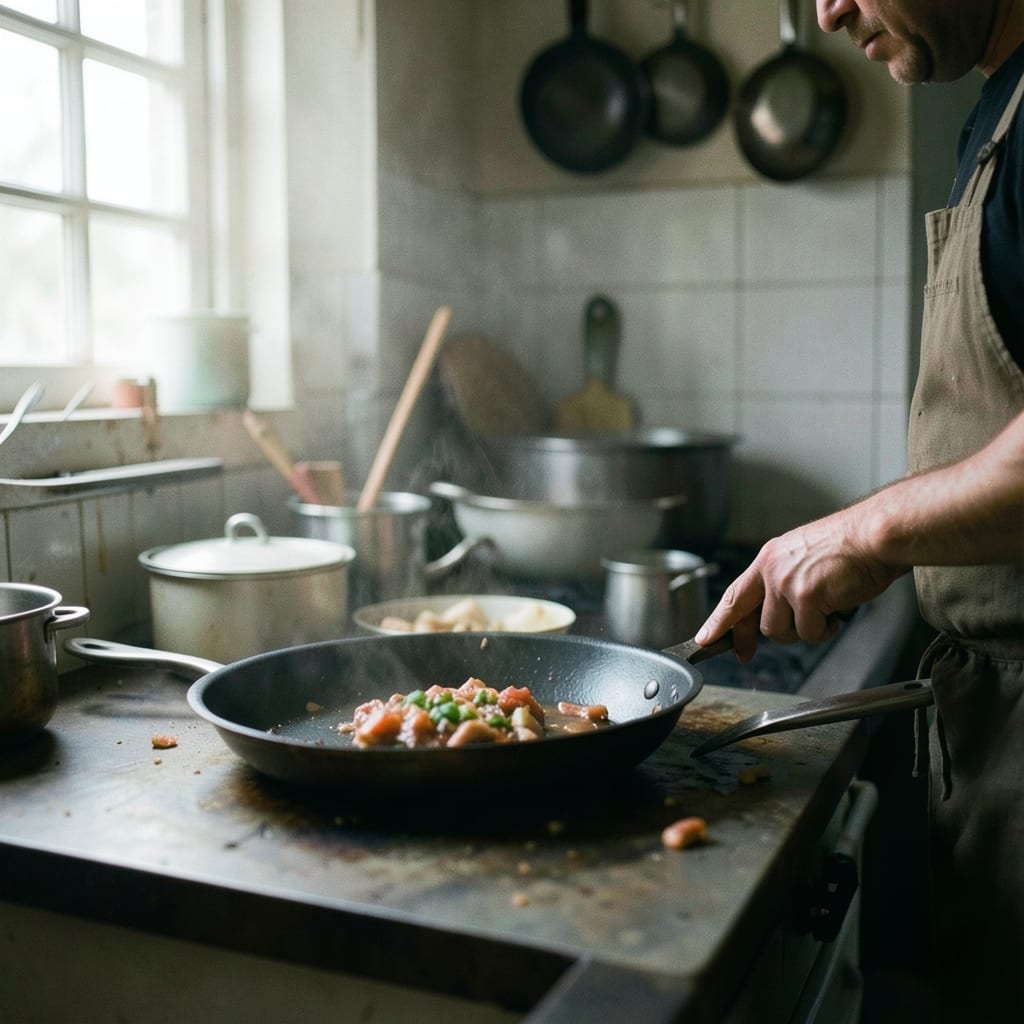
That week, I ruined three pans, went through two bags of potatoes, and at one point even considered throwing the oven out the window. The problem wasn’t just the texture; it was the *feeling* of the dish.
Chips should be a celebration of simplicity—crisp, salty, effortless—but mine were a reminder of everything that could go wrong in a kitchen when you don’t know what you don’t know.
Nine tries before it worked
By the fifth attempt, I’d given up on the oven. I tried an air fryer, but the chips came out uneven—some crisp, others still doughy. Then I switched to a deep fryer, and while the texture improved, the oil temperature was impossible to control.
The sixth attempt involved parboiling the slices for 30 seconds before frying, which made them slightly better but still not right. The seventh? I doubled the salt, thinking it might draw out moisture, but the chips tasted like a salt mine and still fell apart.
The breakthrough came on the ninth try. I realized the issue wasn’t the cooking method—it was the potatoes themselves. I’d been using them straight from the cellar, but they needed time to dry out.
So I peeled, sliced, and left them in a single layer on a wire rack for *three hours* before frying. The difference was immediate: golden, shatteringly crisp edges, no sog at the core.
The oil temperature had to be precise (350°F/175°C, no higher), and I used a mix of vegetable and peanut oil for stability, but the real fix was patience.
That first successful batch wasn’t just about the chips—it was about the process. I’d spent a week treating cooking like a puzzle, and the solution wasn’t in the recipe books or YouTube tutorials.
It was in the small, stubborn details: the time between slicing and frying, the way the potatoes breathed on the rack, the exact moment they turned from pale to gold. And when I finally got it right, I knew this site wouldn’t just be about recipes.
It’d be about the *why* behind them.
The mind behind these pages

I’m Dominic Whitaker, and I’m the kind of person who will ruin nine batches of chips before admitting I don’t know something.
That habit started in my grandmother’s kitchen, where she’d sigh and say, ‘The first one’s always the worst,’ before handing me a wooden spoon and a bowl of flour. She didn’t teach me recipes—she taught me to *watch* them.
That’s what this site does: it shows the work behind the dish, the failures included.
Outside the kitchen, I’m the guy who reassembles IKEA furniture three times, who tests the same hiking route until I’ve memorized every rock and root, who keeps a notebook full of half-finished ideas because I know the best ones come from the mess.
My editor once called it ‘obsessive,’ but my grandmother just smiled and said, ‘That’s how you learn.’
I don’t cook for a living. I cook because it’s the only thing that makes sense when everything else feels half-done. There’s a shelf in my kitchen where I keep the first batch of chips from that October week—the mushy, greasy ones. They’re a reminder that the point isn’t perfection.
It’s the trying.
So if you’re here for a recipe, you’ll get one. But you’ll also get the story of how it almost didn’t work—and why that matters.
Everything here is written the way that potato was
This site doesn’t publish recipes until they’ve been tested, retested, and tested again—not because we’re perfectionists, but because cooking is a conversation, not a monologue. The notes in the margins, the crossed-out steps, the ‘wait, why did this happen?’ scribbled in the corner—those are the parts that matter.
That’s why you’ll find timelines of failures alongside the final dish, and why some pages look like they were written in a hurry (they were).
The potato that taught me patience also taught me something else: the best recipes aren’t just about ingredients. They’re about the *space* between them—the time a dish sits, the way it’s handled, the moment it’s pulled from the heat.
That’s what we document here: not just what went in the pan, but how it got there. And if a recipe changes three months after it’s published? That’s fine. Cooking isn’t static, and neither are we.
So when you see a note like ‘Try this with rainbow carrots—it worked the second time,’ or ‘The first batch burned because the oven lied,’ don’t skip it. Those are the clues. And if you ever send us a message about a recipe that didn’t work? We’ll thank you.
Because that’s how the next one gets better.
What that means for you
You’ll find recipes here that are bold, traditional, or just plain weird—but they’ll all have one thing in common: they’ve been through the fire, the water, and the ‘why did I think this would work?’ moment. No shortcuts, no assumptions.
If a dish says ‘serves 4,’ it’s because we tested it with four people who aren’t related to us. If it says ‘30 minutes,’ we timed it while doing something else (like pretending we weren’t cooking).
What you won’t find are perfect dishes, polished photos, or steps that skip the hard parts. This isn’t a catalog. It’s a kitchen. And like any good kitchen, it’s messy, honest, and occasionally on fire.
Send us the details—what worked, what didn’t, and what you’d try next. We’re always testing, always learning, and your ‘failed’ batch might just be the one that changes everything.
If you’ve got a story—or a potato—that needs its turn in the spotlight, you know where to go.
The recipes are grouped by category: Appetizers, Beverages, Breakfast & Brunch, Desserts, Main Courses and Reviews.