
Salads
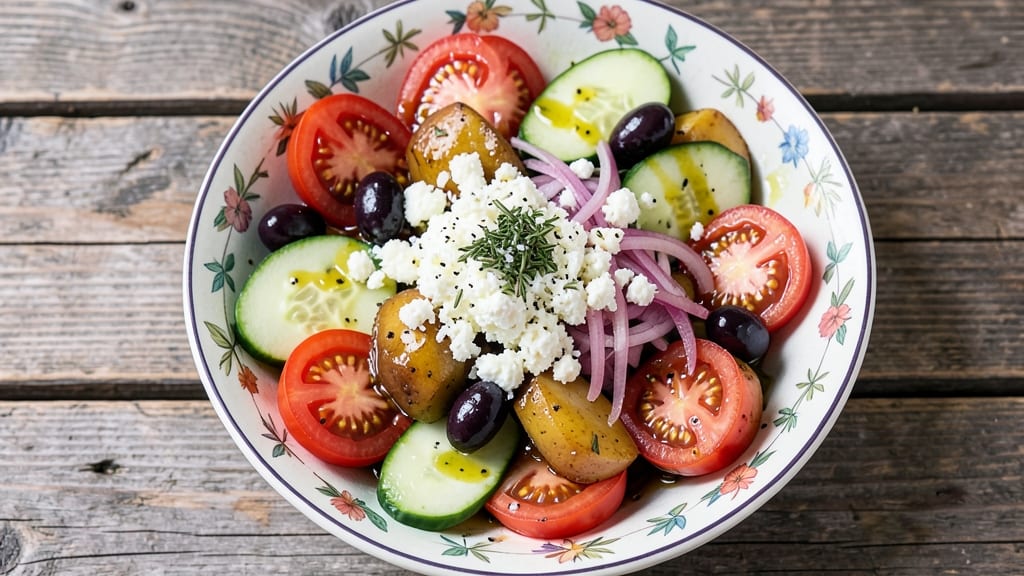
This authentic Greek salad with potato salad recipe merges Mediterranean tradition with comforting familiarity—bright, briny flavors meet creamy, hearty textures in one perfect dish. 🌟 I developed it after realizing how much my family craved both the tangy crunch of Greek salad and the satisfying richness of potato salad, especially during summer gatherings.
The key lies in balancing the bold olive oil and lemon of the Greek components with the creamy, mustard-kissed potatoes.
The beauty of this hybrid dish is its adaptability—prepare both salads separately to control textures and flavors, then assemble just before serving. The Greek portion delivers crisp cucumbers, juicy tomatoes, and salty olives, while the potato salad adds a velvety, herby contrast.
Together, they create a meal that’s both nostalgic and exciting, perfect for picnics, barbecues, or a light yet satisfying dinner.
What makes this recipe truly special is the harmony of contrasts: the sharpness of red onion against the creaminess of potatoes, the saltiness of feta against the sweetness of fresh herbs. Each bite offers a balance that feels both familiar and fresh.
The assembly is simple—just toss the two salads together gently to preserve their individual textures while letting the flavors meld beautifully.
This dish is ideal for feeding a crowd or meal prepping for the week, as both components keep well separately. Whether you're hosting a Mediterranean-inspired dinner or simply craving a comforting yet vibrant meal, this recipe delivers restaurant-quality results with minimal effort. Let's get started!
Ingredients for authentic greek salad recipe with potato salad
Six vibrant ingredients for the Greek portion meet eight hearty staples for the potato salad—simple yet sophisticated.
| Ingredient | Amount | Notes |
|---|---|---|
| Extra-Virgin Olive Oil 🫒 | ¾ cup | High-quality, fruity variety |
| Fresh Cucumber 🥒 | 2 large | Seedless preferred, peeled |
| Ripe Tomatoes 🍅 | 4 medium | Vine-ripened for sweetness |
| Red Onion 🧅 | 1 medium | Thinly sliced for bite |
| Kalata Olives 🫒 | 1 cup | Pitted, preferably Greek |
| Crumbled Feta Cheese 🧀 | 1 cup | High-fat, aged variety |
| Fresh Dill 🌿 | ¼ cup | Chopped, stems removed |
| Fresh Oregano 🍃 | 1 tbsp | Dried oregano as substitute |
| Lemon Juice 🍋 | ½ cup | Freshly squeezed |
| Diamond Crystal Kosher Salt 🧂 | 1 ½ tsp | Adjust to taste |
| Freshly Ground Black Pepper 🌶️ | ½ tsp | Freshly cracked preferred |
| Russet Potatoes 🥔 | 2 lbs | Waxy preferred, peeled |
| Mayonnaise 🥫 | ¾ cup | High-quality, full-fat |
| Yellow Mustard 🌶️ | 2 tbsp | Dijon for stronger flavor |
| Fresh Chives 🌿 | 0.2 cup | Finely chopped for garnish |
| Hard-Boiled Eggs 🥚 | 4 whole | Chopped for potato salad |
The extra-virgin olive oil and Kalamata olives are non-negotiable for authentic Greek flavor. Look for imported olives at specialty stores like Whole Foods or Mediterranean markets—they make all the difference. For the tomatoes, vine-ripened varieties like Roma or heirloom hold up best. The feta should be aged at least 6 months for that crumbly, salty perfection; Baros or Sante brands are ideal. Fresh dill and oregano elevate the dish—grow your own if possible, or grab bunches from the grocery store's produce section where they're often fresher.
No Kalamata olives? Green olives in brine work, but rinse them first. Short on fresh dill? Dried dill at one-third the amount suffices, though it lacks the bright aroma. For the potato salad, Dijon mustard adds depth over regular yellow mustard. The eggs should be ice-cold when chopped to prevent turning gray. If you prefer a tangier potato salad, add 1 tbsp apple cider vinegar to the dressing. The cucumbers can be subbed with zucchini for a summer twist, though texture will differ slightly.
Both salads keep beautifully when stored separately. The Greek salad components last 3-4 days in the fridge if stored in airtight containers with a paper towel to absorb moisture. The potato salad, thanks to the mayo, stays fresh for 4-5 days—though flavor peaks within the first two. For meal prep, portion the feta and olives separately to prevent sogginess. The hard-boiled eggs can be peeled and refrigerated for up to 1 week in their shells, but chop them just before mixing. Assemble both salads only when ready to serve to preserve crispness.
Why You'll Love This Recipe
- No Chopping Chaos: I swear by this recipe because the cucumbers and tomatoes only need a rough chop—no fancy dicing or peeling. The red onion gets the quick-soak treatment in cold water, so you avoid crying while prepping. Honestly, I’ve made this while talking on the phone. That’s how unfussy it is.
- Salty-Sweet Magic: The Kalata olives pack that briny punch, but it’s the sweetness of the ripe tomatoes and the sharp bite of red onion that make this salad sing. Drizzle that extra-virgin olive oil right before serving—trust me, the flavors hit different when it’s fresh.
- Lunchbox Hero: Between us, this is my go-to for packed lunches. The potatoes hold up for days, and the dressing keeps everything crisp. I double the batch on Sundays and stash it in jars—no soggy mess, just fresh bites all week. (Yes, even on a Tuesday night.)
- Budget Brightener: Fresh cucumbers and tomatoes stretch farther than you’d think, and a big jar of Kalata olives lasts forever. I’ll be real: this salad costs me half what store-bought versions do, and it’s way better. Plus, the olive oil makes even the simplest meal feel special without breaking the bank.
Step-by-step instructions for authentic Mediterranean salads
Master these two iconic salads using traditional techniques and quality ingredients.
🍳 Step 1: Prepare the Potato Salad Base
Place the 2 lbs russet potatoes in a large pot and cover with cold water by 2 inches. Add 1.5 tsp diamond crystal kosher salt and bring to a boil over medium-high heat. Once boiling, reduce heat to medium and cook for 15-20 minutes until the potatoes are fork-tender and easily pierced with a knife.
Drain immediately and let cool slightly. While still warm, cut each potato into ½-inch cubes using a sharp chef's knife. Transfer to a large mixing bowl and set aside. The slight warmth helps the potatoes absorb the dressing better, creating that classic creamy texture without making them soggy.
👨🍳 Step 2: Create the Greek Salad Components
Slice the 2 large fresh cucumbers lengthwise and scoop out the seeds using a spoon, then cut into ¼-inch thick half-moons. Core and chop the 4 medium ripe tomatoes into ½-inch chunks, removing any tough stems. Thinly slice the 1 medium red onion into ⅛-inch rings and immediately place in a bowl of ice water for 5 minutes to mellow the sharpness.
Drain and pat the onions dry, then combine with cucumbers and tomatoes in a separate large bowl. Add the 1 cup kalata olives and 1 cup crumbled feta cheese, distributing the feta evenly. This careful layering prevents the feta from dissolving into the tomatoes and cucumbers too quickly, maintaining its signature crumbly texture.
🥘 Step 3: Make the Potato Salad Dressing
In a medium bowl, whisk together the 0.75 cup mayonnaise, 2 tbsp yellow mustard, 0.5 cup lemon juice, 0.5 tsp freshly ground black pepper, and 1 tbsp fresh oregano. Gradually fold in the chopped 4 whole hard-boiled eggs and 0.2 cup fresh chives, mixing gently to avoid breaking the eggs. The acidity from the lemon juice helps balance the richness of the mayonnaise while keeping the dressing stable.
Add the potato mixture to the dressing and toss gently with a rubber spatula until fully coated. Cover and refrigerate for at least 30 minutes to allow the flavors to meld. This resting time is crucial—it lets the potatoes absorb the dressing evenly and the flavors develop their full Mediterranean character.
🍳 Step 4: Assemble the Greek Salad Dressing
In a separate small bowl, whisk together the 0.75 cup extra-virgin olive oil, remaining 1 tbsp fresh oregano, 0.25 cup fresh dill, 0.5 tsp freshly ground black pepper, and 1 tsp diamond crystal kosher salt. Slowly drizzle in the 0.5 cup lemon juice while whisking continuously to create an emulsified dressing. The olive oil should become slightly cloudy—this indicates proper emulsification and a stable dressing.
Pour the dressing over the Greek salad ingredients and toss gently to coat. Sprinkle with the remaining 0.5 tsp diamond crystal kosher salt and let sit for 10 minutes before serving. This brief resting period allows the flavors to harmonize, with the lemon brightening the tomatoes and cucumbers while the olive oil enhances their natural sweetness.
⏰ Step 5: Serve with Mediterranean Flair
Transfer both salads to serving bowls. For the Greek salad, garnish with additional fresh dill and fresh chives for color contrast. Serve the potato salad slightly warmed if desired, with extra crumbled feta cheese on the side. The contrast between the creamy potato salad and the bright, tangy Greek salad creates a perfect Mediterranean balance—each bite delivers a different textural and flavor experience.
For an authentic touch, serve with warm pita bread or crusty sourdough. The salads hold well for 2-3 hours in the refrigerator, making them ideal for gatherings. The key to their success lies in the quality of ingredients and proper preparation—never rush the resting times or skip the flavor balancing steps.
Pro Tips For Making Authentic Greek Salad Recipe With Potato Salad
- Slice Onions Thinly: Use a sharp knife and cut the red onion paper-thin—about 1/16-inch slices—so they soften slightly but don’t turn to mush in the salad. I learned this the hard way when my first attempt looked like confetti and disappeared into the dressing.
- Boil Potatoes Until Fork-Tender: Cook the potatoes until they’re just fork-tender, not falling apart—about 12-15 minutes in salted boiling water. Overcooking turns them into a sad, watery mess that ruins the salad’s texture.
- Drain Cucumbers Well: After slicing cucumbers, pat them dry with a kitchen towel to remove excess moisture—this keeps the salad from turning soggy. Skip this, and your dressing will pool at the bottom like a sad puddle.
- Toss Dressing Last: Mix the olive oil, vinegar, and oregano first, then fold it into the salad just before serving. Adding dressing too early wilts the tomatoes and makes the whole thing gloppy—trust me, I’ve done it.
Common mistakes when making perfect results
Over-Salting the Greek
I’ve caught myself doing this more times than I’d admit—dumping the entire 1.5 tsp kosher salt right into the Greek salad without tasting first. The result? A briny mess that overpowers the delicate flavors of tomatoes and cucumbers.
Instead, sprinkle the salt gradually while tasting. Start with half the amount and adjust—your taste buds will thank you! 🧂
Undercooking Potatoes
Nothing ruins potato salad faster than al dente potatoes. They’ll stay firm and absorb the dressing unevenly, leaving you with a dry, grainy texture. Always cook them until they’re fork-tender—15-20 minutes in boiling water—and let them cool slightly before cubing.
This ensures they soak up the creamy dressing perfectly without turning mushy.
Skipping the Ice Water
The red onion’s sharp bite can dominate the Greek salad if not properly mellowed. Skipping the 5-minute ice water soak leaves it too harsh. This simple step softens the onion’s edge while keeping it crisp. Pro tip: Pat it very dry afterward to prevent a watery salad.
Mixing Too Soon
Both salads need time to develop their flavors—30 minutes for potato salad and 10 minutes for Greek salad. Combining them too early means the feta will dissolve into the potatoes, and the Greek salad’s freshness will wilt.
Let each shine separately before bringing them together at the last minute.
Using Low-Quality Olive Oil
Not all olive oils are created equal. A cheap, bland oil will make your Greek salad taste flat. Invest in a high-quality extra-virgin olive oil—look for labels like "fruity" or "peppery" on brands at Whole Foods or specialty stores. The difference is night and day in flavor and aroma.
Overmixing the Potato Salad
Gentle folding is key—overmixing breaks the eggs and makes the potatoes gummy. Use a rubber spatula to gently toss the dressing into the potatoes, keeping the texture creamy and the eggs intact. Think "light and airy," not "mashed potatoes." ✨
Nutrition facts
Frequently asked questions
Can I make this dish vegetarian?
Yes! Simply omit the hard-boiled eggs from the potato salad and use vegan mayo instead of regular mayo. For extra protein, add chickpeas to the Greek portion or swap the feta for a plant-based alternative like vegan feta. The flavors will still shine through beautifully!
How do I keep the Greek salad crispy?
Pat all vegetables thoroughly dry before assembling and store the salad in an airtight container with a paper towel on top. Avoid adding dressing until just before serving—this keeps the cucumbers and tomatoes from getting soggy. For extra crunch, add the dressing right before eating!
What's the best way to serve this dish?
This Mediterranean-inspired combination works perfectly as a main dish with warm pita bread or crusty sourdough. For a complete meal, pair it with grilled meats like chicken or lamb, or keep it vegetarian with marinated tofu. It's also fantastic for picnics or potlucks—just keep the salads separate until serving!
Can I prepare this ahead of time?
Both salads keep well separately in the fridge for up to 3 days. Store the Greek salad components (without dressing) in one container with a paper towel, and the potato salad in another. Combine them just before serving to maintain freshness. The flavors actually improve overnight!
What if I don't have Kalamata olives?
No problem! Use green olives in brine as a substitute. Just rinse them thoroughly before adding to the salad. For a different flavor profile, try capers or even sun-dried tomatoes for a sweet contrast. The dish will still taste amazing with these alternatives!