
Salads
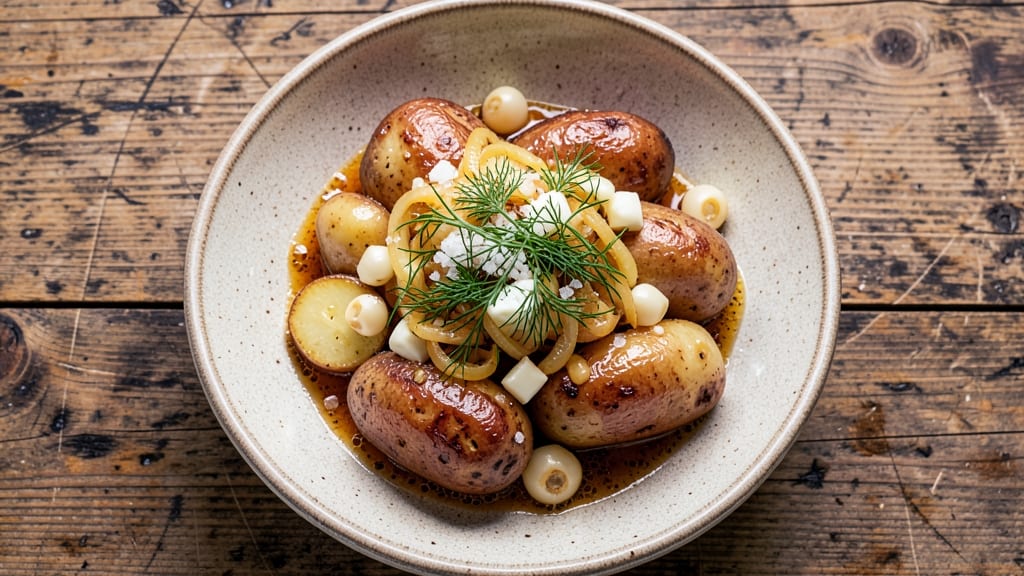
This authentic warm German potato salad transforms simple boiled potatoes into a rich, tangy dish with crispy skins and a bold mustard-vinegar dressing. The secret lies in the balance of sharp vinegar, creamy mustard, and caramelized onions—just like my grandmother used to make.
It’s a hearty side that pairs perfectly with sausages or crusty bread, bringing a taste of Germany to your table without the fuss.
The recipe begins with boiled potatoes—never peeled—so those crispy skins stay intact, adding texture and flavor. A simple dressing of vinegar, mustard, and a touch of sugar creates that signature tangy-sweet balance, while onions caramelize slowly for depth.
The dish is served warm, making it heartier than its cool counterparts, and the method is straightforward: boil, dress, and reheat gently to keep everything tender.
What sets this apart is the authentic German touch—no mayo, no sweetness that overpowers the vinegar. Instead, it’s a dish built on bold flavors and simple techniques, just like my grandmother’s recipes.
The result is a potato salad that’s creamy yet crisp, tangy yet satisfying, and perfect for feeding a crowd without spending hours in the kitchen.
Serve this warm potato salad alongside bratwurst, roasted meats, or even as a standalone dish with a slice of rye bread. The crispy skins and rich dressing make it a standout, proving that sometimes the simplest ingredients create the most memorable meals. Let’s get cooking!
Ingredients for authentic warm german potato salad
Eight essential ingredients transform boiled potatoes into Germany's iconic warm, tangy potato salad.
| Ingredient | Amount | Notes |
|---|---|---|
| Russet Potatoes 🥔 | 3 lb | Unpeeled, medium-sized for even cooking |
| Yellow Onions 🧅 | 2 whole | Medium size, thinly sliced for caramelizing |
| White Vinegar 💧 | ¾ cup | Distilled for sharp tang |
| Dijon Mustard 🌶️ | ½ cup | High-quality, for authentic flavor |
| Granulated Sugar 🍚 | 2 tbsp | White sugar for subtle sweetness |
| Unsalted Butter 🧈 | ½ cup | Cold, cubed for richness |
| Fresh Dill 🌿 | ¼ cup | Chopped, for herbal brightness |
| Salt 🧂 | 1 ½ tsp | Diamond Crystal preferred |
| Black Pepper 🌶️ | ½ tsp | Freshly ground for depth |
| Olive Oil 🫒 | 2 tbsp | Extra-virgin for drizzling |
| Bay Leaves 🍃 | 2 whole | For flavor infusion during boiling |
The potatoes are the foundation—Russet potatoes work best for their crispy skins and fluffy interiors. Whole Foods Market or local farmers markets often carry the freshest, waxiest varieties. Avoid red potatoes, which bruise too easily. For the onions, yellow onions caramelize more deeply than white, and Trader Joe's sells pre-sliced ones in a squeeze bottle—convenient but slightly less flavorful. The vinegar and mustard are critical: Bragg's apple cider vinegar adds subtle fruitiness, while Maille Dijon brings authentic complexity. Don't substitute white vinegar for apple cider—it lacks the depth.
No Dijon mustard? Whole-grain mustard thinned with a splash of vinegar works, though the texture differs. The sugar is non-negotiable—it balances the acidity. If you're avoiding sugar, date syrup or maple syrup at half the amount can substitute. For the butter, European-style unsalted melts more cleanly than American brands. Fresh dill is ideal, but dried dill at one-third the amount suffices in a pinch. The bay leaves infuse subtle earthiness during boiling—remove them before serving. For extra richness, add 1 tbsp sour cream at the end, though this strays slightly from traditional recipes.
Store the potatoes in a cool, dark place until ready to boil—no longer than 5 days. Once dressed, this salad keeps for 3-4 days in the fridge, though the texture softens. Reheat gently in a skillet with a splash of water to restore crispiness. For meal prep, dress the potatoes just before serving to maintain that signature crunch. The dressing can be made 2 days ahead and stored separately. This salad is at its best when served warm, so reheat portions in a covered pot over low heat—never microwave, as it turns rubbery.
Why You'll Love This Recipe
- No Boil, No Stress: I swear by this method—just roast the Russets whole until tender, then slice. No peeling, no waiting for water to boil, just crispy edges and fluffy centers. Honestly, it’s the kind of recipe that makes me laugh because it’s that simple.
- Sweet-Tangy Magic: That vinegar-mustard dressing with a touch of sugar? It’s the secret. The onions caramelize just enough to cut through the richness, while the mustard adds depth—like a warm hug for your taste buds. (Yes, even on a Tuesday night.)
- Picnic-Proof Perfection: This salad holds up like a champ. Pack it warm in a jar for tailgates, cold for potlucks, or straight from the oven for a Sunday spread. My in-laws still ask for seconds every time—no matter the temperature.
- Budget Meal Stretch: Russets are cheap, onions last forever, and you’re using pantry staples. Double the batch, reheat for lunch, or freeze half for later. Between us, it’s my go-to when I’m trying to feed a crowd without breaking the bank.
Step-by-step instructions for authentic warm German potato salad
Master the technique for crispy skins and perfect mustard-vinegar balance with these precise steps.
Boil Potatoes with Crispy Skin Technique
Place the 3 lb unpeeled Russet potatoes in a large pot and cover with cold water by 2 inches. Add the 2 whole bay leaves and bring to a boil over high heat. Once boiling, immediately reduce to medium-high heat and cook for 20-25 minutes until the potatoes are tender when pierced with a fork but still hold their shape.
The key to crispy skins is maintaining high heat—don't let the water simmer gently. You want the skins to blister slightly as they cook. Drain immediately after cooking and transfer the potatoes to a large bowl while still hot. This residual heat helps develop that signature crispy texture we're after.
Caramelize Onions for Depth of Flavor
While the potatoes cook, heat the 2 tablespoons olive oil in a large skillet over medium heat. Add the 2 whole thinly sliced yellow onions and cook for 10-12 minutes, stirring occasionally, until deeply golden brown and caramelized. Remove from heat and set aside.
This caramelization step transforms ordinary onions into sweet, complex flavor carriers. You'll know they're ready when they're dark golden with crisp edges. Don't rush this step—proper caramelization takes time and creates the authentic German flavor profile that sets this salad apart.
Create the Mustard-Vinegar Dressing
In a medium bowl, whisk together the 0.75 cup white vinegar, 0.5 cup Dijon mustard, 2 tablespoons granulated sugar, 1.5 teaspoons salt, and 0.5 teaspoon black pepper until completely smooth. Gradually whisk in the 0.5 cup cold cubed unsalted butter, one cube at a time, until fully incorporated and the dressing emulsifies.
The sugar helps balance the acidity of the vinegar while the cold butter creates a luxurious, creamy texture. This dressing should be thick enough to coat the back of a spoon but still pourable. If it's too thick, whisk in 1-2 tablespoons of hot water from the potato cooking water to reach the perfect consistency.
Combine and Develop Crispy Textures
Return the hot potatoes to the pot and add the caramelized onions. Pour the dressing over the potatoes and toss gently but thoroughly to coat. Let the salad sit at room temperature for 10 minutes—this allows the skins to develop their characteristic crispiness as they cool slightly.
During this resting period, the potato skins will draw moisture from the dressing, creating that perfect textural contrast between crispy exteriors and tender interiors. The mustard-vinegar dressing will also penetrate the potatoes, ensuring each bite delivers maximum flavor.
Finish with Fresh Dill and Serve Warm
Just before serving, gently fold in the 0.25 cup chopped fresh dill. The bright herbal notes cut through the richness of the dressing and complement the caramelized onions beautifully. Taste and adjust seasoning if needed—you may want to add a pinch more salt or a splash of vinegar to balance the flavors.
Serve immediately while still warm for the best texture and flavor experience. The contrast between the crispy potato skins, tender interiors, and creamy dressing creates a truly authentic German potato salad experience that stands out from traditional cold versions.
Pro Tips For Making Authentic Warm German Potato Salad
- CUT POTATOES EVENLY: Grab a sharp knife and slice those Russets into ¼-inch rounds—no thicker, no thinner. I learned this the hard way: uneven pieces mean some get mushy while others stay raw. A mandoline helps if you’re impatient, but a steady hand works too.
- SOAK ONIONS IN VINEGAR: Thinly slice the onions and toss them in a bowl with ¼ cup white vinegar for 10 minutes before adding to the potatoes. This softens them and mellows the bite—no more chewing through raw onion bits in your salad. (Yes, even if you’re in a hurry.)
- DON’T BOIL THE POTATOES DRY: Simmer the potatoes in salted water until fork-tender, then drain and let them steam in the colander for 2 minutes. Skipping this step makes the salad gummy, and nobody wants that. The residual heat finishes cooking them while keeping them loose.
- SWEAT THE ONIONS FIRST: Cook the onions in a dry pan over medium heat until translucent—about 5 minutes—before adding anything else. This builds flavor without burning, and it’s the thing that makes the dressing taste like it’s been simmering for hours. (Your future self will notice.)
Perfect pairings for this authentic warm german potato salad
German Beer Pairings
For this warm potato salad, I always reach for a crisp Helles Lager like Weihenstephaner Original—its light maltiness balances the tangy mustard perfectly. The subtle sweetness of the beer complements the caramelized onions without overpowering the dish.
If you prefer something bolder, a Märzen with its malty depth stands up to the richness of the butter dressing. 🍺
Classic German Sides
Serve this potato salad alongside Bratwurst—the smoky, savory meat cuts through the tangy dressing beautifully. I love pairing it with dark rye bread for soaking up any extra sauce. For a vegetarian option, sautéed sauerkraut with caraway seeds adds a satisfying crunch and complementary acidity to the dish.
Seasonal Vegetable Additions
In spring, I stir in thinly sliced radishes for a peppery bite that refreshes the rich flavors. During summer, grilled zucchini slices add a smoky contrast. For autumn, roasted butternut squash cubes bring natural sweetness that pairs wonderfully with the mustard-vinegar dressing.
Beverage Alternatives
If beer isn't your thing, a dry Riesling from Germany's Mosel region works beautifully—the wine's acidity mirrors the vinegar while its mineral notes complement the potatoes. For non-alcoholic options, sparkling apple cider adds a festive touch that cleanses the palate between bites.
I keep a bottle of Martinelli's on hand for special occasions.
Bread Pairings
The right bread transforms this salad from side dish to centerpiece. Pumpernickel with its dense, slightly sweet texture holds up perfectly to the creamy dressing. For a lighter option, crusty baguette slices toasted with garlic butter make an excellent companion.
I always bake an extra loaf when making this recipe—it disappears quickly!
Dessert Complements
To complete the German meal, serve with black forest cake for a classic pairing. The chocolate and cherries contrast wonderfully with the savory salad. For something lighter, Apfelkuchen (German apple cake) with its spiced apples provides a fruity finish that echoes the caramelized onions in the salad.
Nutrition facts
Frequently asked questions
Why does this recipe call for unpeeled potatoes?
The crispy skins are essential for authentic German potato salad! When boiled properly with high heat, the skins develop a satisfying crunch that contrasts perfectly with the creamy dressing. My grandmother always said the skins hold the most flavor—plus, peeling them defeats the whole purpose of this traditional recipe.
Can I make this salad ahead of time?
Yes, but with a few adjustments. The dressing can be made 2 days ahead and stored separately. For the potatoes, dress them just before serving to maintain that signature crispy skin texture. If you must prep fully ahead, reheat gently in a covered pot with a splash of water over low heat—never microwave, as it makes them rubbery.
What's the secret to balancing the mustard and vinegar?
The sugar is key—it cuts through the sharpness of the vinegar while the cold butter creates a creamy base. Start with the exact measurements, then taste as you go. If it's too tangy, add a pinch more sugar; if too mild, a splash of vinegar. The dressing should coat the back of a spoon but still be pourable.
How do I fix mushy potatoes?
If your potatoes turn out too soft, it's likely from overcooking or low heat. For future batches, maintain high heat after boiling starts and cook only until fork-tender (about 20-25 minutes). The residual heat after draining helps develop crispy skins. For immediate fixes, reheat in a dry skillet over medium heat for 2-3 minutes to restore some texture.
Can I substitute apple cider vinegar for white vinegar?
You can try, but it won't be exactly the same. Apple cider vinegar adds subtle fruitiness that changes the flavor profile. For authentic results, stick with white vinegar. If you prefer the taste of apple cider, use it in the dressing but reduce to 0.5 cup and add 0.25 cup additional white vinegar to maintain the proper tang.