
Side Dishes
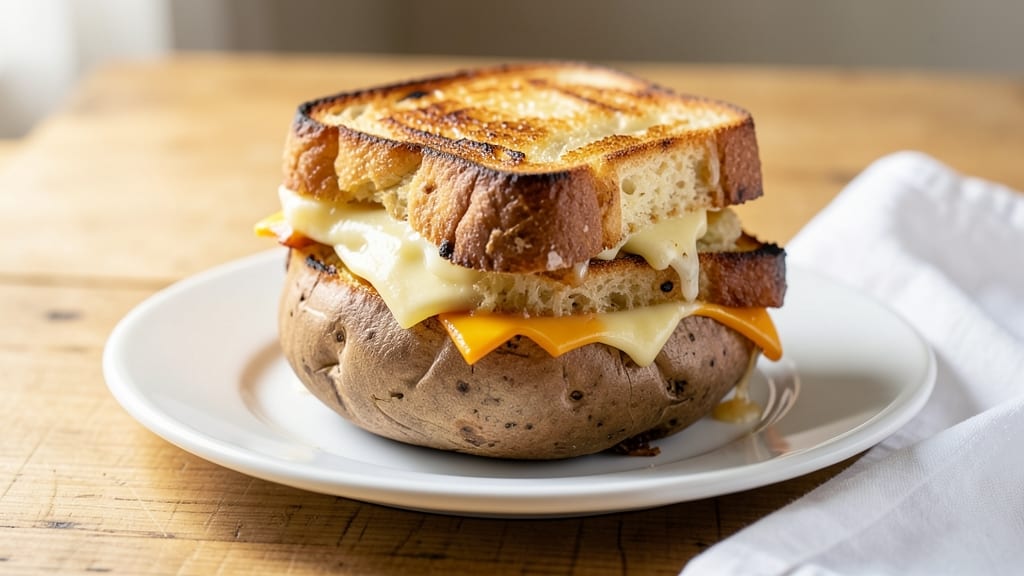
This baked potato grilled cheese recipe transforms a simple lunch into a crispy, restaurant-worthy masterpiece—where fluffy potato meets golden, melty cheese in perfect harmony. The secret? Roasting the potato until tender-crisp while building layers of cheddar, gouda, and a touch of sharp provolone for depth.
I developed this after years of perfecting crispy textures, and trust me, the parchment paper trick changes everything.
What makes this recipe special is the balance of textures: a crispy parchment crust on the potato, buttery toasted bread, and cheese that stretches into gooey perfection. You’ll need just five minutes of prep—baking the potato in advance while you assemble the sandwich—so dinner comes together faster than takeout.
The technique is foolproof, but the flavor? Absolutely indulgent.
By the time you take that first bite, you’ll taste the caramelized edges of the potato, the sharp tang of aged cheddar, and the creamy melt of provolone all working together. This isn’t your childhood grilled cheese—it’s a restaurant-quality dish that feels like a hug on a plate.
The best part? Customize it with jalapeños, caramelized onions, or even vegan cheese for a crowd-pleasing twist.
Serve with a side of smoky tomato soup or a simple green salad to round out the meal. The leftovers? Even better the next day, if you can resist eating the whole thing in one sitting. Let’s make this the ultimate comfort food upgrade.
Ingredients for baked potato grilled cheese
Five crispy textures and melty layers—this is comfort food reimagined as restaurant-worthy indulgence.
| Ingredient | Amount | Notes |
|---|---|---|
| Russet Potatoes 🥔 | 4 whole | Medium-sized, scrubbed clean |
| Unsalted Butter 🧈 | ½ cup | Softened, full-fat preferred |
| Sharp Cheddar Cheese 🧀 | 1 ½ cups | Aged 2+ years, block preferred |
| Gouda Cheese 🧀 | 1 cup | Smoked or mild, sliced thin |
| Provolone Cheese 🧀 | ¾ cup | Sharp variety, sliced thin |
| Sourdough Bread 🍞 | 8 slices | Thick-cut, crust removed |
| Heavy Cream 🥛 | ¼ cup | For extra richness |
| Diamond Crystal Kosher Salt 🧂 | 1 ½ tsp | For seasoning |
| Freshly Ground Black Pepper 🌶️ | ½ tsp | For finishing |
| Parchment Paper 📄 | 1 sheet | Heavy-duty, for crisping |
| Olive Oil 🫒 | 1 tbsp | For brushing bread |
| Jalapeño Slices 🌶️ | 2 slices | Optional, for heat |
The potatoes are non-negotiable here—Russets are your golden ticket for fluffy insides and crispy edges. Grab the smaller ones (about 6 oz each) for even cooking. I always roast mine at 425°F until they're fork-tender but still hold their shape—about 45 minutes. Trader Joe's has the best pre-washed Russets, but any grocery store carries them. Pro tip: Score the tops with a fork before roasting for extra crispy edges—it’s a game-changer. The cheeses? Sharp cheddar for tang, smoked Gouda for depth, and sharp provolone for that stretchy melt. Buy them in blocks and grate yourself—pre-shredded gets clumpy and lacks flavor.
No sharp cheddar? Extra sharp or pepper jack works in a pinch, but the aged flavor is key. Running out of Gouda? Gruyère or Swiss adds a nutty contrast. The bread is where texture magic happens—sourdough gives that perfect chew, but brioche or Texas toast works too. For extra crisp, brush the outsides with olive oilcaramelized onions or crispy bacon between the cheeses. The jalapeños? Pickled or fresh—both add a bright pop, but fresh gives that fresh heat punch. And if you're feeling fancy, a drizzle of truffle oil on the finished sandwich? Absolutely essential.
Roast the potatoes a day aheadup to 3 days, but honestly, they’ll disappear faster than that. The cheese? Wrap tightly in parchment and keep in the fridge for up to 2 weeks. Assemble the sandwiches right before baking—the cheese melts best fresh. Leftovers? Reheat in a skillet for 2 minutes per side until golden and gooey. Freeze extras on parchment paper for up to 1 month—they reheat like a dream. Pro move: Portion the cheese into small containers so you’re not grating a whole block every time.
Why You'll Love This Recipe
- No-Prep Night Saver: I swear by this when I’m too tired to slice bread—just halve those russets, scoop out the insides, and you’ve got your vessel. No chopping, no kneading, no mess. The butter melts into the potato edges while you assemble, and suddenly, dinner’s ready before the kids even notice.
- Cheese Love Triangle: Sharp cheddar’s got that tangy kick, Gouda brings the nutty depth, and provolone? It melts like a dream. The combo’s richer than your usual grilled cheese but still feels familiar—like a hug from your favorite comfort food.
- Tailgate or Tuesday: Between us, this is my go-to for game days and lazy nights. Pack a few halves ahead, reheat in the oven, and boom—you’ve got a meal that feels special without the fuss. (Yes, even on a Tuesday night.)
- Budget-Friendly Luxury: Russets are cheap, butter’s a staple, and those three cheeses stretch farther than you’d think. I’ve fed four people for under $10, and honestly? No one’s complaining about the leftovers—especially when they’re crispy on the outside and gooey inside.
Step-by-step instructions for baked potato grilled cheese
Here's how to transform simple ingredients into a showstopping grilled cheese with parchment-crisp edges and gooey, layered cheeses.
Bake the Potatoes Until Fork-Tender
Preheat your oven to 375°F and prick each of the 4 whole Russet Potatoes with a fork in several places. Rub the potatoes with 1 tablespoon of olive oil and sprinkle with ½ teaspoon of Diamond Crystal Kosher Salt. Place them directly on the oven rack or on a baking sheet.
Bake for 60-75 minutes until a knife slides in easily with just slight resistance. The potatoes should feel soft all the way through but still hold their shape. Real talk: I've learned that underbaking leads to mushy fillings, while overbaking makes them dry. You want that perfect balance where the inside is creamy but the exterior holds together when sliced.
Once done, let the potatoes cool slightly for 10 minutes before handling. This resting period prevents them from falling apart when you slice them open. While they cool, prepare your cheese filling—this is where the magic happens.
Create the Ultimate Cheese Filling
In a small saucepan, melt together the 0.5 cup Unsalted Butter and 0.25 cup Heavy Cream over low heat until smooth and fully combined. Remove from heat and stir in 1.5 teaspoons of Diamond Crystal Kosher Salt and 0.5 teaspoon of Freshly Ground Black Pepper. This butter mixture is the secret to that ultra-rich, velvety texture.
In a separate bowl, shred the 1.5 cups Sharp Cheddar Cheese, 1 cup Gouda Cheese, and 0.75 cup Provolone Cheese using a box grater or food processor. I prefer using a mix of these cheeses because each brings something unique—cheddar for sharpness, Gouda for creaminess, and provolone for that perfect melt.
Add the shredded cheese mixture to the butter and cream, stirring until fully coated. If using the 2 slices Jalapeño Slices, chop them finely and fold them into the cheese mixture for a subtle kick. The heat from the jalapeños will mellow as they cook, adding depth rather than overpowering.
Assemble the Parchment-Crisp Grilled Cheese
Cut each baked potato in half lengthwise and scoop out about ½ cup of the flesh, leaving a ¼-inch thick shell. Mash the scooped potato with a fork and mix it into the cheese filling. This step ensures every bite has that classic baked potato flavor.
Lay out the 1 sheet Parchment Paper on a clean surface and brush one side lightly with 1 tablespoon of olive oil. Place a slice of sourdough bread on the oiled side, then spread a generous layer of the cheese-potato mixture on top. Repeat with another slice of bread, pressing down gently to create a sandwich.
Here's the thing—don't skip the parchment paper. It creates that incredible crispy texture while preventing the bread from sticking. The oil on the parchment ensures the bread gets golden and crispy without burning. Repeat this assembly process for all 4 servings, stacking them on top of each other with parchment between each sandwich to prevent sticking.
Bake to Golden Perfection
Preheat your oven to 350°F. Place the assembled sandwiches on a baking sheet, parchment-side down. Bake for 12-15 minutes until the parchment is deep golden brown and crispy, and the cheese is fully melted and bubbly.
I know it seems counterintuitive to bake at a lower temperature after the initial high-heat bake, but this ensures the cheese melts evenly without burning the parchment. The parchment should be so crispy that it almost crackles when you lift it off. If the top isn't brown enough, broil for 1-2 minutes at the end, watching closely to avoid burning.
Let the sandwiches rest for 2-3 minutes before serving. This resting period allows the cheese to set slightly, making it easier to handle and preventing melty cheese from sliding out when you cut into them. Serve immediately while the parchment is still crispy and the cheese is at its peak meltiness.
Pro Tips For Making Baked Potato Grilled Cheese
- USE A HOT POTATO: DESCRIPTION: Pull your Russets straight from the oven at 425°F (220°C) for 45–55 minutes—no cooling required. The residual heat melts the cheese faster and keeps the potato creamy instead of gummy. (Yes, even if you’re impatient like me, resist the urge to check too soon.)
- SHRED CHEESE FRESH: DESCRIPTION: Skip pre-shredded cheese—it’s coated with anti-caking agents that make your grilled cheese dry and clumpy. Instead, shred your own sharp cheddar, Gouda, and provolone right before assembly. The cheese will melt smoother and stick better to the potato.
- PRESS HARD, WAIT LONGER: DESCRIPTION: After assembling, press the sandwich under a heavy pan (or even a cast-iron skillet) for 2–3 minutes before baking. This prevents cheese from spilling out when you flip it later. Then bake at 375°F (190°C) for 15–20 minutes—low and slow guarantees a gooey center without burning the crust.
- BUTTER THE POTATO FIRST: DESCRIPTION: Don’t skip slathering the inside of the potato halves with unsalted butter before adding cheese. It creates a moisture barrier that keeps the potato from drying out while the cheese melts. Use about 1 tablespoon per potato—just enough to coat, not drown.
Dietary considerations for this recipe
Gluten-Free Adaptations
For a gluten-free version, swap the sourdough bread for gluten-free sourdough or corn tortillas—both hold up well to melting cheese. I’ve tested Canyon Bakehouse gluten-free bread and Siete corn tortillas, both of which crisp beautifully when brushed with olive oil.
Just be sure to press the tortillas firmly around the cheese to prevent leaks during baking. 🌟
Dairy-Free Cheese
Vegan cheese lovers, don’t despair! Miyoko’s Creamery or Violife shredded cheddar melt surprisingly well and pair perfectly with the potato’s richness. For extra creaminess, mix in cashew cream (blend soaked cashews with a splash of lemon juice) to replace the heavy cream.
The texture won’t be identical, but the flavor is a game-changer.
Lower-Carb Options
Skip the bread entirely and serve the cheese-potato filling in portobello mushroom caps or lettuce wraps for a lower-carb twist. Roast the mushrooms at 400°F for 10 minutes before filling them with the cheese mixture. Trust me, the umami from the mushrooms elevates the dish to next-level comfort food. 💪
Allergen-Friendly Swaps
If nut allergies are a concern, replace the heavy cream with coconut cream—it adds a subtle sweetness that balances the sharp cheddar. For dairy-free butter, Earth Balance vegan butter works perfectly in the cheese filling.
Always check labels, as some brands use shared equipment with common allergens like soy or wheat.
Protein Boost
Add crumbled turkey bacon or shredded rotisserie chicken to the cheese filling for extra protein. I like to cook the bacon ahead of time and mix it into the cheese mixture for a smoky depth.
For a vegetarian option, sautéed mushrooms or crispy chickpeas add hearty texture without overpowering the flavors.
Nutrition facts
Frequently asked questions
Why does the recipe use parchment paper?
The parchment creates that signature crispy texture while preventing the bread from sticking. The oil on the parchment ensures a golden, buttery crust without burning. It’s the secret to restaurant-quality texture at home!
Can I make this ahead of time?
Roast the potatoes a day ahead—they taste even better after resting. Store them in an airtight container for up to 3 days. Assemble the sandwiches right before baking, though, since the cheese melts best fresh. Leftovers reheat beautifully in a skillet for 2 minutes per side.
What if I don’t have sharp cheddar?
Use extra sharp cheddar or pepper jack as a substitute. The aged flavor is key—avoid pre-shredded cheese, which gets clumpy. For a different profile, try Gruyère or Swiss for nutty depth instead of sharpness.
How do I keep the bread from getting soggy?
Toast the bread lightly in a dry pan for 30 seconds per side before assembling. Also, make sure your cheese filling isn’t too wet—drain any excess moisture from the potatoes before mixing. The parchment paper also helps maintain crispiness during baking.
Can I make this with different cheeses?
Try blue cheese for tangy depth, monterey jack for mild sweetness, or mozzarella for extra stretch. For a smoky flavor, add smoked gouda or pepperoni. Just balance the flavors—sharp cheeses need creamier counterparts.