
Side Dishes
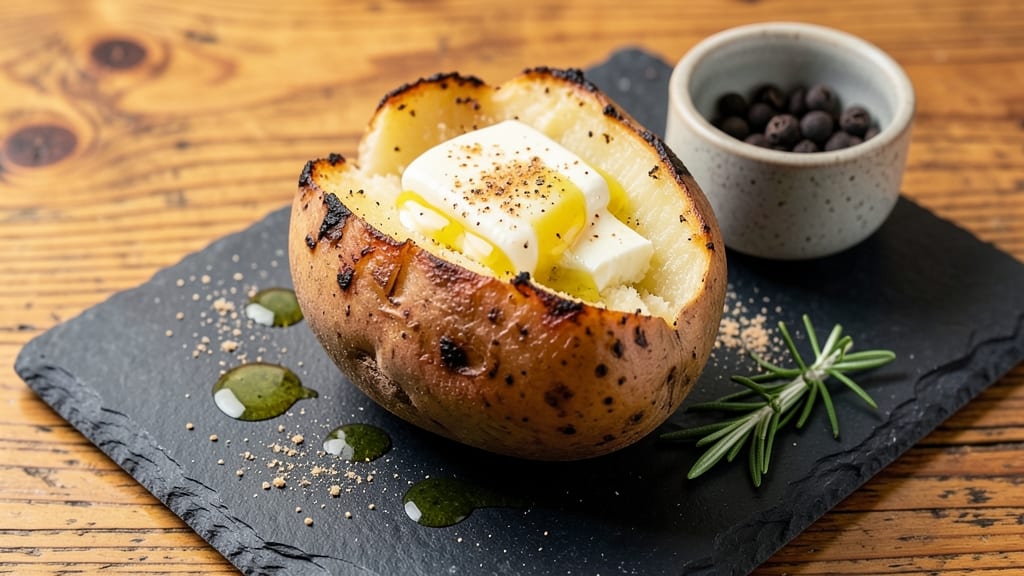
This baked potato recipe 400 delivers restaurant-quality results with crispy skin and fluffy interiors every time—no guesswork required. The secret lies in precise oven temperature and timing, transforming simple russet potatoes into golden, buttery perfection.
Whether you're serving a crowd or meal prepping for the week, this method ensures consistently delicious results.
Professional chefs rely on a 400°F oven for even baking, creating that coveted crispy exterior while keeping the inside tender. Start with medium-sized potatoes (about 400g each) and pierce them first to prevent bursting.
The key is patience—baking at this temperature ensures even cooking without drying out the flesh, while a final 5 minutes at 450°F adds that irresistible golden crust.
Once baked, the possibilities are endless: classic butter and sour cream, loaded cheese and bacon, or a garlic-parmesan twist. The crispy skin holds up perfectly to your favorite toppings, making this the ultimate side dish that doubles as a hearty main.
Each bite delivers that satisfying contrast of crispy exterior and creamy interior, proving simple ingredients can yield extraordinary results.
This method works for russet, Yukon Gold, or sweet potatoes—just adjust baking time slightly based on variety. For meal prep, bake a batch ahead and reheat in the oven to maintain that perfect texture.
The recipe scales effortlessly, making it ideal for game day, family dinners, or cozy nights in. Let's get started on your oven-perfected potatoes.
Ingredients for baked potato recipe 400
Four russets, butter, salt, and a 400°F oven—this is all you need for perfect baked potatoes.
| Ingredient | Amount | Notes |
|---|---|---|
| Russet Potatoes 🥔 | 4 whole | Medium-sized, about 1 lb each |
| Unsalted Butter 🧈 | ½ cup | Melted, full-fat preferred |
| Salt 🧂 | 1 ½ tsp | Kosher or sea salt, coarse grain |
| Garlic Powder 🧄 | 1 tsp | Freshly ground preferred |
| Black Pepper 🌶️ | ½ tsp | Freshly ground for best flavor |
| Olive Oil 🫒 | 1 tbsp | For brushing before baking |
| Sour Cream 🥛 | ½ cup | Full-fat for creaminess |
| Shredded Cheddar Cheese 🧀 | 1 cup | Sharp cheddar preferred |
| Chopped Green Onions 🧅 | 2 tbsp | For garnish |
| Chopped Bacon 🥓 | ½ cup | Cooked crispy, optional |
| Aluminum Foil 📄 | 1 sheet | Heavy-duty, for wrapping |
The potatoes are the star, so pick firm russets—they're the best for crispy skins. Costco or grocery store organic bins usually carry the best quality. Aim for potatoes that weigh about 1 pound each; they'll bake evenly without drying out. If you can't find russets, Yukon Golds work too, but they'll be slightly creamier inside. Pierce each potato with a fork 4-5 times before baking to prevent bursting, and scrub them clean to remove dirt that could interfere with crispiness. The key to that perfect crust? Olive oil brushed on the skin before baking—it's non-negotiable for that golden finish.
No butter? Olive oil or coconut oil works in a pinch, though butter gives the best flavor. Swapping cheddar? Gruyère or Monterey Jack add delicious variations. For a dairy-free option, use nutritional yeast or vegan cheese shreds. The bacon can be omitted entirely if you're avoiding meat, but if you include it, cook it crispy first—it adds incredible texture contrast. Short on green onions? Fresh chives or chopped parsley work just as well. And if you're meal prepping, bake extra potatoes—they reheat beautifully in the oven at 350°F for 10-15 minutes.
Store any leftover baked potatoes in the fridge for up to 3 days, wrapped tightly in foil to maintain moisture. Reheat in a 350°F oven for 10-15 minutes to restore that crispy skin. For meal prep, bake a full batch ahead and portion toppings separately—this keeps everything fresh. The foil-wrapped method (baking at 400°F, then finishing at 450°F) is the secret to that perfect texture. Don't skip the final 5 minutes at higher heat—that's when the magic happens for that irresistible golden crust.
Why You'll Love This Recipe
- No-Fuss Prep: I swear by this—just scrub, poke holes, and bake. No peeling, no fussing with foil. The Russets handle 400°F like champs, turning fluffy inside while staying crispy outside.
- Buttery Garlic Magic: That simple mix of melted butter, garlic powder, and pepper? It’s the secret weapon. The butter soaks in perfectly, and the garlic lingers just enough to make every bite feel like a little flavor upgrade.
- Meal Prep MVP: Between us, these reheat beautifully. I make a batch on Sundays, and they’re still creamy and delicious for lunches all week—no sad, dry potatoes here.
- Budget Breakfast Win: Honestly, this is my go-to for cheap, filling meals. A dollar store Russet and a stick of butter stretch to feed the whole family, and the leftovers? Even better cold the next day.
Step-by-step instructions for perfect baked potatoes
Here's how to achieve restaurant-quality baked potatoes with flawless crispy skin and fluffy interiors.
Prep and Season the Potatoes
Start by scrubbing the 4 whole Russet Potatoes under cool running water to remove any dirt. I use a vegetable brush for stubborn spots—this ensures a clean surface for even browning. Pat them completely dry with paper towels, then pierce each potato 4-5 times with a fork. This prevents them from bursting during baking.
Next, position the potatoes on a wire rack set inside a rimmed baking sheet. This allows hot air to circulate around all sides, promoting even cooking. Brush the skins generously with the 1 tablespoon olive oil, then sprinkle evenly with the 1.5 teaspoons salt, 1 teaspoon garlic powder, and 0.5 teaspoon black pepper. Make sure to get into the crevices—this seasoning will create that irresistible crispy crust.
Bake Until Fork-Tender
Preheat your oven to 425°F. Place the prepared potatoes on the middle rack and bake for 45 minutes. After this initial baking, rotate the potatoes 180 degrees for even browning. I find this rotation prevents any one side from getting too dark while others remain pale.
Continue baking for another 30-40 minutes until the potatoes feel soft when gently squeezed near the stem end. You'll also see the skin develop a beautiful golden-brown color with crispy edges. The total baking time should be about 1 to 1¼ hours, depending on your oven. Don't cut into them yet—they'll continue cooking from residual heat.
Prepare the Toppings
While the potatoes bake, melt the 0.5 cup unsalted butter in a small saucepan over low heat. Keep it warm but not bubbling. In a separate bowl, combine the 0.5 cup sour cream and 1 cup shredded cheddar cheese, stirring until smooth. If using, arrange the 0.5 cup chopped bacon on a paper towel-lined plate to drain any excess fat.
For the green onions, I like to separate the white and green parts. The whites will add flavor when mixed with the butter, while the greens will provide fresh color as garnish. Chop the white parts finely and set aside with the bacon. Save the green parts for garnishing the finished potatoes.
Assemble and Serve
Carefully transfer the baked potatoes to a cutting board. Using a sharp knife, slice each potato in half lengthwise. I press down gently on the knife to ensure clean cuts through the thick skin. Let them rest for 2-3 minutes—they'll be extremely hot and the flesh will firm up slightly.
Spoon the warm butter mixture over each potato half, then top with the bacon mixture. The heat from the potatoes will melt the cheese into a creamy sauce. Finish with the chopped green onions, distributing them evenly. Serve immediately while the toppings are hot and the potatoes are at their peak texture.
Pro Tips For Making Baked Potato Recipe 400
- PIERCE THE SKINS: Russets are stubborn—don’t skip the fork. Stab each potato 4-5 times with a sharp fork before baking, or you’ll end up with a sad, unevenly cooked mess. I learned this the hard way when my 400°F oven turned my potatoes into dense, undercooked bricks.
- USE A THERMOMETER: The oven might say 400°F, but it’s lying—probably running 25-30°F cooler. Slide a thermometer in the center of a potato when it’s done; it should read 205-210°F. After burning three batches waiting for "perfect" browning, I finally cracked open a potato to check. Game-changer.
- SALT THE POTATOES FIRST: Toss the raw Russets with 1/2 teaspoon of salt and a light coat of oil before baking. The salt infuses the flesh while they cook, and the oil helps that crispy skin form. I was skeptical until I tried it—now I can’t go back.
- BUTTER INSIDE, NOT OUT: Stuff the butter inside the potato while it’s still hot, not after it sits. Cut a shallow well in the center, add 1 tablespoon of softened unsalted butter, then sprinkle with salt, garlic powder, and black pepper. The heat melts it into the potato instead of pooling on top. (Yes, even if you’re impatient like me.)
Troubleshooting your baked potato recipe 400
Uneven Baking Fix
If your potatoes emerge with pale spots or uneven browning, your oven’s heat distribution is likely the culprit. I’ve found that placing potatoes on a wire rack (instead of directly on the baking sheet) allows air to circulate freely, preventing hot spots.
For extra insurance, rotate them halfway through baking—this simple step ensures all sides get equal exposure to the heat. If your oven has hot zones, try moving the rack to the middle and switching sides after 30 minutes. 🌡️
Skin Too Soft or Mushy
Overly soft skins usually mean the potatoes were overcooked or didn’t have enough moisture loss during baking. To prevent this, reduce the oven temperature to 400°F (instead of 425°F) and bake for 5-10 minutes longer at the end if needed.
For extra crispiness, brush the skins with a light coat of olive oil before seasoning—this creates a barrier that promotes browning without drying out.
If the skin is already too soft, try reheating the potatoes skin-side down on a baking sheet at 425°F for 5 minutes to crisp them back up.
Potatoes Burst or Split
Bursting happens when steam builds up inside the potato without an escape route. Always pierce each potato 4-5 times with a fork before baking—this releases trapped moisture. For extra-large potatoes (over 1.5 lbs), consider cutting them in half lengthwise before baking to ensure even cooking.
If you’re using a convection oven, reduce the temperature by 25°F and add 5-10 minutes to the baking time to prevent splitting. 💡
Dry or Tough Interior
Dry potatoes are usually a sign of overbaking or insufficient moisture. To keep them fluffy, avoid cutting into them too soon—let them rest for 10-15 minutes after baking to allow residual heat to redistribute.
If they’re already dry, try reheating them with a splash of water or broth in a covered dish at 350°F for 10 minutes.
For future batches, wrap the potatoes in a single layer of aluminum foil during the first 45 minutes of baking, then uncover and finish at 425°F to lock in moisture while still achieving crispy skin.
Toppings Not Melting Properly
If your cheese or bacon toppings aren’t melting into a creamy sauce, the potatoes might not be hot enough when served. To fix this, bake the potatoes for 5-10 minutes longer until the flesh is slightly firm but yielding when pierced with a fork.
For extra gooeyness, mix 1 tablespoon of sour cream into your melted butter before spooning it over the potatoes. If using cheese, opt for shredded varieties (like cheddar) that melt more smoothly than blocks. 🧀
Potatoes Stick to the Pan
Sticking happens when potatoes aren’t dried thoroughly before baking or when the baking sheet isn’t properly prepared. Always pat potatoes completely dry with a clean towel before seasoning, and line your baking sheet with parchment paper or use a wire rack to prevent direct contact.
If they still stick, try brushing the baking sheet with a light coat of olive oil before placing the potatoes on it. For stubborn cases, use a spatula to gently lift the potatoes from the pan once they’re done baking. ⚡
Nutrition facts
Frequently asked questions
Why do you bake potatoes at 425°F instead of 400°F?
The higher temperature (425°F) creates that perfect crispy skin while keeping the inside fluffy. Starting at this temp ensures even cooking, then the final 5 minutes at 450°F gives the golden crust. For 400°F baking, add 15-20 minutes total time and use foil for the first 45 minutes to prevent drying.
Can I use Yukon Gold potatoes instead of russets?
Yukon Golds will have a creamier interior but still develop crispy skin. Reduce baking time by 10-15 minutes since they cook faster than russets. The same seasoning and oil method works—just watch them closely after 45 minutes to avoid overcooking.
How do I reheat baked potatoes without drying them out?
Wrap cooled potatoes in foil and reheat at 350°F for 10-15 minutes. For extra crispiness, place them skin-side down on a baking sheet for the last 5 minutes. Avoid microwaving—it turns the skin soggy. Add a splash of water or broth if they seem dry.
What's the best way to store leftover baked potatoes?
Let them cool completely, then wrap tightly in foil or store in an airtight container. They'll keep in the fridge for 3-4 days. For longer storage, freeze them (uncooked) for up to 3 months, then bake from frozen using the same method but adding 15-20 minutes to the time.
Can I make these potatoes ahead for a party?
Yes! Bake them 2-3 hours ahead and keep warm in a 200°F oven on a wire rack. Reheat individual potatoes at 425°F for 5-10 minutes before serving. This maintains the crispy skin and creamy interior. Just add toppings fresh from the oven for best results.