
Soups & Stews
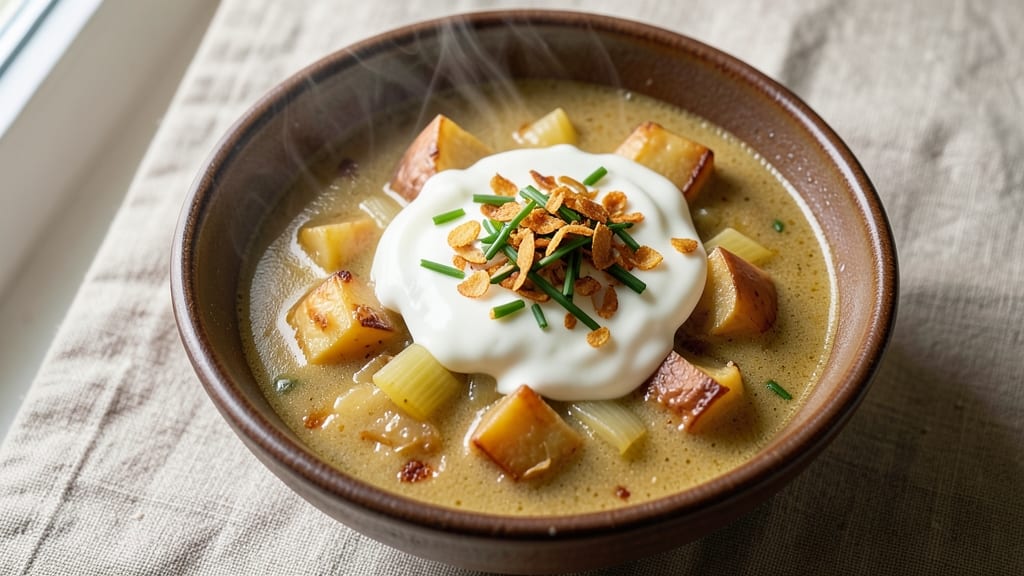
This baked potato soup recipe stove top delivers restaurant-quality creaminess without oven prep—just one pot and 30 minutes of hands-off simmering. The secret lies in slow-cooked potatoes that break down into a velvety base, while sautéed onions and garlic build deep, savory flavor.
I developed this version after craving that comforting, thick texture but wanting a quicker method than traditional baking.
The beauty of this stove-top approach is how it transforms simple ingredients into something luxurious. You’ll start with aromatics—onions, garlic, and celery—sautéed until golden, then add broth, diced potatoes, and cream for that signature richness.
The potatoes soften completely, blending into the soup for a silky texture that feels indulgent yet comes together effortlessly.
What you’ll end up with is a creamy, velvety soup that’s perfect for chilly evenings, packed lunches, or feeding a crowd. The one-pot method means minimal cleanup, while the slow simmer ensures every bite is tender and flavorful.
Top with crispy bacon, shredded cheese, or a dollop of sour cream for extra indulgence—this soup tastes like a hug in a bowl.
Best of all, it reheats beautifully, making it ideal for meal prep. Whether you’re serving it as a hearty appetizer or a main dish, this stove-top baked potato soup delivers comfort without the fuss. Let’s get cooking!
Ingredients for baked potato soup recipe stove top
Simple ingredients transform into luxurious stove-top baked potato soup with velvety texture and restaurant-quality depth.
| Ingredient | Amount | Notes |
|---|---|---|
| Yellow Onions 🧅 | 1 whole | Diced into small pieces |
| Celery Stalks 🥬 | 3 whole | Diced into small pieces |
| Garlic Cloves 🧄 | 4 cloves | Minced for depth of flavor |
| Russet Potatoes 🥔 | 3 lb | Diced into 1-inch pieces |
| Chicken Broth 💧 | 6 cups | Low-sodium preferred |
| Heavy Cream 🥛 | 1 cup | Full-fat for richness |
| Whole Milk 🥛 | 1 cup | For velvety texture |
| Unsalted Butter 🧈 | 3 tbsp | For sautéing aromatics |
| Salt 🧂 | 1 ½ tsp | Diamond Crystal preferred |
| Ground Black Pepper 🌶️ | ½ tsp | Freshly ground preferred |
| Dried Thyme 🌿 | 1 tsp | Or 1 tbsp fresh thyme |
| Garlic Powder 🧄 | ½ tsp | For additional savory depth |
| Crispy Bacon 🥓 | 4 oz | Chopped for garnish (optional) |
| Sharp Cheddar Cheese 🧀 | ½ cup | Shredded for topping (optional) |
The potatoes are the heart of this soup, so Russet potatoes are ideal—their high starch content breaks down beautifully for that signature creamy texture. Organic potatoes from the grocery store's produce section work well, but if you can find them, Yukon Golds add a touch of sweetness. For the aromatics, yellow onions and celery should be fresh—look for crisp stalks and firm texture at the store. If you're prepping ahead, store potatoes in a cool, dark place and use within 2 weeks for best results. The chicken broth should be low-sodium; Swanson or Pacific Foods brands are reliable choices for consistent flavor.
No heavy cream? Full-fat coconut milk works beautifully for a dairy-free version, though the texture will be slightly lighter. Short on milk? Half-and-half at half the amount gives similar richness. The butter is non-negotiable for sautéing—it creates the flavor base that carries through the soup. European-style butter like Plugra has higher fat content for better browning. For the bacon, thick-cut slices from Oscar Mayer or Applegate crisp up perfectly. If you're avoiding dairy entirely, nutritional yeast sprinkled on top adds a cheesy flavor without the cheese. The thyme can be fresh or dried—just remember dried is more concentrated, so use one-third the amount if substituting.
This soup reheats beautifully—simply warm on the stove over medium-low heat, stirring occasionally, until hot throughout. For meal prep, portion into glass containers and store in the fridge for up to 5 days. Freeze for up to 3 months by transferring to airtight containers, leaving a 1-inch headspace. When reheating from frozen, add a splash of broth or milk to prevent drying out. The toppings—bacon, cheese, or a dollop of sour cream—can be added fresh after reheating to maintain crispness. Garnish with fresh parsley or chives if you have them on hand for a pop of color.
Why You'll Love This Recipe
- No Chopping Chaos: I swear by this—just dice the onions, celery, and garlic in one go. The stove-top method means I don’t even need to peel the potatoes first; scrub, cube, and toss them in raw. Ten minutes of prep, and the broth does all the work.
- Creamy Without the Stress: That golden-brown crust on top? It’s the magic. The Russets soften perfectly in the broth, but the edges get crispy under the broiler (or even a quick pop in the oven if you’re using the stove-top method). Honestly, it’s the best of both worlds—silky smooth with a satisfying bite.
- Leftovers That Taste Better: Between us, this soup only gets richer overnight. The flavors meld, and the texture? Even better the next day. I make a double batch on Sundays—one for dinner, one for lunches—and no one complains when I reheat it.
- Budget-Friendly Comfort: Russets are cheap, broth is cheap, and a single onion and celery stalk stretch far. This isn’t one of those recipes where you’re nickel-and-dimed by specialty ingredients. It’s hearty, filling, and costs me less than takeout—without the guilt.
Step-by-step instructions for one-pot creamy baked potato soup
This method delivers velvety texture and rich flavor using just one pot—no transfers, no mess.
Sauté the Aromatic Vegetable Base
In a large Dutch oven or heavy pot, melt the 3 tablespoons unsalted butter over medium heat. Add the 1 whole yellow onions and 3 whole celery stalks, both diced into small pieces. Cook for 5-6 minutes until the onions become translucent and the celery softens slightly.
Here's where the foundation happens: stir occasionally to prevent burning. When the vegetables release their natural juices and take on a golden hue, add the 4 cloves garlic cloves (minced) and the 1 teaspoon dried thyme. Cook for another 30 seconds until fragrant—this ensures maximum flavor extraction. The garlic should sizzle gently but not brown, or it'll turn bitter.
Add Potatoes and Broth for Initial Cooking
Push the sautéed vegetables to one side of the pot and add the 3 pounds russet potatoes (diced into 1-inch pieces). Stir to coat the potatoes lightly with the butter and aromatics. Pour in the 6 cups chicken broth and bring to a gentle boil over medium-high heat. Once boiling, reduce heat to medium-low and let it simmer uncovered for 15 minutes.
This initial cooking softens the potatoes and infuses them with flavor. You'll see the broth reduce slightly and the potatoes begin to break down at the edges. Stir occasionally to prevent sticking—this is where the magic of even cooking begins. If the broth level gets too low, add a splash of water to maintain consistency.
Blend Until Silky Smooth
After 15 minutes, use an immersion blender to purée the soup directly in the pot. Work in batches if needed, blending until completely smooth with no visible potato chunks. If you prefer a slightly rustic texture, you can blend only half and leave the other half chunky. For true velvety richness, aim for a completely smooth consistency.
Here's the thing—this blending step is non-negotiable for that restaurant-quality texture. The immersion blender keeps everything contained, eliminating the need to transfer hot soup to a separate blender. If you don't have one, carefully transfer the soup to a blender in batches, then return it to the pot. The soup should now have a thick, creamy base ready for the final touches.
Incorporate Dairy for Creamy Texture
Return the pot to medium heat and stir in the 1 cup whole milk and 1 cup heavy cream. Add the 1.5 teaspoons salt, 0.5 teaspoon ground black pepper, and 0.5 teaspoon garlic powder. Let the soup simmer gently for 10-12 minutes, stirring occasionally. The dairy will slowly thicken the soup to your desired consistency—if it gets too thick, add a splash of hot broth to loosen.
Watch the soup carefully during this stage. It should never boil vigorously, as this can cause the dairy to curdle. Instead, maintain a gentle simmer where you see small bubbles forming at the edges. The soup will develop a glossy sheen and a luxurious mouthfeel. This is where the one-pot promise pays off—no separate saucepan needed for the creamy finish.
Finish and Serve with Garnishes
Once the soup reaches your desired thickness, remove it from heat. Taste and adjust seasoning if needed—this is your final opportunity to perfect the balance. Ladle the soup into bowls and top each serving with 4 ounces chopped crispy bacon and 0.5 cup shredded sharp cheddar cheese. The cheese should melt slightly from the heat of the soup, adding a final layer of richness.
For presentation, I like to garnish with a sprinkle of freshly ground black pepper and a few extra crispy bacon bits. Serve immediately while hot, as the cheese will continue to melt and the soup will thicken slightly as it sits. This one-pot method delivers all the comfort of classic baked potato soup with minimal cleanup—just what you want on a chilly day.
Pro Tips For Making Baked Potato Soup Recipe Stove Top
- Dice Potatoes Small: I learned this the hard way—big chunks mean uneven cooking. Cut Russets into ½-inch cubes so they soften evenly in the broth. (Yes, it takes 10 extra seconds, but your soup won’t have a single chewy bite.)
- Sweat Onions Low: After burning three batches, I finally figured out: onions need patience. Cook them over medium-low heat for 5-6 minutes until translucent, not golden. (High heat = bitter soup.)
- Strain Broth First: Sounds weird, but it works: strain your chicken broth through a fine-mesh sieve before adding it. Lumps of herbs or fat turn your creamy soup grainy. (I skip this when I’m lazy, but the texture is noticeably better when I don’t.)
- Simmer, Don’t Boil: Let the soup bubble gently at a low simmer—never a rolling boil. Boiling breaks down the potatoes into mush and scalds the edges of the onions and celery. (Your future self will thank you.)
Wine and beer pairings for these flavors
Crisp White Wine
For this creamy potato soup, I reach for a dry Riesling or Chablis—both have enough acidity to cut through the richness while complementing the earthy potato and savory bacon.
A 2022 Chateau de Beaucastel Chateauneuf-du-Pape Blanc from France offers a perfect balance of citrus and mineral notes that refresh your palate between bites. 🍷
Light-Bodied Red
If you prefer red wine, go for a Pinot Noir with subtle earthy undertones. The 2021 Domaine Serene Pinot Noir from Oregon has red fruit and a touch of spice that pairs beautifully with the soup’s creamy texture and bacon garnish. Avoid heavy Cabernets—they’ll overpower the delicate flavors.
Hoppy Beer Pairing
A session IPA like Allagash White brings a crisp, citrusy contrast to the soup’s richness. The hoppy bitterness balances the creaminess, while the light body won’t feel overwhelming. For a darker option, try a Belgian Dubbel—the caramel and spice notes enhance the soup’s savory depth.
Creamy Stout
If you love a malty finish, a Guinness or Samuel Smith’s Nut Brown Ale adds a toasty, slightly sweet contrast. The roasted notes in the stout echo the caramelized onions in the soup, while the creamy texture mirrors the soup’s velvety consistency. 🍺
Non-Alcoholic Option
For a non-alcoholic match, try a sparkling apple cider like Martinelli’s—the effervescence cleanses your palate, while the apple’s sweetness complements the soup’s savory notes. A ginger beer with a squeeze of lime also works wonderfully, adding a zesty kick.
Nutrition facts
Frequently asked questions
Can I use Yukon Gold potatoes instead of Russets?
Yukon Golds will give your soup a slightly sweeter, creamier texture while still breaking down beautifully. They require about 2-3 extra minutes of simmering since they're waxier, but the flavor difference is worth it. Just dice them slightly smaller (½-inch pieces) to ensure even cooking.
What if I don't have an immersion blender?
No problem! Transfer the hot soup to a blender in batches (never fill past the max line) and blend until completely smooth. Return to the pot immediately after each batch to maintain temperature. For extra safety, hold the lid down with a kitchen towel while blending to prevent steam buildup.
Why did my soup turn out too thick?
This usually happens when the dairy thickens too much during simmering. The fix is simple: stir in 2-4 tablespoons of hot broth or milk while reheating. If you prefer it thicker, reduce the dairy to ½ cup each of milk and cream next time. The key is maintaining a gentle simmer - never let it boil vigorously with dairy.
Can I make this soup ahead of time?
Yes! This soup actually tastes better the next day as flavors meld. Store in an airtight container in the fridge for up to 5 days. Reheat gently on the stove, stirring occasionally, and add a splash of milk or broth if it thickens too much. For freezing, portion into containers with 1-inch headspace and freeze for up to 3 months.
What's the secret to preventing dairy from curdling?
The secret is heat control! Always add dairy to soup that's simmering gently (small bubbles at edges), never boiling. If you see curdling start, immediately remove from heat and whisk vigorously. For extra insurance, temper the dairy first by mixing 1 tablespoon of hot soup with the cold cream/milk before adding the full amount.