
Side Dishes
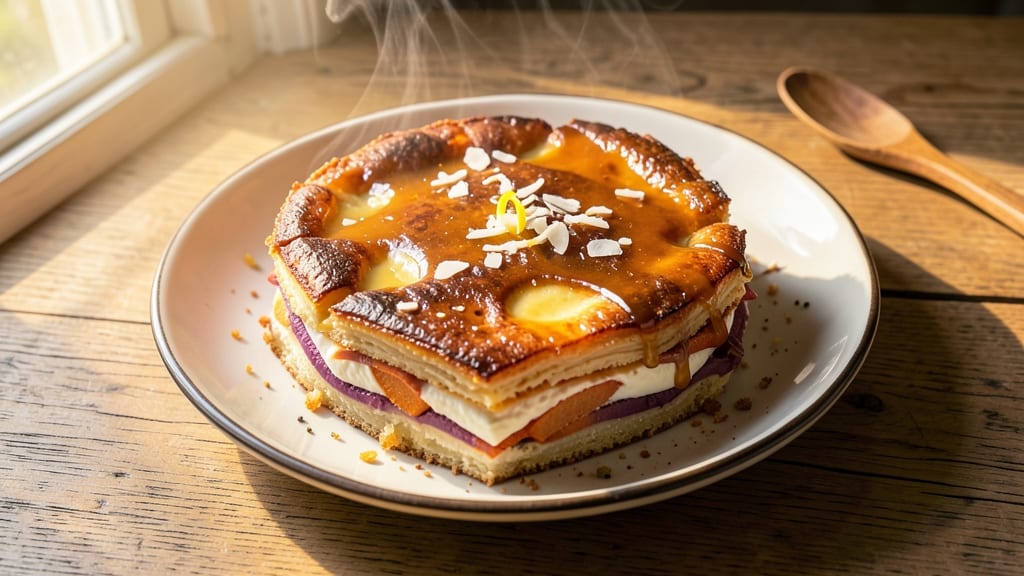
Sweet potato bebinca transforms humble ingredients into a layered dessert masterpiece with silky coconut caramel and golden crispness. This Portuguese-Indian classic requires patience—each layer of sweet potato batter, coconut milk, and caramelized sugar must be perfect for that signature texture.
The result? A dessert so rich and complex it feels like a restaurant experience at home.
What sets this recipe apart is the two-stage baking process: first baking the layers until set, then caramelizing the top with coconut sugar for that signature glossy finish. The sweet potato adds natural sweetness and earthy depth, while pandan extract (or vanilla) brings floral notes that elevate every bite.
It's the kind of dessert that commands attention at any gathering.
By the final layer, you'll have a dessert with crispy edges and creamy centers, where each slice reveals perfect layers of coconut caramel and tender sweet potato. The aroma alone—warm coconut and caramelized sugar—will have everyone anticipating dessert.
This isn't just a recipe; it's a showstopper that proves homemade desserts can rival the best bakery creations.
Perfect for celebrations or when you want to impress, bebinca requires about 3 hours (including baking and cooling time) but delivers results worth every minute. The key is precision in layering and caramelizing—once you master it, you'll have a new favorite dessert to make repeatedly.
Let's get started on creating this layered masterpiece.
Ingredients for sweet potato bebinca
Transform humble pantry staples into a showstopping dessert with these precise ingredients.
| Ingredient | Amount | Notes |
|---|---|---|
| Sweet Potatoes 🍠 | 2 ½ lbs | Orange-fleshed, peeled and mashed |
| Coconut Milk 🥥 | 2 cans | Full-fat, 13.5 oz each (Thai Kitchen brand) |
| Granulated Sugar 🍚 | 2 cups | White or light brown preferred |
| Coconut Sugar 🍯 | 1 ½ cups | For caramelizing top layers |
| Pandan Extract 🌿 | ½ tsp | Or vanilla extract as substitute |
| Unsalted Butter 🧈 | ¾ cup | Cold, cubed for layering |
| All-Purpose Flour 🌾 | ½ cup | For sweet potato batter |
| Large Eggs 🥚 | 4 whole | Room temperature for blending |
| Salt 🧂 | ½ tsp | Fine sea salt preferred |
| Ground Cinnamon 🌶️ | 1 tsp | For subtle warmth |
| Vanilla Bean Paste 🌸 | 1 tbsp | Or 1 tsp vanilla extract |
| Shredded Coconut 🥥 | ½ cup | Sweetened, for garnish |
The sweet potatoes are the heart of this dessert—look for vibrant orange-fleshed varieties like Jewel or Beauregard at your local market. Whole Foods or Trader Joe's usually carry perfect ones, but any well-marbled sweet potato works. Peeled and mashed until completely smooth, they create the silky base for every layer. The coconut milk? Thai Kitchen brand is my go-to—it's consistently rich and creamy, though any full-fat canned coconut milk will do. Don't skimp on the butter either; European-style unsalted (like Plugrá) adds a velvety texture that store brands can't match. For the pandan extract, Asian markets often carry it, but if you can't find it, vanilla extract brings a similar floral depth.
No pandan extract? Vanilla bean paste or even almond extract (use half the amount) works beautifully. The coconut sugar can be swapped for regular sugar, though it adds a subtle caramel note that's worth having. For the shredded coconut, sweetened is non-negotiable—unsweetened will make the final garnish taste bland. If you're making this ahead, prep the sweet potato batter first and store it in the fridge for up to 2 days. The coconut milk can be opened and refrigerated for 3 days, but once opened, the can should be stored in the fridge. The butter should be cold when you layer it—pop it in the freezer for 15 minutes if it's too soft. For extra richness, some cooks add a splash of coconut cream between layers, but I find the coconut milk alone creates perfect texture.
This dessert requires patience—each layer must set completely before adding the next. The baked bebinca keeps beautifully for 4-5 days at room temperature, wrapped tightly in plastic. For longer storage, freeze individual layers between parchment paper for up to 3 months. When reheating, warm in a 300°F oven for 10-15 minutes to restore that perfect caramelized sheen. The aroma alone—warm coconut and caramelized sugar—will have your kitchen smelling like a tropical paradise. Serve with a dollop of coconut whipped cream or a scoop of vanilla ice cream for the ultimate indulgence.
Why You'll Love This Recipe
- No Peel, No Stress: I swear by this trick—just roast the sweet potatoes whole until tender, then scoop out the flesh. No peeling, no mess, and the flavor? Even richer from the caramelized skin.
- Caramel-Pandan Magic: That first spoonful of creamy coconut milk layered with sweet potato and a whisper of pandan? It’s like dessert and comfort food had a baby. The coconut sugar gives it just the right chew, while the pandan makes it smell like a tropical vacation.
- Leftovers? Better Than Fresh: Between us, the bebinca actually tastes better the next day. The layers soften into perfect, melt-in-your-mouth texture, and it’s still warm enough to reheat in seconds—no waiting for an oven.
- Crowd-Pleaser on a Budget: Sweet potatoes and coconut milk are cheap staples, but this dish feels fancy. I’ve served it at potlucks, family dinners, and even as a "nice" dessert after a home-cooked meal—no one ever guesses how simple it is.
Step-by-step instructions for sweet potato bebinca
This layered dessert transforms humble sweet potatoes into a silky, caramelized masterpiece with coconut richness.
Prepare the Sweet Potato Batter
Peel and boil the 2.5 lbs sweet potatoes until fork-tender, about 15-20 minutes. Drain well and mash until completely smooth—no lumps allowed. Transfer to a mixing bowl and let cool slightly.
In a separate bowl, whisk together the 4 whole large eggs, 1 tbsp vanilla bean paste, and 0.5 tsp salt until frothy. Gradually fold this into the mashed sweet potatoes, then add the 0.5 cup all-purpose flour and 1 tsp ground cinnamon, mixing just until combined. The batter should be thick but pourable—like heavy pudding. I like to rest it for 10 minutes before layering; this helps the flavors meld and prevents separation.
Assemble the Coconut Caramel Layers
Preheat your oven to 350°F. Grease an 8x8-inch baking dish generously with 0.25 cup unsalted butter (reserve the rest for later). Pour ½ cup coconut milk into the dish and spread evenly. Sprinkle ½ cup granulated sugar over the milk, then swirl gently with a knife to create a marbled effect. Bake for 15 minutes until the sugar begins to caramelize at the edges.
Remove from the oven and immediately spread ½ of the sweet potato batter evenly over the caramel. Repeat with another layer of ½ cup coconut milk, ½ cup granulated sugar, and ½ cup coconut sugar, swirling to create another caramel layer. Top with the remaining batter. Here's the thing—don't overthink the layers. Just keep alternating between the coconut milk-sugar mixtures and batter until all ingredients are used, ending with a final caramel layer.
Bake to Golden Perfection
Return the dish to the oven and bake for 40-45 minutes until the top is golden brown and the edges are set. The center should still have a slight wobble—it'll firm up as it cools. Real talk: your oven might run hot, so start checking at the 35-minute mark. If the top browns too quickly, tent loosely with foil.
While baking, melt the remaining 0.5 cup unsalted butter in a small saucepan over low heat. Once melted, remove from heat and stir in the 0.5 tsp pandan extract (or vanilla substitute). Brush this buttery pandan mixture over the top of the bebinca immediately after removing it from the oven. This step adds that signature floral aroma and helps create a glossy finish.
Cool and Set Properly
Let the bebinca cool completely in the baking dish at room temperature for at least 2 hours—this is critical. The layers need time to set properly, developing that signature silky texture. I know it's tempting to cut into it sooner, but patience here makes all the difference. If you're really eager, chill in the refrigerator for 1 hour to speed up the process, but room temperature gives the best texture.
Once fully cooled, run a thin knife around the edges to loosen, then invert onto a serving platter. If it doesn't release cleanly, don't force it—use a spatula to gently lift each layer. Garnish with the 0.5 cup shredded coconut, pressing lightly so it sticks. The contrast between the crisp coconut and creamy layers is what makes this dessert truly special.
Pro Tips For Making Sweet Potato Bebinca
- Boil Sweet Potatoes Until Fork-Tender: I learned this the hard way—undercooked sweet potato mash ruins the whole thing. Simmer peeled cubes in salted water until they collapse under a fork (about 15-20 minutes), then mash while hot. Cold, tough chunks? That’s how you end up with a lumpy bebinca.
- Use Equal Parts White & Brown Sugar: Skip the all-coconut-sugar route—mix half granulated, half coconut sugar for balance. The white sugar dissolves faster, preventing grainy layers, while coconut sugar adds depth. (Yes, even if your recipe says otherwise.)
- Layer Thin, Cool Between Layers: Thin layers (¼-inch thick) cook evenly and prevent a gummy center. After each layer, chill the tray 10 minutes in the fridge—sounds tedious, but it’s the only way to avoid a soggy, dense mess.
- Whisk Coconut Milk Cold: Warm the coconut milk just enough to dissolve sugar (no boiling), then whisk it cold into the hot sweet potato mash. Cold milk thickens better and keeps the texture silky, not gluey. (Trust me, you’ll taste the difference.)
Storing and reheating this sweet potato bebinca
Room-Temp Storage
Your freshly baked bebinca stays fresh for 4-5 days at room temperature if stored properly. Wrap it tightly in plastic wrap first, then place in an airtight container to prevent drying. I like using glass containers with locking lids—they keep the moisture in and preserve that signature caramelized sheen.
Store in a cool, dark place away from direct sunlight to maintain texture. The flavors actually deepen over time, so it's perfect for making ahead for gatherings. 💫
Refrigerator Refresh
If you need to store bebinca longer than 5 days, refrigeration works beautifully. Transfer it to an airtight container and keep it for up to 1 week. To restore its best texture before serving, let it sit at room temperature for 30-45 minutes to soften slightly.
For extra richness, reheat gently in a 300°F oven for 10 minutes—this reactivates the caramelized layers without drying them out. A quick spritz of warm water on the shredded coconut garnish before serving brings back that fresh-from-the-oven appeal.
Freezer Preservation
For maximum longevity, freeze bebinca in individual layers between sheets of parchment paper. This prevents freezer burn and makes it easy to thaw just what you need. It keeps for up to 3 months in your freezer.
When ready to serve, thaw overnight in the refrigerator, then warm through in a 325°F oven for 15 minutes. The texture will be slightly denser but still delightful.
Pro tip: Freeze the unbaked layers separately—this gives you flexibility to bake fresh portions whenever you're craving that tropical coconut aroma. ❄️
Reheating Secrets
Bebinca reheats best in the oven rather than the microwave—this preserves that perfect caramelized texture. Place slices on a baking sheet and warm at 300°F for 8-10 minutes until heated through. For a restaurant-style finish, broil for 1-2 minutes at the end to restore that golden crust.
If using the microwave, cover loosely with a damp paper towel and heat in 20-second intervals on medium power, checking between each. The key is gentle heat—you want to warm the dessert, not melt it into a puddle. 🔥
Serving Suggestions
Serve bebinca at room temperature for the best texture contrast between crisp edges and creamy centers. For an elevated presentation, dust with powdered sugar or drizzle with warm coconut syrup (simmer ½ cup coconut milk with 2 tbsp sugar for 5 minutes).
Pair with a scoop of vanilla bean ice cream or a dollop of coconut whipped cream for that perfect balance of warm and cool.
The natural sweetness of the sweet potato shines when contrasted with tart elements—try a squeeze of lime juice or a sprinkle of toasted coconut flakes for brightness. 🌟
Nutrition facts
Frequently asked questions
Why does my sweet potato bebinca have a raw center?
The most common cause is underbaking or insufficient cooling time. The center should have a slight wobble when done, but it firms up completely as it cools. Always bake until the edges are set and the top is golden brown. Then let it cool at least 2 hours before cutting—this gives the layers time to fully set. If you're in a hurry, chill in the fridge for 1 hour instead of room temperature cooling.
Can I substitute regular potatoes for sweet potatoes?
Not recommended! Sweet potatoes bring natural sweetness and a silky texture that regular potatoes can't match. The starch content differs significantly, which affects the layering and caramelization. If you absolutely must substitute, use yams (like orange-fleshed varieties) as a closer alternative, but expect slightly different texture results. The flavor profile will change dramatically.
How many layers should I make in an 8x8-inch pan?
This recipe creates 5 distinct layers in an 8x8-inch pan: alternating between coconut caramel and sweet potato batter, ending with a final caramel layer. Each layer should be about ¼-inch thick when spread. The key is patience—don't rush the layering process. If your batter seems too thick, thin it slightly with 1-2 tablespoons of coconut milk to ensure even spreading.
What's the best way to make bebinca ahead of time?
Bebinca actually tastes better the next day! Bake it completely, then store wrapped tightly in plastic at room temperature for up to 5 days. For longer storage, refrigerate for up to 1 week or freeze individual layers for 3 months. The flavors deepen over time, making it perfect for making ahead. Just let it sit at room temperature for 30 minutes before serving to restore that perfect texture.
Can I make bebinca without pandan extract?
If you can't find pandan, use vanilla extract (1 tsp) or almond extract (½ tsp) for a similar floral note. For a different flavor profile, try 1 tsp cardamom powder or ½ tsp rose water. The key is to balance the coconut sweetness—vanilla works best for maintaining that traditional bebinca character. Just adjust to taste!