Side Dishes
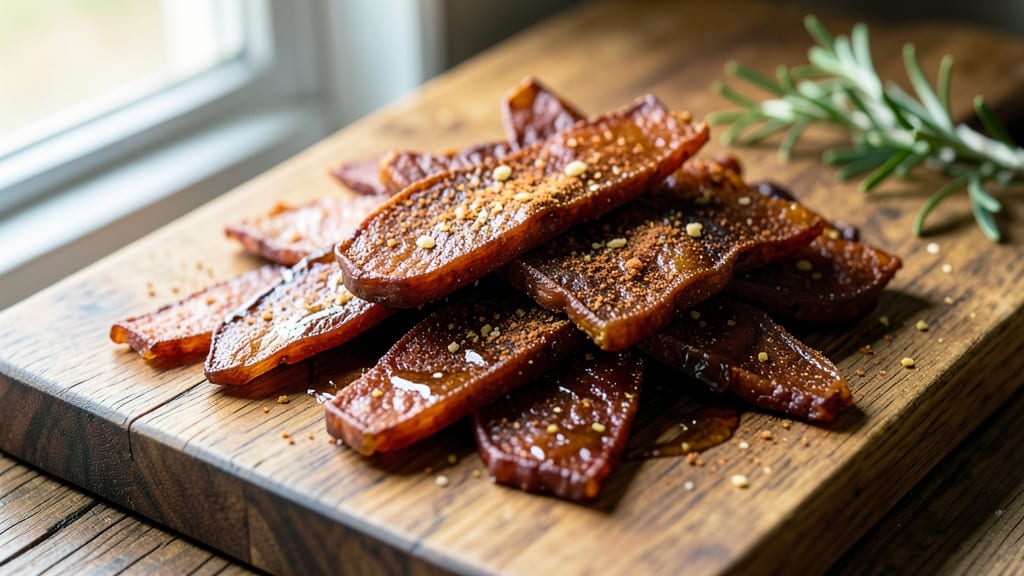
This vegan sweet potato jerky recipe transforms humble sweet potatoes into smoky-sweet, chewy bites perfect for on-the-go snacking or trail mix adventures. 🌱 The secret lies in thin, even slicing and a precise dehydrating process that balances texture and flavor without compromising safety—no meat required.
I developed this after craving a plant-based alternative that delivers the same satisfying crunch and savory depth.
What makes this recipe work is the perfect blend of spices—smoked paprika, garlic powder, and a touch of liquid smoke—that infuses every slice with bold, campfire-inspired flavor. The sweet potatoes stay tender yet firm enough to hold their shape, with just the right chewiness that makes each bite irresistible.
Unlike store-bought versions, this method ensures no artificial additives, just pure, wholesome ingredients.
The process is straightforward but requires attention to detail: uniform slicing (about ⅛-inch thick), thorough seasoning, and dehydrating at 160°F for 8–10 hours to achieve food-safe moisture levels. The result?
A snack that’s hearty enough to satisfy hunger but light enough for hiking or travel. Plus, it stores for weeks in an airtight container, making it a pantry staple.
Whether you’re prepping for a backpacking trip, seeking a healthy snack alternative, or simply craving a smoky-sweet treat, this jerky delivers restaurant-quality flavor with minimal effort. Let’s get started on creating your own batch—no dehydrator? A low oven works too, with adjustments for time and temperature.
Ingredients for sweet potato jerky
These eleven ingredients create restaurant-quality sweet potato jerky with bold, smoky depth and perfect chewiness.
| Ingredient | Amount | Notes |
|---|---|---|
| Large Sweet Potatoes 🍠 | 2 whole | Organic preferred, firm and unblemished |
| Smoked Paprika 🌶️ | 3 tbsp | High-quality for authentic smokiness |
| Garlic Powder 🧄 | 1 ½ tbsp | Freshly ground preferred |
| Onion Powder 🧅 | 1 tbsp | For subtle depth of flavor |
| Ground Black Pepper 🌶️ | 1 tsp | Freshly cracked for intensity |
| Liquid Smoke 🔥 | 1 tbsp | Natural, no artificial additives |
| Maple Syrup 🍁 | 2 tbsp | Grade B for robust flavor |
| Extra-Virgin Olive Oil 🫒 | 2 tbsp | For even coating |
| Nutritional Yeast 🧀 | 2 tbsp | For umami depth (optional) |
| Sea Salt 🧂 | 1 ½ tsp | Diamond Crystal preferred |
| Lemon Juice 🍋 | 1 tbsp | Freshly squeezed |
The sweet potatoes are the foundation—organic varieties like Beauregard or Jewel deliver the best texture and sweetness. Avoid any with soft spots or blemishes, as they won't slice evenly or dehydrate properly. For even slicing, use a mandoline set to ⅛-inch thickness—consistency is key to uniform drying. Most grocery stores carry organic sweet potatoes, but Whole Foods or local farmers' markets often have the freshest, firmest selections. Pro tip: Peel them just before slicing to prevent oxidation.
Smoked paprika is non-negotiable for authentic flavor—Penzeys or McCormick brands offer high-quality options. No liquid smoke? A 1:1 swap of smoked salt works in a pinch, though it lacks depth. The maple syrup should be Grade B for its robust flavor profile, not the lighter Grade A. Nutritional yeast adds umami without animal products, but leave it out if you prefer a cleaner taste. For extra crunch, consider adding 1 tsp of ground flaxseed to the seasoning mix—it mimics the texture of traditional jerky while keeping it vegan.
Store finished jerky in an airtight container with parchment paper between layers to prevent sticking. It keeps for 4-6 weeks at room temperature or 3 months in the freezer when properly sealed. For dehydrating, 160°F for 8-10 hours is ideal—use a food thermometer to confirm internal temps reach 145°F for food safety. Oven method? 200°F with the door slightly ajar and a baking rack to circulate air, increasing time to 12-14 hours.
Why You'll Love This Recipe
- No Peel, No Stress: I swear by this—just scrub the skins, slice, and roast. No peeling, no fuss. The sweet potatoes caramelize into crispy-edged, tender strips that practically fall apart with a fork.
- Smoky-Sweet Magic: That smoked paprika? It’s the secret weapon. One teaspoon turns ordinary sweet potatoes into something dangerously addictive—like a cross between a spiced chip and a savory snack. The garlic and onion powders just tie it all together with warmth.
- Snack or Side: Honestly, I make this for everything. Pack it in lunchboxes, toss it in salads, or serve it alongside tacos. It’s the kind of thing that disappears fast, whether you’re feeding kids or hosting a game night.
- Budget Crunch-Saver: Sweet potatoes are cheap, and this recipe stretches them far. A single bag feeds my family for days—leftovers reheat beautifully or get crumbled into eggs for an instant flavor boost. (Yes, even on a Tuesday night.)
Step-by-step instructions for sweet potato jerky
Transform humble sweet potatoes into smoky, sweet jerky with this precise method—perfect for adventurers and snack lovers alike.
👨🍳 Step 1: Prep and Slice the Sweet Potatoes
Start with the 2 whole large sweet potatoes. Scrub them thoroughly under cool water to remove any dirt, then peel away the skin using a vegetable peeler. The potatoes should be firm and free of soft spots—this ensures even drying later.
Using a mandoline or sharp knife, slice the potatoes into ⅛-inch thick strips. For uniform jerky, cut against the grain for even drying. Arrange the slices on a clean kitchen towel and pat dry with another towel—removing excess moisture is critical for successful dehydrating. I like to work in batches to keep the prep organized.
🥘 Step 2: Create the Smoky-Sweet Marinade
In a large mixing bowl, combine the 3 tbsp smoked paprika, 1.5 tbsp garlic powder, 1 tbsp onion powder, 1 tsp ground black pepper, 1 tbsp liquid smoke, 2 tbsp maple syrup, 2 tbsp extra-virgin olive oil, 2 tbsp nutritional yeast, and 1.5 tsp sea salt. Whisk vigorously until the mixture forms a thick, aromatic paste—this will be the flavor foundation for your jerky.
Add the 1 tbsp lemon juice and mix again. The acidity helps tenderize the sweet potato while balancing the sweetness. Taste the marinade—it should be boldly smoky with a touch of sweetness and umami. If needed, adjust the sea salt or maple syrup to your preference, but remember the flavors will intensify during drying.
🍳 Step 3: Coat and Rest the Sweet Potato Strips
Transfer the dried sweet potato slices to a shallow dish and pour the marinade over them. Using clean hands or a silicone spatula, coat each strip thoroughly, pressing gently to ensure the marinade adheres evenly. Place the dish in the refrigerator and let the slices marinate for at least 2 hours—overnight works best for maximum flavor penetration.
During this time, the sweet potatoes will absorb the marinade, becoming tender and infused with smoky depth. I like to flip the strips halfway through marinating to ensure even coating. This step is where the magic happens—don’t skip it, even if you're eager to dehydrate.
⏰ Step 4: Dehydrate for Perfect Texture
Preheat your dehydrator to 135°F—this low temperature ensures the sweet potatoes dry slowly and evenly without burning. Arrange the marinated strips in a single layer on the dehydrator trays, leaving space between each piece for proper air circulation. If using an oven, prop the door open slightly with a wooden spoon and place a wire rack on top of a baking sheet.
Dehydrate for 6-8 hours, checking periodically after 4 hours. The jerky is ready when it’s pliable but no longer sticky to the touch and has a leathery texture. You’ll know it’s done when a strip bends slightly but doesn’t crack—this indicates perfect moisture balance. If any pieces dry too quickly, cover them lightly with parchment paper to slow the process.
🔪 Step 5: Store and Enjoy
Once fully dehydrated, let the sweet potato jerky cool completely before storing. Transfer it to an airtight container or resealable bag, pressing out any excess air to maintain freshness. Properly stored, it will keep for up to 2 weeks at room temperature or 3 months in the refrigerator.
Enjoy your jerky as a standalone snack, trail mix addition, or even a crunchy topping for salads. Each bite should deliver a harmonious blend of smoky, sweet, and slightly tangy flavors with a satisfying chewy texture. For extra crunch, store in the freezer for up to 3 months—just thaw before eating.
Pro Tips For Making Sweet Potato Jerky
- Slice Thin, Slice Even: I learned this the hard way—uneven slices mean uneven cooking. Use a mandoline or the thinnest blade on your knife (about ⅛-inch thick) and stack them neatly before slicing to keep them consistent. No mandoline? A sharp knife and a ruler work, but your hands will hate you.
- Bake at 225°F, Not Higher: Sweet potato jerky needs slow drying to stay tender, not crispy like chips. Crank the oven to 225°F and prop the door open with a wooden spoon—this keeps moisture from turning your jerky into sad, gummy strips. (Yes, even if you’re impatient like me.)
- Skip the Raw Sweet Potato: Roast or boil your sweet potatoes first until fully tender—fork-tested and all. Cold, raw slices won’t dry properly and will either stay doughy or burn before they’re done. I used to skip this, and my jerky always tasted undercooked.
- Boost Flavor with Wet Rub: Dry spices alone won’t stick to sweet potato slices. Mix your smoked paprika, garlic powder, onion powder, and black pepper with a splash of olive oil or melted butter to create a paste. Brush it on the slices before baking—it clings better and adds a richer depth of flavor. (Your future self will thank you.)
Make-ahead tips for sweet potato jerky
Batch Prep Strategy
Double the recipe for efficiency—I always make 4 servings at once to save time. Use a mandoline for precise slicing and organize strips on parchment-lined trays to prevent sticking. Label containers with dates to track freshness, especially if storing long-term. 📅
Dehydrator vs. Oven
For dehydrators, set to 135°F—this ensures even drying without browning. If using an oven, prop the door open 2 inches with a wooden spoon and use the lowest rack for 12-14 hours. A food thermometer is essential to confirm internal temps reach 145°F for safety. 🌡️
Flavor Boost Hacks
Add 1 tsp ground flaxseed to the marinade for extra crunch, or sprinkle 1 tbsp everything bagel seasoning before dehydrating. For heat lovers, toss finished jerky with ½ tsp cayenne pepper—it clings beautifully to the dried strips. 🌶️
Storage Secrets
Store in glass airtight containers (like Le Parfait jars) with parchment paper between layers to prevent moisture buildup. Freeze for up to 3 months—thaw at room temp for 30 minutes before eating. Vacuum-sealing extends shelf life to 6 months if you have a chamber vacuum. ❄️
Reheating & Reviving
If jerky loses crispiness, revive it by placing strips in a single layer on a baking sheet at 200°F for 5 minutes. For extra flavor, brush with 1 tsp olive oil before reheating. Store revived jerky in the fridge for up to 5 days. 🔥
Travel Prep Tips
Portion jerky into resealable snack bags (like Ziploc Stay-Fresh) for easy grab-and-go snacks. Pack in small glass jars for backpacking—they’re lightweight and won’t crush. For extra protection, wrap individual servings in parchment paper before sealing. 🎒
Nutrition facts
Frequently asked questions
Can I use regular potatoes instead of sweet potatoes?
Regular potatoes won't work well—they lack the natural sweetness and moisture balance needed for jerky. Sweet potatoes contain more natural sugars that caramelize during dehydrating, creating that perfect chewy texture. If you're set on a potato jerky, try purple or red potatoes for better flavor, but they'll still require longer drying times.
How do I know when the sweet potato jerky is fully dehydrated?
Your jerky is done when it's pliable but no longer sticky to the touch and holds its shape when bent. A food thermometer should read 145°F internally. For visual cues, look for a leathery texture with no moisture—if it cracks when bent, it's overdone.
Can I make this jerky without a dehydrator?
Use your oven set to 200°F with the door slightly propped open (about 2 inches) for airflow. Place strips on a wire rack over a baking sheet and dehydrate for 12-14 hours, checking periodically. For even drying, rotate trays halfway through.
Why did my jerky turn out too chewy or rubbery?
This usually happens from uneven slicing or improper drying. Use a mandoline for consistent ⅛-inch slices and ensure even spacing on dehydrator trays. If slices are too thick, they'll dry unevenly. For rubbery texture, try adding 1 tsp apple cider vinegar to the marinade to tenderize the sweet potatoes before dehydrating.
How can I add extra protein to this vegan jerky?
Blend ¼ cup cooked lentils or chickpeas into the marinade for added protein and texture. For a crunchy boost, sprinkle 1 tbsp hemp seeds or toasted pumpkin seeds on the strips before dehydrating. These additions work well without altering the drying process significantly.