
Side Dishes
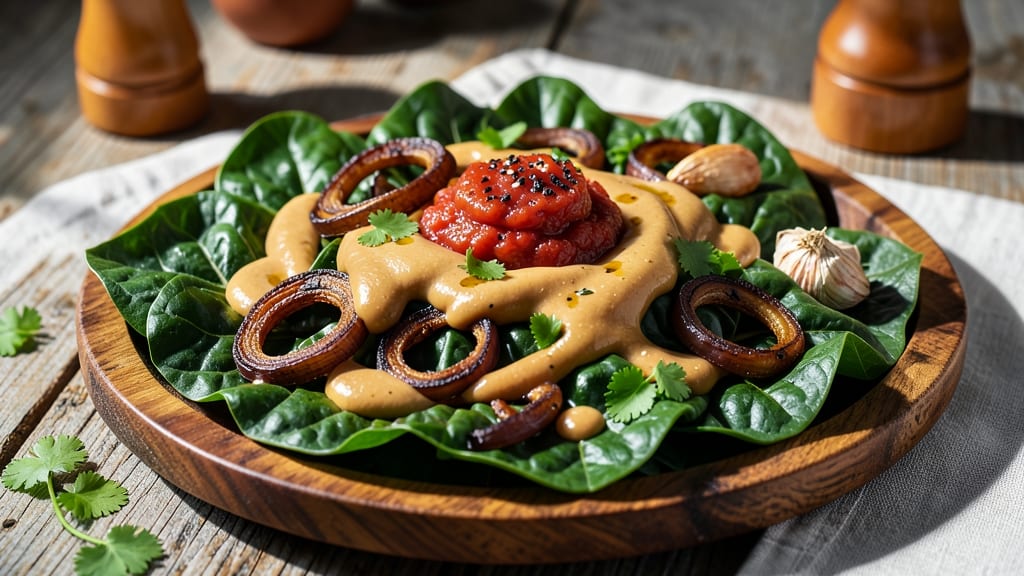
This African sweet potato leaves recipe transforms humble greens into a vibrant, nutty side dish with bold flavors that pair perfectly with rice or ugali. 🌱 The secret lies in balancing earthy sweet potatoes with aromatic onions, garlic, and a touch of peanut butter for that signature West African zing.
My version stays true to traditional methods while simplifying the process for home cooks—no complicated techniques required, just fresh ingredients and patience. The cooking process is straightforward: wilt the leaves in a hot pan with onions and garlic, then simmer until tender.
Adding a splash of tomato paste and a spoonful of peanut butter deepens the flavor profile, creating a dish that’s both comforting and complex. The result is a rich, slightly sweet, and nutty side that’s naturally vegetarian but hearty enough to stand alongside grilled meats or fish.
What makes this recipe special is its versatility—it works as a standalone side or a base for stews. The peanut butter adds a creamy contrast to the leafy texture, while the spices (like cayenne or curry) let you tailor the heat to your preference.
It’s the kind of dish that feels like a hug in a bowl, especially when served with warm, fluffy rice or a soft ugali. For those new to African greens, don’t be intimidated by the leaves—just wash them thoroughly and chop them finely.
The key to success is low-and-slow cooking, which allows the flavors to meld and the greens to soften just enough to be tender. Let’s get cooking!
Ingredients for sweet potato leaves african
Fresh greens, aromatic spices, and a creamy peanut twist create this vibrant African-inspired side dish.
| Ingredient | Amount | Notes |
|---|---|---|
| Sweet Potato Leaves 🌿 | 10 oz | Fresh, stems removed, chopped |
| Yellow Onion 🧅 | 1 whole | Medium size, diced |
| Garlic Cloves 🧄 | 4 cloves | Peeled, minced |
| Peanut Butter 🥜 | 2 tbsp | Natural, unsweetened |
| Tomato Paste 🍅 | 1 tbsp | Smooth, no sugar added |
| Vegetable Oil 🫒 | 2 tbsp | Light or canola preferred |
| Water 💧 | ½ cup | Room temperature |
| Ground Cayenne Pepper 🌶️ | ¼ tsp | Adjust for heat preference |
| Ground Curry Powder 🌶️ | 1 tsp | Mild or medium heat |
| Salt 🧂 | ½ tsp | Kosher or sea salt |
| Black Pepper 🌶️ | ¼ tsp | Freshly ground preferred |
| Lemon Juice 🍋 | 1 tbsp | Freshly squeezed |
The sweet potato leaves are the star—look for vibrant, dark green leaves with no yellowing or wilt. African or Caribbean markets often carry them fresh, but most grocery stores stock them in the produce section. If you can't find them, collard greens or kale work as a substitute, though the flavor will differ slightly. The peanut butter should be natural and unsweetened—Créole or Skippy Natural are reliable choices. For the spices, Penzeys or local spice shops offer high-quality curry and cayenne, but regular grocery store brands work fine for home cooking. The key to success is using fresh ingredients—wilted leaves or stale spices will make the dish taste flat.
No peanut butter? Almond butter or tahini adds a similar richness, though the flavor will shift slightly. Short on tomato paste? Fresh diced tomatoes or a splash of tomato juice will work in a pinch, but the paste gives that concentrated umami depth. The cayenne can be omitted entirely if you prefer a milder dish, or swap it for smoked paprika for a different flavor profile. If you're using kale or collards, add an extra tablespoon of water since these greens tend to be tougher. The lemon juice is optional but brightens the dish—freshly squeezed is best, but bottled works if you're in a hurry.
Sweet potato leaves keep for 3-4 days in the fridge, wrapped in a damp towel. The cooked dish reheats beautifully—just add a splash of water to prevent drying out. Portion into containers for easy lunches or leftovers. For best flavor, serve within 2 days of cooking, though it will keep for 4-5 days refrigerated. Freezing isn't recommended as the texture becomes mushy. The spices and peanut butter can be stored at room temperature for up to 6 months in airtight containers, away from light and heat.
Why You'll Love This Recipe
- Here’s what sold me: that first spoonful of peanut butter doesn’t just add richness—it transforms the dish. The nutty depth cuts through the earthy greens, while the tomato paste gives it a tangy kick. It’s the kind of flavor combo that makes you pause mid-bite.
- I’ll be real: peanut butter and tomato paste are my budget cheats. They turn a handful of greens into a meal that feeds four for under $3. Plus, the leftovers? They actually improve overnight—more flavorful, never soggy. That’s efficiency.
Step-by-step instructions for sweet potato leaves African recipe
Transform humble greens into a rich, aromatic dish with this West African-inspired method.
🍳 Step 1: Sauté Onion and Garlic for Flavor Foundation
Heat the 2 tablespoons vegetable oil in a large skillet over medium heat. Add the 1 whole yellow onion and cook for 5-6 minutes until softened and translucent. You'll notice the onions release moisture and begin to caramelize slightly at the edges—that's your signal they're ready for the next step.
Lower the heat to medium-low and add the 4 cloves minced garlic. Cook for 30 seconds until fragrant—this prevents the garlic from burning while infusing its aromatic oils into the oil. The mixture should smell sweet and nutty, not acrid. If it starts to darken too quickly, reduce the heat immediately to maintain that delicate flavor balance.
👨🍳 Step 2: Build the Peanut-Curry Base
Stir in the 1 tablespoon tomato paste and cook for 1 minute until it darkens slightly and blends completely with the onions and garlic. This creates a rich, umami foundation for your dish. Then add the 2 tablespoons peanut butter, 1 teaspoon ground curry powder, 0.5 teaspoon salt, and 0.25 teaspoon black pepper. Stir vigorously for 2 minutes until the peanut butter melts and incorporates smoothly.
Here's where the magic happens: the peanut butter should create a glossy, velvety coating on the vegetables. If it looks too thick, add 1-2 tablespoons of the 0.5 cup water to loosen it. The sauce should be thick enough to coat the back of a spoon but still flow easily. This balance ensures the greens will absorb flavor without becoming watery.
🥘 Step 3: Cook the Sweet Potato Leaves
Add the 10 oz chopped sweet potato leaves to the skillet and stir to coat them evenly with the peanut-curry mixture. Pour in the remaining 0.5 cup water and bring to a gentle simmer. Cover with a lid and cook for 10-12 minutes over medium-low heat until the leaves are tender but still vibrant green. You'll know they're done when they collapse slightly when pressed with a spoon but still retain their shape.
During this time, stir occasionally to prevent sticking. The leaves should absorb the rich peanut sauce while maintaining their natural texture. If the mixture looks too dry before the leaves are tender, add another 1-2 tablespoons water. The leaves should be wilted but not mushy—they should hold their own against the robust peanut-curry sauce.
🔥 Step 4: Finish with Cayenne and Lemon Brightness
Remove the skillet from heat and stir in the 0.25 teaspoon ground cayenne pepper and 1 tablespoon lemon juice. The cayenne adds a subtle heat that cuts through the richness of the peanut butter, while the lemon juice brightens the entire dish. Taste and adjust seasoning if needed—you might want to add a pinch more salt or cayenne to your preference.
Let the dish sit off heat for 2-3 minutes to allow the flavors to meld completely. The lemon juice will help distribute the peanut oil throughout the leaves, creating a cohesive texture. The finished dish should have a perfect balance: tender greens with a glossy, aromatic peanut-curry sauce that's neither too sweet nor too spicy. Serve immediately with warm rice or crusty bread to soak up every last bit of flavor.
Pro Tips For Making Sweet Potato Leaves African
- Wilt Leaves Properly: Sweet potato leaves need a good sweat—cover the pot for 5 minutes after adding water, then uncover and let the steam escape. This collapses them just enough to soften without turning them to mush (yes, even if you’re impatient like me).
- Toast Peanut Butter: Skip the raw peanut butter—heat it with the onions and garlic until it’s just golden, not brown. That toasted nutty aroma cuts through the earthy greens and makes the sauce sing (I learned this the hard way after a bland batch).
- Sear the Onion Base: Cook the onions until they’re deep amber, not just translucent. This builds flavor that fights the greens’ bitterness—low and slow for 10 minutes, stirring occasionally. (Your future self will notice the difference.)
- Balance the Paste: Use tomato paste sparingly—start with 1 tablespoon, then adjust. Too much turns the dish into a thick, sweet sludge; too little leaves it flat. Taste as you go (yes, even if it’s messy).
Troubleshooting this recipe
Leaves Too Tough
If your sweet potato leaves are still tough after cooking, you likely didn’t cook them long enough or used too much water. For tender results, simmer them uncovered for an extra 2-3 minutes to concentrate flavors and soften the texture.
I find 12-15 minutes total works best for 10 oz of leaves—stir occasionally to prevent sticking. If using collard greens or kale, add 1 extra tablespoon of water and simmer 5 minutes longer. 💫
Peanut Butter Separating
The peanut butter may separate if the sauce gets too thin or if you add water too quickly. To fix this, reduce the heat to low and stir continuously for 1-2 minutes while adding 1 teaspoon at a time of the 0.5 cup water.
For a smoother texture, mix the peanut butter with 1 tablespoon of warm water before adding it to the pan. If it still separates, stir in ½ teaspoon of cornstarch mixed with 1 teaspoon water to thicken the sauce. 🥜
Sauce Too Thin
A thin sauce usually means too much water was added or the leaves released extra moisture. If this happens, remove the skillet from heat and let it sit for 2 minutes to thicken naturally.
For an immediate fix, stir in ½ teaspoon of cornstarch mixed with 1 teaspoon water and cook for 1 more minute. Alternatively, mash 1-2 cooked leaves into the sauce to absorb excess liquid.
Always taste as you go—adjusting heat or stirring more vigorously can also help thicken the sauce. ✨
Burnt Onions or Garlic
Burnt onions or garlic happen when the heat is too high or the pan isn’t wide enough. To prevent this, use medium heat and spread the onions evenly in the pan.
If they start to brown too quickly, reduce the heat to medium-low and cover the pan for 1 minute to steam them gently. For garlic, add it after the onions are translucent and cook for no more than 30 seconds.
If already burnt, remove the pan from heat and scrape out the burnt bits before continuing. 🔥
Leaves Turning Mushy
Mushy leaves result from overcooking or too much liquid. If this happens, check the heat—medium-low is ideal. For a quick fix, stir in 1 tablespoon of peanut butter to bind the leaves and cook for 1-2 minutes longer to thicken the sauce.
If the leaves are already mushy, remove them from the pan, drain excess liquid, and return them to the skillet to crisp slightly over high heat for 30 seconds. Serve immediately for the best texture. 💡
Lack of Flavor
If your dish lacks depth, the spices or peanut butter might not have melded enough. To boost flavor, increase the tomato paste to 2 tablespoons and cook it longer (2 minutes) to deepen its umami.
For extra richness, stir in 1 teaspoon of honey or 1 tablespoon of coconut milk at the end. If the peanut butter taste is too strong, add ½ teaspoon of smoked paprika or 1 extra garlic clove to balance it.
Always taste as you go—seasoning can be adjusted at the end. 🌶️
Nutrition facts
Frequently asked questions
What's the best way to prepare sweet potato leaves if I can't find fresh ones?
If fresh sweet potato leaves are unavailable, look for frozen leaves in African or Caribbean markets. For substitutes, use collard greens or kale—just chop them finely and add 1 extra tablespoon of water since they're tougher. For a closer flavor, try spinach or Swiss chard, though the texture will differ slightly.
Can I make this recipe without peanut butter?
Swap the peanut butter for almond butter or tahini for a similar richness. For a traditional African touch, try shea butter (1 tbsp) or coconut milk (2 tbsp) instead. The dish will still taste delicious—just adjust the heat level if using coconut milk, as it's naturally milder.
How do I adjust the spice level for kids or sensitive eaters?
Reduce or omit the cayenne pepper entirely—it's the main heat source. For a milder kick, replace it with smoked paprika (½ tsp) or ginger (½ tsp). Always taste as you go! The peanut butter and curry powder already add depth, so the dish will still be flavorful without heat.
What are the best pairing options for this dish?
This rich, nutty side pairs perfectly with steamed white rice, ugali, or fufu for a traditional African meal. For protein, serve with grilled chicken, fish, or plant-based patties. The tangy lemon brightness also complements crusty bread—great for soaking up the peanut-curry sauce!
How long can I store leftovers, and how do I reheat?
Store leftovers in an airtight container in the fridge for 3-4 days. To reheat, add 1-2 tablespoons of water to the pan and warm over low heat for 3-5 minutes, stirring occasionally. Avoid microwaving—it can make the leaves soggy. For best texture, reheat gently and serve immediately.