
Side Dishes
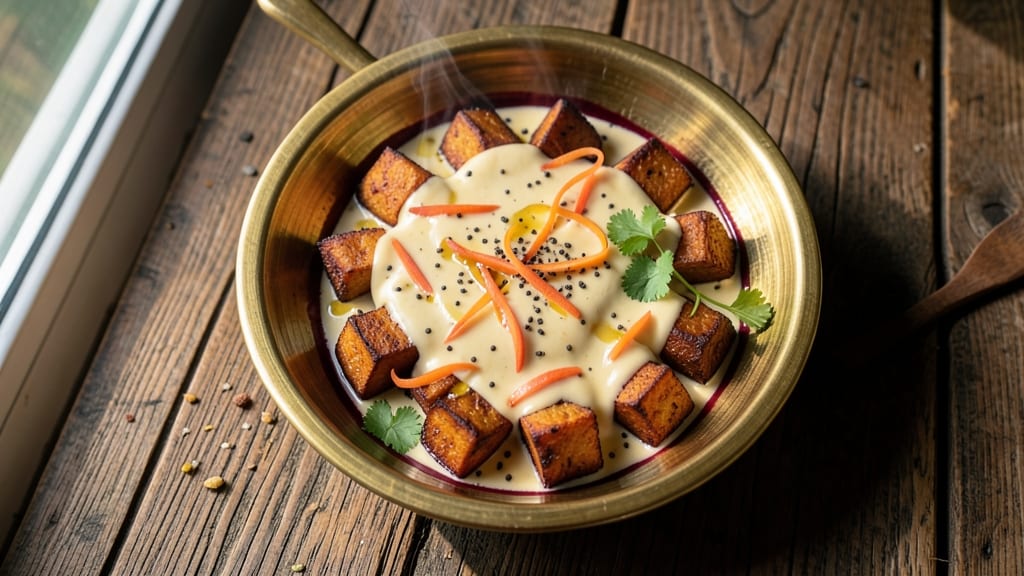
This Marathi sweet potato recipe transforms humble shakarkandi into a fragrant, coconut-infused curry with a tangy tamarind kick—just like my grandmother used to make. The secret lies in slow-cooked spices that develop deep, earthy notes while keeping the sweet potatoes tender and caramelized at the edges.
What makes this dish special is how it balances sweetness from the potatoes with the bright acidity of tamarind, creating a harmony that's both comforting and complex.
The recipe begins with tempering whole spices in coconut oil—a classic Marathi technique that infuses the dish with aromatic warmth. Mustard seeds pop, cumin sizzles, and the coconut milk creates a velvety base that clings to every forkful.
Unlike many sweet potato dishes that rely on heavy cream, this version uses coconut milk for a lighter texture while maintaining rich, satisfying depth. The tamarind paste adds that signature tang that cuts through the sweetness, making each bite balanced and vibrant.
By the time you serve this curry, you'll have a dish that's hearty enough to stand alongside bhakri or steamed rice, yet light enough for a quick weeknight meal. The spices mellow beautifully over time, so the flavors deepen as you let it sit—a testament to traditional Marathi cooking methods.
This isn't just a side dish; it's a taste of home, packed with the kind of warmth that makes every spoonful feel like a hug.
Perfect for family gatherings or solo comfort meals, this recipe scales effortlessly and reheats beautifully. The key to success is patience—allowing the spices to bloom and the tamarind to meld with the coconut milk.
Trust me, the effort is worth it when you taste that perfect balance of sweet, spicy, and tangy. Let's get cooking!
Ingredients for sweet potato marathi
Sweet potatoes, coconut milk, and tamarind create this fragrant Marathi curry with just the right tangy kick.
| Ingredient | Amount | Notes |
|---|---|---|
| Sweet Potatoes 🍠 | 2 lb | Medium-sized, peeled and cubed |
| Coconut Milk 🥥 | 1 can | Full-fat, 13.5 oz can |
| Tamarind Paste 🍈 | ¼ cup | Adjust for tartness preference |
| Coconut Oil 🫒 | ¼ cup | For tempering spices |
| Mustard Seeds 🌿 | 1 tbsp | Whole, for tempering |
| Fresh Ginger 🧅 | ½ inch | Fixed: 2-inch piece, peeled and grated |
| Cumin Seeds 🌶️ | 1 tbsp | Whole, toasted lightly |
| Green Chilies 🌶️ | 2 whole | Slit lengthwise, seeds removed |
| Turmeric Powder 🌿 | ½ tsp | Freshly ground preferred |
| Coriander Powder 🌿 | 1 tbsp | Freshly ground for best flavor |
| Garam Masala 🌶️ | 1 tsp | For finishing touch |
| Salt 🧂 | 1 tsp | Adjust to taste |
| Fresh Cilantro 🌿 | ¼ cup | Chopped, for garnish |
| Lemon Juice 🍋 | 1 tbsp | Freshly squeezed |
The sweet potatoes are the star here—look for vibrant orange ones at Indian grocery stores or the produce section. Costco or local Asian markets usually have the best selection. Tamarind paste can be tricky to find, but Trader Joe's carries it, or you can make your own by soaking tamarind pods. For the coconut milk, full-fat is a must—it gives that rich, velvety texture. The ginger should be fresh and aromatic; if it smells like nothing, toss it. The spices? Penzeys or bulk bins are your friends for the freshest cumin and coriander—both make a huge difference in flavor.
No tamarind paste? Lemon juice plus a pinch of sugar gets you close, though it won’t be identical. Running out of mustard seeds? Substitute with 1/2 tsp ground mustard seed, but the tempering won’t have that same pop. For heat, red chili powder works in a pinch, but fresh green chilies give that bright, fresh kick. The coconut oil must be virgin and unrefined—it’s what carries those spice flavors. If you can’t find garam masala, mix cinnamon, cardamom, and cloves for a DIY version. The cilantro is optional but adds that fresh finish—skip it if you’re not a fan.
This curry tastes even better the next day—let it sit overnight for the flavors to meld. Keeps for 4-5 days in the fridge, and freezes beautifully for up to 3 months. I always make a double batch because it disappears fast. Reheat gently on the stove with a splash of water or coconut milk to keep it creamy. Serve with steamed rice or bhakri for the full Marathi experience.
Why You'll Love This Recipe
- One-Pot Magic: I swear by this dish when I’m too tired to scrub pots. The sweet potatoes roast in coconut oil while the tamarind and coconut milk simmer in the same pan—no extra dishes, just rich, sticky goodness that clings to every bite.
- Tamarind Tang Magic: That first spoonful of tamarind paste might make you pause—really?—but trust me. It cuts through the sweetness of the potatoes and coconut milk like a bright, citrusy whisper, leaving you with a balance that’s dangerously addictive. (Yes, even on a Tuesday night.)
- Leftover Goldmine: This recipe actually tastes better the next day. The flavors meld into this deep, caramelized harmony, and it reheats like a dream. I’ve fed it to skeptical roommates and my picky mom—both devoured seconds.
- Budget Bright Spot: Sweet potatoes and coconut milk stretch this dish into a full meal for four (or two very hungry people). Mustard seeds add that tiny, satisfying pop of texture without breaking the bank, and the tamarind? A little goes a long way. My wallet thanks me every time.
Step-by-step instructions for spiced coconut sweet potato curry
Let's create this aromatic Marathi-inspired curry with its perfect balance of sweet, spicy, and tangy flavors.
Prepare the Sweet Potatoes and Tempering Spices
First, peel and cut the 2 lb sweet potatoes into 1-inch cubes - medium-sized pieces will cook evenly without turning to mush. Set them aside. In a small bowl, mix together 0.5 tsp turmeric powder, 1 tbsp coriander powder, 1 tsp salt, and 1 tbsp garam masala. This spice blend forms the flavor foundation of our curry.
In a separate pan, heat 0.25 cup coconut oil over medium heat. Add 1 tbsp mustard seeds and 1 tbsp cumin seeds. Let them sizzle for 30 seconds until they begin to pop and release their aroma - this is your signal they're ready. Immediately add the 0.5-inch grated fresh ginger and 2 slit green chilies. Sauté for 1 minute until the raw ginger smell disappears and the chilies soften slightly. Pour this fragrant tempering into a large bowl - we'll use it shortly.
Cook the Sweet Potatoes Until Tender
In a large, heavy-bottomed pot, combine the sweet potatoes with the spice blend you prepared earlier. Add 1 can coconut milk and 0.25 cup tamarind paste, stirring well to coat the potatoes completely. The tamarind paste will give that signature tangy twist we're aiming for.
Bring the mixture to a gentle boil over medium-high heat, then reduce to medium-low heat. Cover and simmer for 20-25 minutes, stirring occasionally, until the sweet potatoes are fork-tender with just a slight bite remaining. You'll know they're ready when they pierce easily but still hold their shape - this prevents them from turning mushy. The coconut milk should have reduced slightly, creating a rich, velvety sauce.
Finish with Tempering and Fresh Herbs
Once the sweet potatoes are tender, stir in the tempering mixture you prepared earlier. The mustard seeds and cumin will add another layer of depth to the dish. Cook uncovered for 5-7 minutes over medium heat, allowing the liquid to reduce slightly and the flavors to meld together. You should see the sauce thicken just enough to coat the back of a spoon.
Finally, stir in 0.25 cup chopped fresh cilantro and 1 tbsp freshly squeezed lemon juice. The cilantro brightens the dish while the lemon juice cuts through the richness of the coconut milk. Taste and adjust the seasoning if needed - you might want to add a pinch more salt or a touch more tamarind paste for the perfect balance of sweet, spicy, and tangy flavors. Let the curry sit off the heat for 5 minutes before serving to allow all the flavors to truly meld together.
Pro Tips For Making Sweet Potato Marathi
- Boil Until Fork-Tender: Sweet potatoes should give just slightly when pierced with a fork—no mushy centers, no rock-hard cores. I learned this the hard way after serving a batch where the middle was still raw. Medium-high heat and 15-20 minutes (depending on size) is your sweet spot. Drain immediately and shock them in cold water to stop cooking—this keeps them from turning to mush later.
- Toast Mustard Seeds Low: Crank the heat to medium-low for the mustard seeds—high heat burns them before they pop. I was skeptical until I tried it; now I swear by the gentle sizzle. Let them dance for 30 seconds before adding curry leaves or onions, or they’ll turn bitter before you even get to the tamarind.
- Soften Tamarind First: Skip the clumpy mess by soaking tamarind paste in warm water for 5 minutes before using. A spoonful of water thins it out just enough to blend smoothly into the coconut milk. My grandmother swore by this, and she was right: the sauce stays silky, not grainy.
- Use Coconut Oil Early: Add coconut oil to the pan before the mustard seeds, not after. It coats the bottom and prevents the tamarind-coconut sauce from sticking like glue when you pour it in later. Yes, even if you’re impatient like me—trust the process.
Storing and reheating this recipe
Fridge Storage Tips
Let your curry cool completely before transferring to airtight glass containers—I prefer Pyrex with snap-on lids for easy reheating. Store in the fridge at 40°F or below for up to 4-5 days.
The flavors actually deepen overnight as the spices meld with the coconut milk, creating that rich, complex taste. 🥣
Freezer-Friendly Method
For longer storage, freeze portions in quart-sized freezer bags—leave 1 inch of headspace to prevent expansion cracks. Thaw overnight in the fridge, then reheat gently.
This curry maintains its texture beautifully for 3 months in the freezer, making it perfect for meal prep. Label bags with the date to track freshness!
Stovetop Reheating
My go-to method is reheating on the stove: transfer curry to a heavy-bottomed pot and add 2-3 tablespoons of water or coconut milk to prevent sticking. Heat over medium-low for 8-10 minutes, stirring occasionally, until steaming. The coconut milk will help restore that creamy consistency. 🔥
Microwave Shortcut
For quick reheating, cover a portion with a damp paper towel and microwave on 50% power for 1-2 minutes. Stir, then continue in 30-second bursts until heated through. Avoid high power—it can make the sauce watery. Add a splash of coconut milk if needed to revive the texture.
Serving After Reheating
After reheating, taste and adjust seasoning—curries often need a pinch of salt or a squeeze of lemon juice to brighten flavors. Garnish with fresh cilantro and a drizzle of coconut oil for that restaurant-quality finish. Serve with steamed rice or bhakri for the full Marathi experience! ✨
Nutrition facts
Frequently asked questions
Can I substitute regular potatoes for sweet potatoes in this Marathi recipe?
While you can use regular potatoes, the flavor and texture will differ significantly. Sweet potatoes add natural sweetness and a creamy consistency that pairs beautifully with the coconut and tamarind. For a closer match, try orange-fleshed potatoes, but they won't have the same caramelized edge when cooked. The dish will still taste good, but the traditional Marathi balance of sweet-tangy-spicy will be less pronounced.
What's the best way to make tamarind paste if I can't find it in stores?
Soak 2 tbsp tamarind pulp (or 1 tbsp tamarind pods) in 0.5 cup warm water for 15-20 minutes until it softens. Strain through a fine sieve or cheesecloth to remove fibers, then adjust water to reach a thick paste consistency. For extra tang, add 1 tsp lemon juice to the mixture. This homemade version will have a more authentic depth than store-bought substitutes.
How can I adjust the spice level for kids or sensitive palates?
Reduce the green chilies to 1 whole chili or remove seeds completely. For extra mildness, omit the mustard seeds during tempering and use 1/2 tsp ground cumin instead. The coconut milk and tamarind will still provide the signature flavors without the heat. Always taste as you go—you can add more spices later, but you can't remove them once added.
Can I make this curry in an Instant Pot or pressure cooker?
Sauté the spices in 0.25 cup coconut oil as directed, then add sweet potatoes, coconut milk, tamarind, and spices. Seal the lid and cook on high pressure for 8 minutes, then quick-release. Finish with the tempering mixture and fresh herbs. The pressure cooker reduces cooking time to about 15 minutes total while keeping the sweet potatoes perfectly tender.
What's the traditional Marathi way to serve this sweet potato dish?
This curry is traditionally served with bhakri (a millet flatbread) or steamed white rice to complement its rich coconut-tamarind flavors. For a complete Maharashtrian meal, add a side of sambar (lentil stew) and a simple khatta meetha (tangy-sweet chutney). The contrast of bhakri's earthy texture with the creamy curry creates a satisfying balance that's very much in the spirit of Marathi home cooking.