
Side Dishes
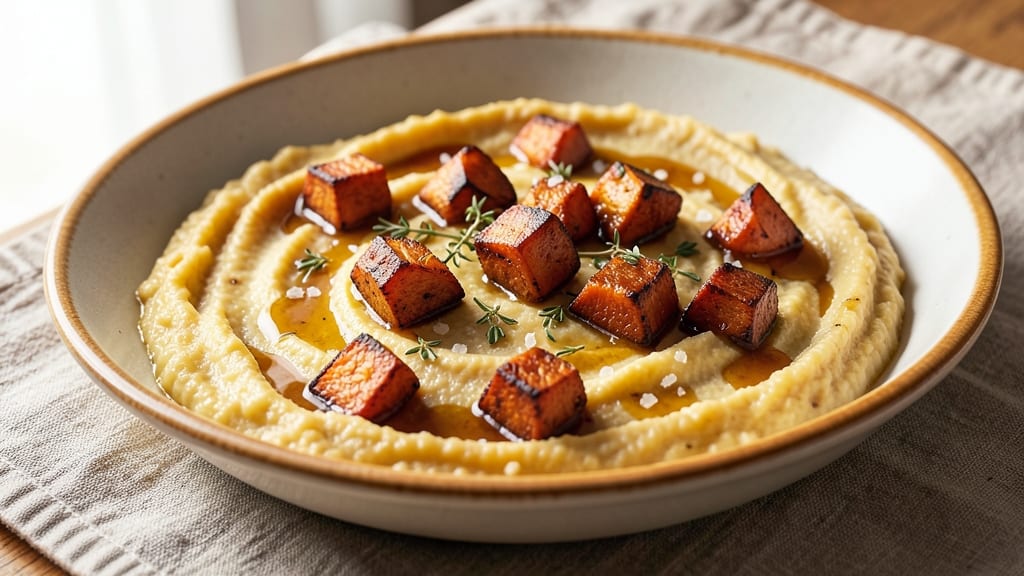
This sweet potato polenta recipe transforms humble ingredients into a restaurant-quality side dish with crispy golden edges and a creamy interior. The secret lies in roasting sweet potatoes until caramelized, then blending them into polenta for a texture that's both hearty and velvety.
I developed this recipe after realizing how often store-bought polenta fell short—too gummy or lacking depth. This version delivers perfect balance every time.
The process is surprisingly straightforward: roast sweet potatoes until tender and caramelized, then simmer polenta in broth until thick and creamy. The roasted sweet potatoes add natural sweetness and complex flavor, while the crispy top comes from a quick broil at the end.
This dish works as a vegetarian main or elegant side, especially when paired with grilled meats or roasted vegetables. The versatility makes it perfect for weeknight dinners or special occasions.
What makes this recipe stand out is the textural contrast—crispy on top, creamy inside, with sweet potatoes adding natural sweetness that complements savory flavors. The method ensures no lumps, and the result is a dish that feels both comforting and refined.
Whether you're serving it as a side or making it the star, this polenta delivers restaurant-quality results with minimal effort. Let's get started!
For extra richness, stir in a pat of butter or olive oil at the end, or keep it dairy-free for a plant-based option. Garnish with fresh herbs, toasted nuts, or a sprinkle of smoked paprika for added depth.
The possibilities are endless, but the foundation remains the same: perfectly balanced sweet potato polenta that's crispy on top and creamy within.
Ingredients for sweet potato polenta
Restaurant-quality polenta starts with these simple yet transformative ingredients.
| Ingredient | Amount | Notes |
|---|---|---|
| Sweet Potatoes 🍠 | 2 lbs | Medium, peeled and cubed |
| Polenta (Cornmeal) 🌾 | 1 cup | Fine grind preferred |
| Vegetable Broth 💧 | 4 cups | Low-sodium preferred |
| Extra-Virgin Olive Oil 🫒 | ½ cup | For roasting and finishing |
| Unsalted Butter 🧈 | 2 tbsp | Cold, for crispy top |
| Salt 🧂 | 1 ½ tsp | Kosher or sea salt |
| Black Pepper 🌶️ | ½ tsp | Freshly ground |
| Garlic Cloves 🧄 | 3 cloves | Minced for flavor |
| Smoked Paprika 🌶️ | 1 tsp | For garnish and depth |
| Fresh Thyme Leaves 🌿 | ¼ cup | Chopped, for garnish |
| Pecans 🥜 | ¼ cup | Toasted, for crunch |
Sweet potatoes are the heart of this dish—choose vibrant orange ones with smooth skin for the best flavor. Trader Joe's or Whole Foods carry the sweetest varieties, but any medium-sized sweet potato works. Peeled and cubed, they roast until caramelized, adding natural sweetness that balances the earthy polenta. For extra richness, some cooks add a touch of maple syrup to the roasting oil, but the sweet potatoes' natural sugars are usually enough. If you're short on time, pre-cut sweet potatoes from the produce section save 10 minutes of prep work.
No vegetable broth? Chicken-free bouillon cubes dissolved in water work perfectly, or even water with a pinch of miso paste for umami depth. The polenta should be fine grind—cornmeal labeled 'polenta' at Italian markets is ideal, but regular fine cornmeal works in a pinch. Want to skip the butter? Extra-virgin olive oil adds richness without dairy. For the crispy top, cold butter is key—microwave it 20 seconds to soften slightly before spreading. The smoked paprika adds warmth; if you can't find it, regular paprika with a pinch of liquid smoke mimics the effect.
Roasted sweet potatoes keep 3 days in the fridge, so make extra for quick meals. The cooked polenta reheats beautifully—just add a splash of broth or water and stir. For make-ahead convenience, portion into containers with a layer of butter on top. Reheat covered to preserve moisture. Garnishes like toasted pecans or fresh thyme stay fresh 2 days in the fridge, so store them separately until ready to serve.
Why You'll Love This Recipe
- One-Pot Magic: I swear by this recipe because it’s literally one pot—no chopping, no peeling, no fuss. Just roast the sweet potatoes until tender, blend them into the simmering polenta, and let the broth and butter work their magic. The kind of meal that makes you question why you ever cooked anything else.
- Sweet & Savory Balance: That caramelized sweet potato meets the earthy polenta? It’s a match made in comfort-food heaven. The olive oil and butter add richness without overpowering, and honestly? The first bite makes you forget it’s even healthy.
- Weeknight to Weekend: I make this for lazy Tuesday dinners and Sunday brunches—same recipe, different vibes. Serve it as a side with roasted chicken or pile it high with sautéed greens and crispy bacon. (Yes, even on a Tuesday night.)
- Budget-Friendly Leftovers: Polenta stretches forever, and sweet potatoes are dirt cheap. A single batch feeds my family for days—reheat with a splash of broth and butter, and it’s just as good the third time around. My wallet and my taste buds thank me.
Step-by-step instructions for sweet potato polenta
Achieve the perfect balance of crispy edges and velvety interior with this method.
Roast Sweet Potatoes Until Tender
Preheat your oven to 400°F and line a baking sheet with parchment paper. Toss the 2 lbs of peeled and cubed sweet potatoes with 0.5 cup of extra-virgin olive oil, 1 tsp of salt, and 0.25 tsp of black pepper. Spread them in a single layer, ensuring they don't overlap.
Roast for 25-30 minutes until the sweet potatoes are fork-tender with slightly crispy edges. You'll know they're done when they yield easily to a fork but still hold their shape. This step develops their natural sweetness and ensures they blend seamlessly into the polenta.
Cook Polenta to Creamy Perfection
While the sweet potatoes roast, bring the 4 cups of vegetable broth to a boil in a medium saucepan over medium-high heat. Gradually whisk in the 1 cup of polenta (cornmeal), reducing the heat to medium-low immediately to prevent lumps.
Cook for 15-20 minutes, stirring frequently with a wooden spoon, until the polenta thickens to a creamy consistency. It should coat the back of the spoon but still be slightly loose—this texture ensures the sweet potatoes blend smoothly. If it thickens too quickly, add a splash of hot broth to loosen it.
Blend Roasted Sweet Potatoes Into Polenta
Remove the roasted sweet potatoes from the oven and let them cool slightly. Transfer them to a food processor and pulse until they reach a smooth, chunky puree—you want some texture, not a completely smooth paste. This ensures the polenta retains its body while incorporating the sweet potatoes' flavor.
Return the polenta to the stove and stir in the sweet potato puree. Add the minced 3 cloves of garlic, 1 tsp of smoked paprika, and remaining 0.25 tsp of black pepper. Simmer for an additional 5 minutes to let the flavors meld. The mixture should be thick but still spoonable—adjust with a little more broth if needed.
Create the Crispy Butter Topping
Reduce the heat to low and stir in the 2 tbsp of cold unsalted butter until it melts completely. The butter should coat the polenta evenly, creating a glossy finish. This step is crucial for achieving that signature crispy top.
To finish, transfer the polenta to a serving dish and spread it into an even layer. Sprinkle the 0.25 cup of toasted pecans and 0.25 cup of chopped fresh thyme leaves evenly over the top. Place the dish under a broiler for 2-3 minutes until the butter melts and the pecans turn golden brown. Watch closely to avoid burning.
Serve Immediately for Maximum Enjoyment
Remove the polenta from the broiler and let it rest for 1-2 minutes to allow the top to set slightly. The contrast between the crispy pecan-thyme crust and the creamy sweet potato polenta is what makes this dish exceptional.
Serve warm, garnished with an extra sprinkle of smoked paprika if desired. The polenta should be rich, slightly sweet, and perfectly balanced in texture—creamy in the center with a delightful crunch on top. Pair it with a simple green salad or roasted vegetables for a complete meal.
Pro Tips For Making Sweet Potato Polenta
- Peel and Cube Evenly: Sweet potatoes vary in thickness—cut them into ½-inch cubes before peeling to avoid uneven cooking. I learned this the hard way when one batch turned mushy while others stayed firm.
- Start with Cold Broth: Add cold vegetable broth to the polenta slowly while stirring—hot broth dumps all at once makes lumps. Sounds weird, but it works: the gradual heat keeps the texture smooth every time.
- Don’t Stir the Polenta: Once the polenta reaches a creamy consistency, resist the urge to keep stirring. Let it sit off the heat for 2 minutes—this is when it thickens properly. I skip this when I’m lazy, and the dish is noticeably grittier.
- Finish with Butter and Oil: Toss in the unsalted butter and a splash of extra-virgin olive oil at the end. The oil keeps it from drying out overnight, while the butter adds richness—this is the thing that matters most for leftovers.
Common mistakes when making this dish
Overcooking Sweet Potatoes
Roasting sweet potatoes until they're mushy is a common mistake that kills the dish's natural sweetness and texture. The goal is fork-tender with slight resistance—about 25-30 minutes at 400°F. Overcooked sweet potatoes lose their vibrant color and become dry, turning your polenta into a bland, gummy mess.
I've learned to check doneness by piercing with a fork: it should slide in easily but still hold its shape. If they're already too soft, save them for smoothies instead. 🍠
Skipping the Puree Texture
Blending roasted sweet potatoes into a completely smooth paste is another rookie error. The magic lies in a chunky puree—just pulse them until you see small, uneven pieces remain. This texture prevents your polenta from becoming gluey while adding delightful pockets of sweet potato flavor.
I recommend using a food processor for 10-15 seconds of pulsing, then stopping to check consistency. If you blend too long, you'll end up with a uniform, flavorless mass.
Ignoring the Butter Temperature
Cold butter is non-negotiable for that coveted crispy top. When you stir in butter that's too warm or melted, it simply dissolves into the polenta without creating the necessary surface tension for browning.
I always microwave my 2 tbsp of unsalted butter for just 20 seconds to soften slightly before spreading it on top—this gives it enough fluidity to melt and crisp while still maintaining structure. Using room-temperature butter will leave you with a sad, greasy puddle instead of golden perfection. 🧈
Broiling Too Long
The broiler is your friend, but it's easy to overdo it. That 2-3 minute broil time is critical—any longer and your pecans will burn while the polenta underneath remains uncooked. Keep a close eye on the dish, especially if you have a powerful broiler.
I like to place the dish on the middle rack and watch for the butter to bubble and turn golden. If you see smoke, pull it out immediately. The top should be crispy but not charred—this balance makes all the difference in the final presentation.
Underseasoning the Broth
Low-sodium vegetable broth is great, but it often lacks depth. If you're using it, be prepared to add extra salt during cooking. I typically taste the broth before adding polenta and adjust with ½ tsp of salt if needed.
The polenta itself should have 1.5 tsp total of salt—don't skip this step! The sweet potatoes' natural sweetness needs that salt to bring out their flavor. Remember, you can always add more salt later, but you can't take it out.
Taste as you go, especially after adding the smoked paprika and garlic.
Stirring Too Aggressively
Polenta is famously finicky about lumps, but aggressive stirring can actually create more problems. Instead of vigorous whisking, use a wooden spoon and stir in gentle, circular motions. This prevents the polenta from breaking down too quickly and keeps the texture smooth.
I've seen many cooks turn their polenta into a gluey disaster by overworking it. Once the polenta starts thickening (after 10 minutes), reduce heat to medium-low and stir only occasionally. Patience is key here—rushing leads to ruined texture. ⏰
Nutrition facts
Frequently asked questions
Can I make this sweet potato polenta dairy-free?
Replace the 2 tbsp butter with 2 tbsp olive oil or vegan butter, and use dairy-free vegetable broth. For extra richness, stir in 1 tbsp nutritional yeast at the end for a cheesy flavor without dairy. The texture will still be creamy, just plant-based.
How do I store leftovers?
Transfer leftovers to an airtight container and refrigerate for up to 4 days. Reheat in a saucepan with a splash of broth or water, stirring until warmed through. For the crispy top, broil for 1-2 minutes after reheating. Freeze portions for up to 3 months—thaw overnight in the fridge before reheating.
What's the best way to serve this as a main dish?
Turn it into a hearty meal by topping with grilled chicken, shrimp, or white beans for protein. Add a dollop of sour cream or avocado and sprinkle with fresh parsley. For a vegan option, serve with roasted chickpeas and tahini drizzle. The creamy texture makes it satisfying on its own for vegetarians.
Can I use regular potatoes instead of sweet potatoes?
Not recommended! Sweet potatoes add natural sweetness and creaminess that regular potatoes lack. If you must substitute, use yams** (similar texture) but expect a less vibrant flavor. The roasted sweet potatoes are key to this recipe's signature taste—stick with them for best results.
Why did my polenta turn out too thick?
This usually happens when you don't stir frequently enough during cooking or use too much polenta. Next time, whisk in the 1 cup polenta gradually while keeping the broth at a gentle simmer. If it thickens too quickly, add 1-2 tbsp hot broth to loosen it. Always taste as you go—it should be creamy but still spoonable.