
Side Dishes
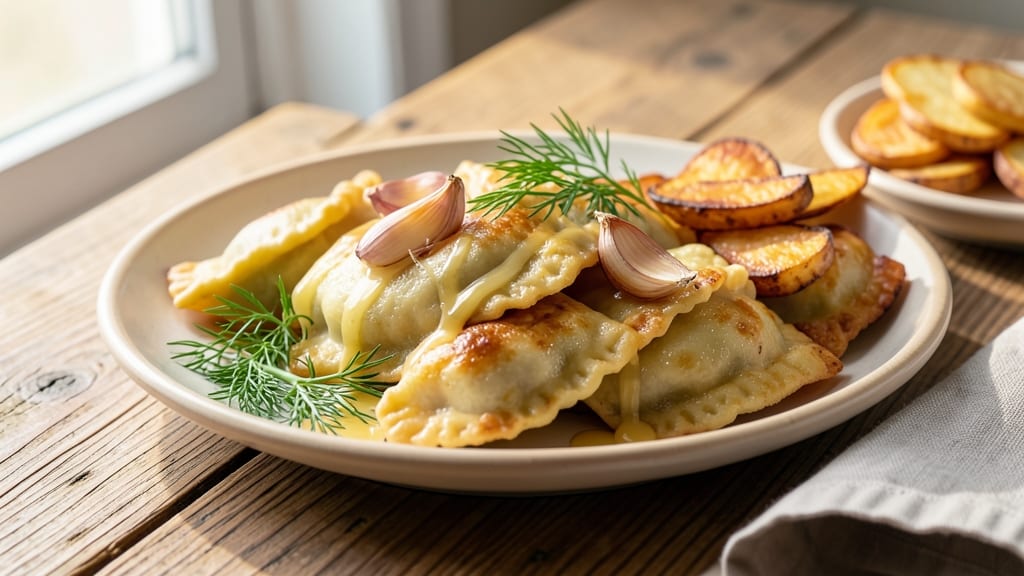
This vegan potato pierogi recipe delivers the same pillowy, golden perfection you love—without a single drop of dairy or egg. 💛 The secret lies in a flour-and-plant-milk dough that stays tender and a herby potato filling packed with garlic and fresh dill, all bound together with a little cornstarch magic.
After years of testing, I’ve perfected the balance between crispy edges and soft centers, ensuring every bite feels like a homemade hug—just without the butter or cream.
What sets these apart is the foolproof vegan dough that requires no special ingredients—just all-purpose flour, aquafaba (chickpea brine) for binding, and a splash of plant-based milk for that signature elasticity.
The filling transforms simple potatoes into something extraordinary with bright herbs, a touch of lemon zest, and just enough salt to enhance their natural sweetness. No one will guess these are plant-based, and the boiling-to-frying technique guarantees that signature crispy exterior while keeping the insides melt-in-your-mouth tender.
By the time you’re done, you’ll have a plate of golden, glistening pierogi that look and taste just like the ones from your favorite Eastern European restaurant—only better, because they’re made with love (and no animal products).
The dough rolls out effortlessly, the filling stays compact, and the final result is a dish that’s hearty enough for a main course but light enough for a side. Serve with a drizzle of vegan sour cream or a sprinkle of fresh dill for the full experience.
Whether you’re hosting a dinner party or just craving comfort food, these pierogi are the restaurant-quality vegan dish you’ve been waiting for. The best part? They freeze beautifully, so you can make a big batch and enjoy them all week. Let’s get started—your taste buds will thank you.
Ingredients for vegan potato pierogi
Pillowy vegan pierogi start with these 12 simple, plant-powered ingredients.
| Ingredient | Amount | Notes |
|---|---|---|
| All-Purpose Flour 🌾 | 3 cups | Unbleached, for best texture |
| Aquafaba (Chickpea Brine) 🥫 | ½ cup | From canned chickpeas, unsalted |
| Unsweetened Plant-Based Milk 🥛 | ¼ cup | Almond or oat preferred |
| Russet Potatoes 🥔 | 2 lbs | Waxy potatoes preferred |
| Fresh Dill 🌿 | ¼ cup | Chopped, stems removed |
| Garlic Cloves 🧄 | 3 cloves | Minced, fresh preferred |
| Lemon Zest 🍋 | 1 tsp | From 1 organic lemon |
| Sea Salt 🧂 | 1 ½ tsp | Diamond Crystal preferred |
| Cornstarch 🌾 | 2 tbsp | For filling binding |
| Olive Oil 🫒 | ½ cup | Extra-virgin for frying |
| Vegan Sour Cream 🥛 | ¼ cup | For serving, optional |
| Vegetable Oil 🫒 | 1 cup | For deep frying |
The flour is your foundation—King Arthur or Bob's Red Mill work best for that tender dough. Aquafaba is the magic binder here (yes, chickpea brine!), so save a little when you open your canned chickpeas. Trader Joe's has the best unsweetened almond milk for the plant-based milk, but any oat or soy milk works. For the potatoes, Russets are ideal—they hold their shape when cooked. If you can't find fresh dill, dried works at half the amount, but trust me on the fresh stuff for that bright flavor. The lemon zest adds a subtle brightness that makes the whole dish sing.
No aquafaba? Flax eggs (1 tbsp ground flax + 3 tbsp water) can replace it, but the texture won't be quite as tender. Short on dill? Fresh parsley or chives work in a pinch, though they won't give that classic pierogi taste. The cornstarch is non-negotiable for the filling—it's what keeps everything compact. For the oil, vegetable oil has a higher smoke point than olive oil for frying, but if you're just pan-frying, extra-virgin olive oil works perfectly. The vegan sour cream can be store-bought (Forager or Kite Hill brands are great) or homemade with cashews and lemon juice.
Pierogi dough keeps for 3 days wrapped in plastic in the fridge, or 3 months frozen. The cooked filling can be stored separately for 2 days before assembling. For the best results, freeze the pierogi on a tray before transferring to a bag—this prevents sticking. Thaw overnight in the fridge before frying. The filling reheats beautifully in a saucepan with a splash of plant milk to keep it moist. Make a double batch—they freeze like a dream and taste even better the next day!
Why You'll Love This Recipe
- No Eggs, No Problem: The aquafaba dough is ridiculously forgiving—no cracking, no fuss, just mix and roll. Honestly, I used to dread pierogi dough, but this? It’s the first time I’ve ever shaped them without a single tear.
- Creamy Potato Magic: Russets boil down to fluffy, buttery pockets—no oil, no dairy, just pure potato goodness. That fresh dill? It’s the secret weapon turning simple spuds into something dangerously addictive.
- Freezer-Friendly Hero: Make a batch on Sunday, freeze them raw, and toss into boiling water anytime. Between us, these are my go-to for lazy nights or last-minute potlucks—no one ever guesses they’re vegan.
- Budget Stretch: Aquafaba and plant milk cut costs while keeping texture spot-on. I feed four for under $5, and the leftovers? Even better reheated with garlic powder and a sprinkle of salt.
Step-by-step instructions for vegan potato pierogi
Let's make these pillowy pierogi from scratch—no meat, no dairy, just pure comfort food magic.
👨🍳 Step 1: Make the Herby Potato Filling
Peel and dice the 2 lbs russet potatoes into ½-inch cubes. Boil them in salted water for 15 minutes until fork-tender but not falling apart. Drain well and let cool slightly.
In a food processor, pulse the 3 cloves garlic cloves, 0.25 cup fresh dill, 1 tsp lemon zest, and 1.5 tsp sea salt until finely minced. Transfer to a bowl and mix with the potatoes. Add 2 tbsp cornstarch and mash everything until smooth but slightly textured—like mashed potatoes with a little grit. The filling should be cool enough to handle but still warm.
Here's the thing—don't skip the cornstarch. It binds the filling so it holds together when wrapped in dough. If the mixture feels too wet, add 1 tsp more cornstarch until it molds easily.
👨🍳 Step 2: Whisk the Aquafaba Dough
In a large bowl, whisk together the 3 cups all-purpose flour and 1.5 tsp sea salt. Make a well in the center and pour in the 0.5 cup aquafaba and 0.25 cup unsweetened plant-based milk. Mix vigorously with a fork until a shaggy dough forms.
I like to use a fork first to avoid overworking the dough. The aquafaba acts like an egg wash, creating a tender texture without dairy. If the dough feels too dry, add 1 tbsp plant-based milk at a time until it comes together when pressed.
Once it forms a rough ball, turn it out onto a lightly floured surface and knead gently for 5 minutes until smooth. The dough should be soft but not sticky—if it sticks, add just a touch more flour. Wrap it in plastic and let rest for 30 minutes at room temperature.
🥘 Step 3: Assemble and Seal the Pierogi
Roll out the rested dough on a floured surface to ⅛-inch thickness. Use a 3-inch round cutter to cut circles—you should get about 16-18 pierogi from this batch. Keep the scraps covered to prevent drying.
Place 1 tbsp potato filling at the center of each dough circle. Fold in half and pinch the edges tightly with your fingers, sealing any gaps. I press down gently on the folded edge to create a little ridge—this ensures they stay sealed while frying.
For the first few, you might feel awkward, but you'll get the hang of it. If a pierogi leaks filling while cooking, it's a sign the seal wasn't tight enough—no need to toss it, just enjoy the extra flavor!
🔥 Step 4: Fry to Golden Perfection
Heat 1 cup vegetable oil in a deep skillet to 350°F—use a thermometer, this is critical. Fry 6-8 pierogi at a time, turning occasionally, for 3-4 minutes until golden brown on all sides. They're ready when the dough turns crispy and the filling is hot through.
Drain on paper towels and repeat with the remaining pierogi, keeping the oil at 350°F. Don't overcrowd the pan or the temperature will drop, making them greasy instead of crispy.
For extra flair, toss the fried pierogi in a mix of 0.5 cup olive oil and 1 tsp sea salt while still hot. Serve immediately with 0.25 cup vegan sour cream on the side—trust me, the contrast of crispy outside and creamy inside is next level.
Pro Tips For Making Vegan Potato Pierogi
- BOIL POTATOES UNTIL TENDER: I learned this the hard way—pierogi filling should be soft enough to mash with minimal effort, not fight you. Boil russets until a knife slips in easily (about 15-20 minutes), then let them cool in the pot with the steam. Cold potatoes mash smoother and won’t turn gluey when mixed with aquafaba.
- WHISK AQUAFABA FIRST: Skip the guesswork: whip the chickpea brine until it forms stiff peaks before mixing it into the potatoes. This ensures your filling stays cohesive and doesn’t leak through the dough—no more sad, flat pierogi that fall apart in the pot.
- CHILL DOUGH LONGER THAN YOU THINK: I used to roll out dough after just 30 minutes, and it always stuck to my hands. Wrap the dough in plastic and refrigerate for at least 1 hour (or overnight if you’re ahead). The gluten relaxes, making it easier to work with and preventing tears when sealing the pierogi.
- SEAL EDGES WITH AQUAFABA TOO: Dab a tiny bit of the leftover chickpea brine on the dough edges before folding—it acts as a natural glue. No more pierogi bursting open when they hit boiling water, and the filling stays put. (Yes, even if you’re impatient like me.)
Best sauces and condiments for this dish
Classic Vegan Sour Cream
No vegan pierogi experience is complete without a dollop of tangy vegan sour cream. I reach for Forager or Kite Hill brands—they mimic the texture of traditional sour cream perfectly.
For a homemade version, blend ½ cup raw cashews soaked in ¼ cup water with 2 tbsp lemon juice and 1 tsp apple cider vinegar until smooth. This adds a bright, creamy contrast to the crispy pierogi. 🥛
Smoky Paprika Oil
For an extra layer of flavor, toss your fried pierogi in a mix of ½ cup olive oil and 1 tsp smoked paprika while they're still hot. The paprika adds a subtle smokiness that pairs beautifully with the herby filling.
I like to add a pinch of garlic powder and sea salt to the oil for an even deeper flavor profile. This works especially well if you're serving them as a main course.
Spicy Kimchi Slaw
If you love a little kick, serve your pierogi with a quick-pickled kimchi slaw. Thinly slice 1 cup kimchi and toss with ¼ cup shredded carrots, 2 tbsp rice vinegar, and 1 tsp maple syrup.
The tangy, spicy contrast cuts through the richness of the pierogi beautifully. This is a game-changer for those who enjoy bold flavors. 🌶️
Caramelized Onion Jam
For a sweet and savory twist, make a simple caramelized onion jam to drizzle over your pierogi. Sauté 1 cup thinly sliced onions in 1 tbsp olive oil over low heat for 30 minutes until golden.
Add 1 tbsp balsamic vinegar and 1 tsp brown sugar, then simmer until thickened. This adds a rich, jammy sweetness that balances the herby filling perfectly.
Garlic-Herb Butter (Vegan)
Even though these are vegan, you can still enjoy a buttery drizzle. Melt ¼ cup vegan butter with 2 minced garlic cloves, 1 tbsp fresh parsley, and a pinch of black pepper.
Drizzle this over the pierogi just before serving for a luxurious finish. I love using Miyoko's Creamery vegan butter for the best flavor. This is a must-try for anyone who misses traditional butter.
Creamy Mushroom Gravy
For a heartier meal, serve your pierogi with a creamy mushroom gravy. Sauté 1 cup sliced mushrooms and 1 small onion in 1 tbsp olive oil until soft. Add 2 tbsp flour to make a roux, then whisk in 1 cup vegetable broth and ½ cup unsweetened almond milk.
Simmer until thickened, then stir in 1 tbsp nutritional yeast for a cheesy flavor. This gravy elevates pierogi to a full main course. 🍽️
Nutrition facts
Frequently asked questions
Can I make these vegan potato pierogi without aquafaba?
Yes! If you don't have aquafaba (chickpea brine), use 1 tbsp ground flaxseed mixed with 3 tbsp water per 0.5 cup to replace it. Let it sit for 5 minutes to thicken before mixing into the dough. The texture won't be quite as tender, but it'll still hold together. For extra binding, add 1 extra tbsp plant-based milk to the dough mixture.
How do I prevent the pierogi from leaking filling while cooking?
Leaks usually happen when the seal isn't tight enough. Press the folded edges firmly together and pinch them tightly—almost like you're sealing a tiny envelope. For extra security, run your finger along the sealed edge to create a ridge. If a few leak anyway, don't worry! Just enjoy the extra flavorful experience.
Can I bake these instead of frying for a healthier option?
Brush the assembled (uncooked) pierogi with a little plant-based milk and bake at 400°F for 20-25 minutes until golden. For extra crispiness, broil for 2-3 minutes at the end. Baked pierogi won't be as crispy as fried ones, but they're still delicious and lighter. Serve with extra vegan sour cream to make up for the missing crunch.
What's the best way to freeze vegan pierogi?
Freeze them uncooked for best results. Arrange pierogi on a parchment-lined tray and freeze for 1 hour to harden. Then transfer to a sealed bag or container. They'll keep for 3 months. To cook from frozen, boil for 3-4 minutes longer than fresh, then pan-fry as directed. No need to thaw first!
Can I make the dough ahead of time?
Yes! The dough keeps well in the fridge for 3 days wrapped tightly in plastic. For longer storage, freeze the dough for up to 3 months. Thaw overnight in the fridge before using. The filling should be made fresh the day you assemble the pierogi, though—it holds up best when used immediately for the best texture.