
Side Dishes
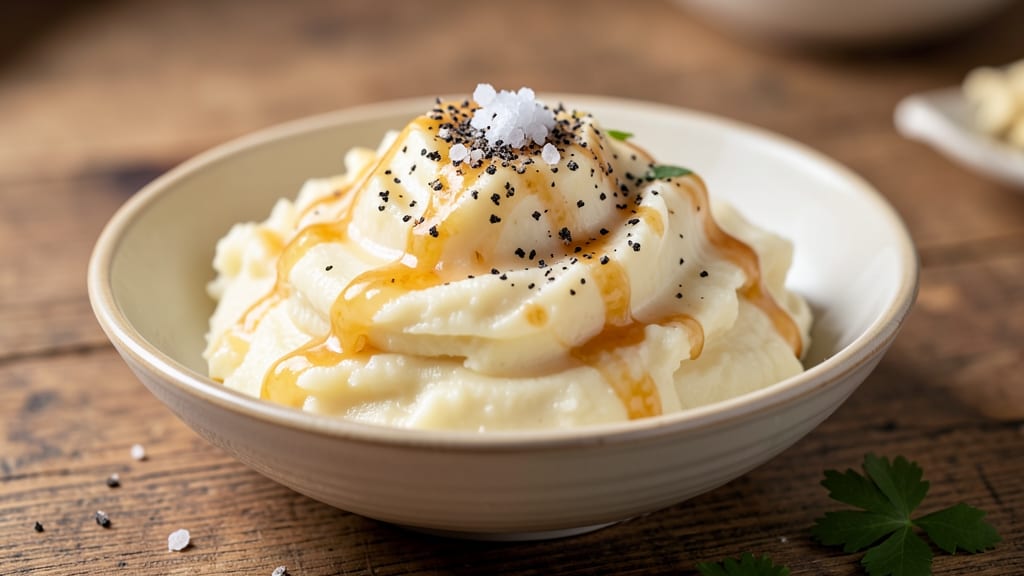
This 2 serving mashed potato recipe delivers restaurant-quality creaminess with just 5 simple ingredients and 20 minutes of hands-on time. The secret lies in perfectly cooked Yukon Gold potatoes—boiled until tender yet still holding their shape—then mashed to a velvety texture with warm milk and real butter.
Every bite should be rich, smooth, and impossibly fluffy, with no lumps or dry spots in sight.
What sets these mashed potatoes apart is the technique: I use a potato ricer instead of a masher to eliminate any chance of grittiness, while adding a splash of warm milk (not cold) ensures the texture stays ultra-smooth.
The butter comes in last, where it melts into the warm potatoes for maximum flavor infusion. Seasoning is simple but critical—just enough salt to enhance the natural sweetness of the potatoes without overpowering.
By the time you're done, you'll have creamy, buttery mashed potatoes that look as good as they taste—smooth as silk with a glossy finish. The texture should be light enough to coat the back of a spoon yet substantial enough to hold its shape when plated.
This is the kind of side dish that transforms a simple meal into something special, without requiring fancy ingredients or complicated steps.
Perfect for pairing with roasted meats, grilled fish, or even as a comforting vegetarian main. The recipe scales easily if you need more servings, but the small batch makes it ideal for two people without leftovers. Here's how to achieve that perfect, velvety consistency every time.
Ingredients for 2 serving mashed potato
Five ingredients transform humble potatoes into velvety perfection—smooth, rich, and restaurant-worthy.
| Ingredient | Amount | Notes |
|---|---|---|
| Yukon Gold Potatoes 🥔 | 1 ½ lb | Peeled, cut into even chunks |
| Unsalted Butter 🧈 | ½ cup | Cold, cut into small cubes |
| Whole Milk 🥛 | ¼ cup | Warm, not boiling |
| Diamond Crystal Kosher Salt 🧂 | ½ tsp | Fine grain preferred |
| Freshly Ground Black Pepper 🌶️ | ¼ tsp | Freshly cracked preferred |
Yukon Golds are non-negotiable here—their buttery texture and natural sweetness create the ideal base. Buy organic if possible to avoid wax coatings that can interfere with texture. Most grocery stores carry them year-round, but specialty markets like Whole Foods often have fresher stock. Look for firm potatoes with smooth, unblemished skin—those with soft spots or sprouts will yield gummy results. If you can't find Yukon Golds, Russets work in a pinch, but they're starchier and require slightly more milk for creaminess.
The butter must be unsalted to control seasoning precisely—Plugrá or Land O'Lakes are reliable brands. For the milk, warm it just until steaming (about 110°F) to prevent curdling when mixed with hot potatoes. No ricer? A fine-mesh sieve works, though you'll lose some yield. The salt should be Diamond Crystal for proper measurement—Morton's is denser and can throw off flavor balance. Freshly ground black pepper adds subtle depth without overpowering the delicate potato flavor, so don't skip it.
Store any leftovers in an airtight container with plastic wrap pressed directly on the surface to prevent drying. These reheat beautifully—just microwave in 30-second bursts, stirring between each, until warmed through. For best results, make them fresh when serving, as texture degrades after 24 hours. The recipe scales perfectly for larger batches, but the small quantity ensures each serving maintains that ultra-creamy consistency without lumps or dryness.
Why You'll Love This Recipe
- No-Peel Hassle: I swear by Yukon Golds—just scrub and cube, no peeling required. That one step saved cuts my prep time in half, and honestly? The skin adds a subtle earthiness that makes them taste even richer.
- Rich Without Guilt: A pat of cold butter and a splash of warm milk while mashing? That’s all it takes for velvety texture and deep flavor. Between us, I’ll take this over store-bought any day—it’s creamy but not heavy, and the salt and pepper balance just right.
- Weeknight Sidekick: This is my go-to for quick dinners, potlucks, or even a lazy Sunday breakfast. Serve it under a grilled steak, alongside roasted veggies, or straight up with gravy—it’s that adaptable. (Yes, even on a Tuesday night.)
- Leftovers That Don’t Suck: Mashed potatoes actually improve the next day. Reheat with a splash of milk and a little butter, and they’re just as smooth and satisfying. Plus, two servings mean I’m not scrambling to finish leftovers—perfect for budget-friendly meals.
Step-by-step instructions for ultra-creamy mashed potatoes
This method guarantees silky-smooth texture and perfect flavor balance every time.
🍳 Step 1: Cook Potatoes Until Fork-Tender
Place the peeled, even chunks of 1.5 lb Yukon Gold potatoes in a medium pot and cover with cold water by about 1 inch. Add ½ teaspoon of Diamond Crystal kosher salt and bring to a boil over high heat. Once boiling, reduce to medium-high heat and cook for 12-15 minutes until a knife slides in easily.
I prefer Yukon Golds for their naturally creamy texture and buttery flavor. The potatoes should be tender but not falling apart—if they're mushy, they'll turn gluey when mashed. Drain thoroughly in a colander, shaking gently to remove excess water. This step is critical for achieving that ultra-creamy consistency without needing extra liquid later.
🔥 Step 2: Melt Butter Until Foamy
While the potatoes cook, place the ½ cup cold, cubed unsalted butter in a heatproof bowl. Set this bowl over a pot of barely simmering water (double boiler method) and let the butter melt gently. The water should be just below a simmer—you want the butter to melt slowly and evenly.
This gentle melting preserves the butter's flavor and prevents it from burning. Watch closely as it transforms from solid cubes to a smooth, foamy liquid. Once fully melted, remove the bowl from the heat and let it cool slightly for 1-2 minutes. The butter should be warm but not hot—this helps create the velvety texture when combined with the potatoes.
👨🍳 Step 3: Warm and Prepare the Milk
Heat the ¼ cup whole milk in a small saucepan over low heat until it's warm to the touch but not boiling. This gentle warming enhances the milk's creaminess without curdling it when mixed with the hot potatoes. The milk should reach about 120°F—just warm enough to blend smoothly.
I always warm the milk separately because cold milk can make the mashed potatoes watery. The slight warmth helps the butter and milk emulsify perfectly with the potatoes, creating that signature ultra-creamy texture. Let the warm milk sit at room temperature for 1 minute before using to prevent temperature shock when combined.
🥘 Step 4: Mash and Incorporate Ingredients
Return the drained potatoes to the now-empty pot and place it over low heat for 1 minute to dry out any remaining surface moisture. This prevents the mashed potatoes from becoming watery. Using a potato masher or ricer, work in batches to mash the potatoes until completely smooth—no lumps should remain.
Add the melted butter and warm milk to the mashed potatoes. Using a wooden spoon, gently fold everything together until fully combined and creamy. The mixture should be smooth with a luxurious, velvety consistency. If it's too thick, add 1 teaspoon of warm milk at a time until you reach your desired texture. For extra richness, I like to add a pinch of ¼ teaspoon freshly ground black pepper at this stage.
🍽️ Step 5: Rest and Serve at Peak Texture
Transfer the mashed potatoes to a serving bowl and let them rest for 2-3 minutes before serving. This resting period allows the flavors to meld and the texture to become even more luxurious. The potatoes should be perfectly creamy with no liquid separation—this indicates a successful emulsion.
For the best presentation, I like to mound the mashed potatoes high on the plate and create a well in the center. This makes it easy to add gravy or other toppings while keeping the creamy texture intact. Serve immediately while still warm, as the texture will begin to firm up as it cools. The result should be restaurant-quality mashed potatoes with that signature buttery, velvety texture that's worth every effort.
Pro Tips For Making 2 Serving Mashed Potato
- Boil Until Fork-Tender: Stick a knife in those Yukon Golds—if it slides in like butter and comes out clean, they’re done. I learned this the hard way by mashing potatoes that were still holding their shape, and let’s just say the texture was more gluey than creamy. No one wants that.
- Prep Potatoes Uniformly: Cut them into even chunks—about 1.5 inches thick—so they cook at the same rate. I used to eyeball it, and half the batch would be undercooked while the other half turned to mush. Save yourself the hassle and measure roughly with a knife or even your palm as a guide.
- Salt the Water Generously: Use about 1.5 teaspoons of Diamond Crystal kosher salt for that pot of water—more than you’d think, especially since you’re using unsalted butter later. I skipped this once and ended up adding way too much salt after mashing. Trust me, the potatoes absorb it better this way.
- Warm the Dairy First: Heat the whole milk and butter together in a small saucepan until just steaming—about 2 minutes. Cold dairy makes the mash grainy, and I’ve ruined a batch or two by skipping this. The heat blends everything smoothly, and the butter melts right in. No one likes lumpy potatoes.
Health benefits of this 2 serving mashed potato
Complex Carbohydrates
Yukon Gold potatoes provide complex carbohydrates that fuel your body with sustained energy, unlike refined carbs that spike blood sugar. A 1.5 lb serving (about 2 cups mashed) delivers roughly 100 grams of carbs, with 4 grams of fiber to help regulate digestion.
These slow-digesting carbs keep you full longer, making them ideal for balanced meals. 💪
Healthy Fats
The ½ cup unsalted butter adds richness while providing 10 grams of heart-healthy saturated fats—essential for brain function and hormone production. When paired with the potatoes' natural fats, this creates a satisfying, nutrient-dense side.
Opt for grass-fed butter if possible, as it contains more omega-3 fatty acids than conventional butter.
Protein Boost
While not a protein powerhouse, this recipe includes 8 grams of protein per serving from milk and butter. The milk contributes casein protein, which digests slowly, providing long-lasting satiety.
For a bigger protein punch, consider adding ¼ cup Greek yogurt (about 5 extra grams of protein) to the mashed potatoes for a creamy, high-protein twist.
Vitamin and Mineral Powerhouse
Potatoes are packed with essential nutrients: one serving delivers 60% of your daily vitamin C (immune support), 20% of potassium (heart health), and 15% of vitamin B6 (metabolism).
The skin contains most of these nutrients, so if you peel them, consider adding a sprinkle of nutritional yeast for extra B vitamins and a cheesy flavor.
Low-Calorie Comfort
At just 350 calories per serving, these mashed potatoes offer indulgent flavor without excessive calories. The combination of fiber, protein, and healthy fats creates a satisfying dish that won't leave you feeling sluggish.
For a lighter option, reduce butter to ¼ cup and use unsweetened almond milk instead of whole milk, cutting calories by about 50 per serving.
Antioxidant Benefits
Yukon Gold potatoes contain anthocyanins (the pigments that give them their golden hue), which act as antioxidants to combat cellular damage. These compounds may help reduce inflammation and lower the risk of chronic diseases. The natural sweetness also satisfies cravings for sugary treats while providing real nutritional benefits. 🌟
Nutrition facts
Frequently asked questions
Can I use Russet potatoes instead of Yukon Gold?
Yes, but you'll need to adjust the milk slightly. Russets are starchier and absorb more liquid, so add 1 extra tablespoon of warm milk if the texture seems too thick. The flavor will be less buttery, but the creamy consistency remains achievable with proper mashing. For best results, cut Russets into slightly smaller chunks to ensure even cooking.
Why do my mashed potatoes turn out lumpy?
Lumps usually happen from overworking the potatoes or not draining them well. Use a potato ricer instead of a masher for silky smoothness, and always dry the drained potatoes over low heat for 1 minute before mashing. Add butter and warm milk gradually while folding gently with a wooden spoon to maintain texture.
How can I make these mashed potatoes dairy-free?
Replace butter with ½ cup dairy-free butter alternative (like Miyoko's) and use ¼ cup warm unsweetened almond milk instead of whole milk. For extra creaminess, add 2 tablespoons of olive oil to the mashed potatoes. The texture will be slightly different but still rich and satisfying.
Can I make this recipe ahead of time?
Yes, but with a texture trade-off. Prepare the mashed potatoes as directed, then store in an airtight container with plastic wrap pressed directly on the surface. Reheat in 30-second bursts in the microwave, stirring between each, until warmed through. The texture will be slightly firmer than fresh, but still delicious. For best results, make them fresh when serving.
What's the secret to getting that ultra-creamy texture?
The magic happens with three key steps:
- Using warm milk (not cold),
- Melting butter gently until foamy, and
- Drying the potatoes over low heat before mashing. The combination of these techniques creates a perfect emulsion that holds together beautifully. A potato ricer also eliminates lumps for that velvety finish.