
Side Dishes
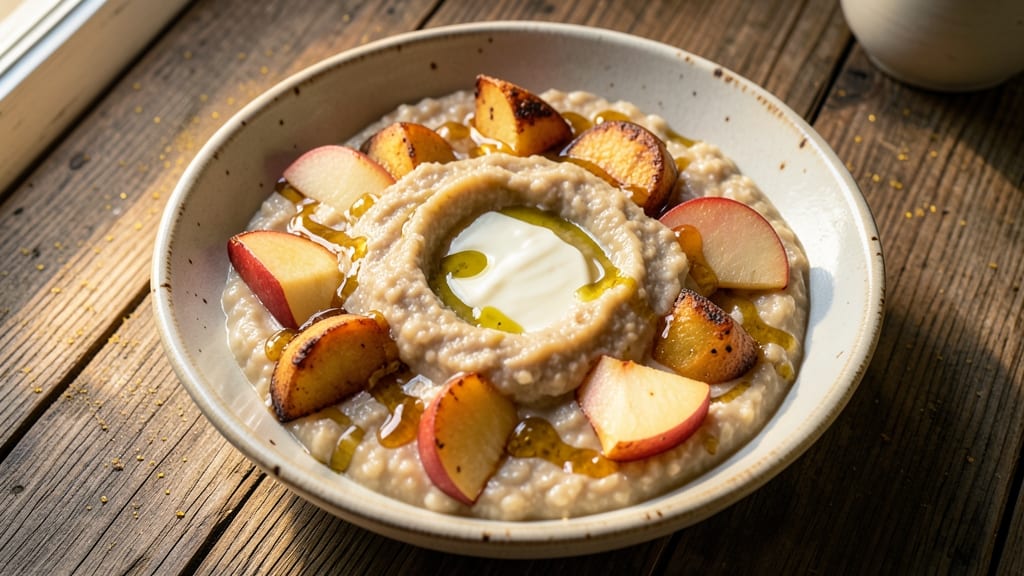
This 17th-century apple and potato porridge brings rustic warmth straight from medieval kitchens to your modern stove. 🍏✨ Historically, porridge was a staple—thickened with oats or potatoes, sweetened with honey, and spiced simply with cinnamon or nutmeg. My version keeps the authenticity while ensuring safety and simplicity for today’s cooks.
The recipe relies on slow-cooked potatoes and apples, mashed into a hearty, comforting porridge. Unlike modern quick meals, this dish was meant to simmer gently in cast-iron pots over open flames, developing deep, earthy flavors.
I’ve adapted the technique for modern stovetops while preserving the original spirit—no shortcuts, just honest, rustic comfort.
What makes this porridge special is its versatility. In 17th-century homes, it served as both a filling side dish and a sweetened breakfast, depending on the household’s means.
Serve it plain with a drizzle of honey for a peasant-style meal, or add butter and spices for a more refined noble’s table. The texture is creamy yet sturdy, perfect for soaking up broths or pairing with fresh bread.
Ready in just 30 minutes, this porridge delivers the same warmth and nostalgia as it did centuries ago. The key is patience—letting the potatoes soften and the apples caramelize slowly for that authentic, hearty flavor. Whether you’re recreating history or simply craving a cozy, one-pot meal, this recipe delivers.
Ingredients for apple and potato porridge 17th century
Simple, earthy ingredients that taste like history—just potatoes, apples, and spices.
| Ingredient | Amount | Notes |
|---|---|---|
| Russet Potatoes 🥔 | 2 lb | Peeled, cut into 1-inch chunks |
| Apples 🍏 | 2 medium | Sweet variety like Gala or Honeycrisp |
| Extra-Virgin Olive Oil 🫒 | ¼ cup | For sautéing potatoes |
| Unsalted Butter 🧈 | ½ cup | Cold, cubed for richness |
| Whole Milk 🥛 | 2 cups | Full-fat for creaminess |
| Honey 🍯 | ¼ cup | Raw for authentic sweetness |
| Ground Cinnamon 🌿 | 1 tsp | Freshly ground preferred |
| Ground Nutmeg 🌿 | ½ tsp | Freshly grated nutmeg |
| Salt 🧂 | 1 tsp | Diamond Crystal kosher |
| Fresh Thyme Leaves 🌿 | ¼ cup | Chopped, stems removed |
| Fresh Parsley Leaves 🌿 | 0.1 cup | Chopped for garnish |
| Water 💧 | 2 cups | For simmering |
The potatoes are the backbone here. Russets hold up best to long cooking, but Yukon Golds add creaminess if you prefer. Organic potatoes from the store’s bulk bin stay fresher longer—skip the pre-washed ones. Apples should be firm but not hard; Gala or Honeycrisp caramelize beautifully. I always buy a few extra to snack on while cooking—Trader Joe's has great organic options. The butter matters too: Plugrá or Kerrygold melt beautifully, but any good-quality European-style butter works. If you're feeling fancy, try cultured butter for deeper flavor.
No honey? Maple syrup works one-to-one, though it has a more robust flavor. Short on apples? Pears or pippins (if you can find them) add a nice twist. The spices are non-negotiable though—freshly ground cinnamon and nutmeg make all the difference. No fresh thyme? Dried at one-third the amount is fine, but it lacks that bright herbal note. The milk can be swapped for half-and-half or coconut milk for extra richness, though the texture changes slightly. And if you're making this for a crowd, double the recipe—it reheats beautifully.
This porridge tastes even better the next day. Store leftovers in an airtight container in the fridge for up to 5 days, or freeze portions for 3 months. I like to reheat it gently on the stove with a splash of milk to restore creaminess. For serving, a drizzle of honey and a sprinkle of fresh parsley brings it back to life. Cast iron is ideal for cooking—it mimics the old cast-iron pots and adds a subtle rustic flavor. If you don't have one, a heavy-bottomed pot works just as well.
Why You'll Love This Recipe
- One-Pot Wonder: I swear by this recipe because it’s literally one pot—peel and chop the Russets, core the apples, toss everything in, and let it simmer. No measuring cups, no extra bowls, just hands-off magic while you sip tea or fold laundry.
- Sweet-Savory Magic: That first bite of tender Russet potatoes kissed with caramelized apple? It’s like autumn in a bowl. The olive oil and butter make the potatoes creamy without heaviness, while the apples add just enough natural sweetness to balance the earthy potatoes—no sugar needed.
- Breakfast to Dinner: Honestly, I make this for breakfast when I’m in a rush, but it’s also my go-to for a cozy Sunday dinner with crusty bread. The texture works at any time of day—creamy enough for morning, hearty enough for a midweek meal when you’re too tired for anything fancy.
- Budget-Friendly Staples: Between us, this recipe uses pantry basics that won’t break the bank. Russets and apples stay cheap, and a little olive oil and butter stretch far. I’ve made this for six people on a tight grocery budget, and everyone still asked for seconds—proof it’s a smart, satisfying choice.
Step-by-step instructions for apple and potato porridge
Here's how to transform humble potatoes and apples into a rich, spiced porridge fit for 17th-century kitchens.
🍳 Step 1: Sauté the Potatoes Until Golden
Heat the 0.25 cup extra-virgin olive oil in a large, heavy-bottomed pot over medium heat. Add the 2 lb peeled, 1-inch potato chunks and cook for 10-12 minutes, stirring occasionally, until they develop a golden-brown crust in spots. This caramelization builds deep flavor—don't rush this step.
Here's the thing—if the potatoes start sticking before they brown, reduce the heat slightly. You want that crust without burning. I like to press down gently with a wooden spoon to ensure even browning on all sides. The potatoes should be soft when pierced with a knife but still hold their shape.
🍳 Step 2: Add Apples and Spices for Warmth
Peel, core, and dice the 2 medium apples into ¼-inch pieces. Add them to the pot along with the 0.5 cup cold, cubed butter, 1 tsp salt, 1 tsp ground cinnamon, and 0.5 tsp ground nutmeg. Stir well to coat everything in the buttery oil.
Cook for another 5 minutes until the apples soften slightly and release their juices. You'll smell that perfect blend of caramelized potatoes, sweet apples, and warm spices—this is where the magic happens. If the mixture looks dry, add 2 tablespoons of water to deglaze and create a loose paste.
🥘 Step 3: Build the Creamy Base
Pour in the 2 cups whole milk and 2 cups water, stirring constantly to combine. Bring to a gentle simmer over medium-low heat, then reduce heat to low. Let it cook uncovered for 20-25 minutes, stirring occasionally, until the potatoes are completely tender and the mixture thickens to a porridge-like consistency.
Here's the moment that matters: you'll know it's ready when the porridge coats the back of a spoon and the potatoes break down easily. If it's too thick, stir in more milk 1 tablespoon at a time. The texture should be like a thick, creamy mash—rich enough to coat a spoon but still spoonable.
🔥 Step 4: Finish with Honey and Herbs
Remove the pot from heat and stir in the 0.25 cup honey and 0.25 cup chopped fresh thyme leaves. Let it sit for 2 minutes to allow the honey to meld with the spices. The mixture should be sweet but not cloying—this balance is key to that authentic rustic flavor.
For the final touch, stir in the 0.1 cup chopped fresh parsley leaves. This bright herb cuts through the richness and adds a fresh finish. Taste and adjust seasoning—you might need a pinch more salt or cinnamon to balance the sweetness. The porridge should sing with warm, spiced apple-potato harmony.
🍽️ Step 5: Serve Warm with Crispy Toppings
Ladle the porridge into bowls and serve immediately. For that 17th-century touch, I like to top each serving with extra cinnamon and a pat of butter to melt on top. The contrast of warm porridge with crispy butter bits takes it to another level.
Pair with fresh fruit or a drizzle of honey if you're feeling fancy. This porridge tastes even better the next day when the flavors have fully melded—just reheat gently with a splash of milk to restore its creaminess. Each spoonful should deliver that perfect balance of earthy potato, sweet apple, and warming spices.
Pro Tips For Making Apple And Potato Porridge 17th Century
- PEEL POTATOES THIN: The skin’s starch makes this porridge gummy if left on—especially Russets. Use a sharp knife and slice off just the toughest outer layer, not the whole peel. (Yes, even if you’re in a hurry, this saves you from a gluey mess later.)
- COOK APPLES IN BATCHES: Tossing raw apple chunks into the pot with potatoes? Don’t. Sauté them first in butter until they soften and release juices—about 5 minutes over medium heat. This keeps them tender without turning the porridge into soup. (I learned this after one batch where the apples stayed crunchy like sad applesauce.)
- STIR LOW AND SLOW: This isn’t mashed potatoes—aggressive stirring turns it into glue. Once the potatoes break down, switch to a wooden spoon and coax them gently, letting the milk absorb naturally. Low heat is your friend here; rushing it makes the texture sad.
- SALT THE MILK FIRST: Skip adding salt to the pot until the very end. Whole milk curdles when heated with salt, and you’ll end up with a split porridge. Stir in a pinch of salt after removing from heat—trust me, your taste buds will notice the difference. (Your grandmother wasn’t wrong about this.)
Serving suggestions for apple and potato porridge 17th century
Peasant-Style Serving
In 17th-century homes, this porridge was often served as a simple, filling meal for peasants. I like to present it in wooden bowls with rustic charm—think of a hearty farmhouse setting.
Serve with crusty dark rye bread for dipping, and a side of pickled vegetables (like cucumbers or cabbage) to cut through the richness. A small pitcher of sour cream on the side lets everyone add their preferred tanginess.
The contrast of cold pickles with warm porridge mirrors how medieval households balanced flavors. 🍞
Noble's Table Presentation
For a more refined serving, I elevate this dish with elegant touches that would impress a 17th-century noble. Start with gold-rimmed ceramic bowls and garnish each serving with a sprig of fresh rosemary instead of parsley for a sophisticated herbal note.
Add a drizzle of caramelized honey (warmed with a pinch of cinnamon) and a small pat of brown butter melted and cooled. The contrast of warm spices with the cool honey creates a luxurious mouthfeel. Serve with toasted baguette slices brushed with garlic butter for dipping.
Modern Pairings
This porridge bridges history and contemporary tastes beautifully. For a breakfast pairing, serve with scrambled eggs cooked in butter and topped with crispy bacon bits. The salty-sweet contrast works wonders.
For a lunch option, I love pairing it with grilled chicken thighs marinated in apple cider and thyme—a nod to medieval feasts. The chicken's savory notes complement the porridge's sweet-spiced profile.
For a vegetarian option, sautéed mushrooms with garlic and thyme add an earthy depth that enhances the dish's rustic charm.
Drink Pairings
In 17th-century England, porridge was often accompanied by small ale (a lightly fermented beer) or mulled cider. For a modern twist, I recommend a crisp dry sparkling wine like Prosecco to cut through the richness. The bubbles cleanse the palate between bites.
For a non-alcoholic option, chilled hibiscus tea with a touch of honey adds a floral note that pairs beautifully with the cinnamon and nutmeg. The tartness of the tea balances the porridge's sweetness perfectly. 🍷
Leftovers Reinvented
This porridge tastes even better the next day, so I always make extra. For reheating, I gently warm it on the stove with a splash of milk to restore creaminess. For a creative twist, transform leftovers into apple-potato pancakes.
Mash the cooled porridge with an egg and pan-fry in butter until golden. Top with extra honey and chopped nuts for a breakfast that feels like a gourmet treat. You can also use it as a filling for hand pies—simply wrap in puff pastry and bake until golden.
These reinventions keep the historical essence while adding modern flair.
Seasonal Variations
While this recipe works year-round, seasonal ingredients can elevate it further. In autumn, add roasted chestnuts to the porridge for a nutty depth. During winter, stir in dried cranberries and a pinch of cloves for a festive twist.
Spring calls for fresh rhubarb instead of apples—simmer it with the potatoes for a tangy-sweet balance. Summer versions can include fresh berries like blueberries or raspberries, which add vibrant color and brightness. Each seasonal adaptation keeps the porridge's rustic heart while celebrating nature's bounty. 🍂
Nutrition facts
Frequently asked questions
Why did 17th-century households serve porridge with both sweet and savory toppings?
Porridge was a versatile staple that needed flavor enhancements to make it satisfying. Sweet toppings like honey balanced the earthy potatoes, while savory options (like pickled veggies) cut through richness. This dual approach mirrored how medieval cooks maximized limited ingredients—using what was available to create balanced meals.
Can I substitute modern ingredients for 17th-century ones?
Use maple syrup instead of honey (1:1 ratio) or coconut milk for dairy-free creaminess. For spices, freshly ground cinnamon and nutmeg are ideal, but store-bought works in a pinch. The key is maintaining the porridge's rustic balance—adjust sweetness/saltiness based on your substitutions.
How did 17th-century cooks thicken porridge without modern tools?
They relied on slow cooking and natural starches! Potatoes and oats (if used) released starch as they simmered, creating thickness. Wooden spoons helped mash ingredients, and cooks stirred constantly to prevent lumps. For extra body, they might add a bit of crushed bread or ground nuts—whatever was on hand.
What’s the best way to reheat this porridge without drying it out?
Gently reheat on the stove over low heat with 1-2 tablespoons of milk or water per serving. Stir frequently and cover with a lid to trap steam. For microwave reheating, use 30-second intervals on low power, stirring between each. The goal is to restore creaminess without overcooking the apples.
Could this porridge have been served cold in the 17th century?
Rarely! Porridge was typically eaten warm to highlight its comforting texture. However, in hot climates or for travel, it might have been served at room temperature. The spices (like nutmeg) would still shine, but the creamy consistency would be less appealing. Cold porridge was more common in modern times with refrigeration.