
Side Dishes
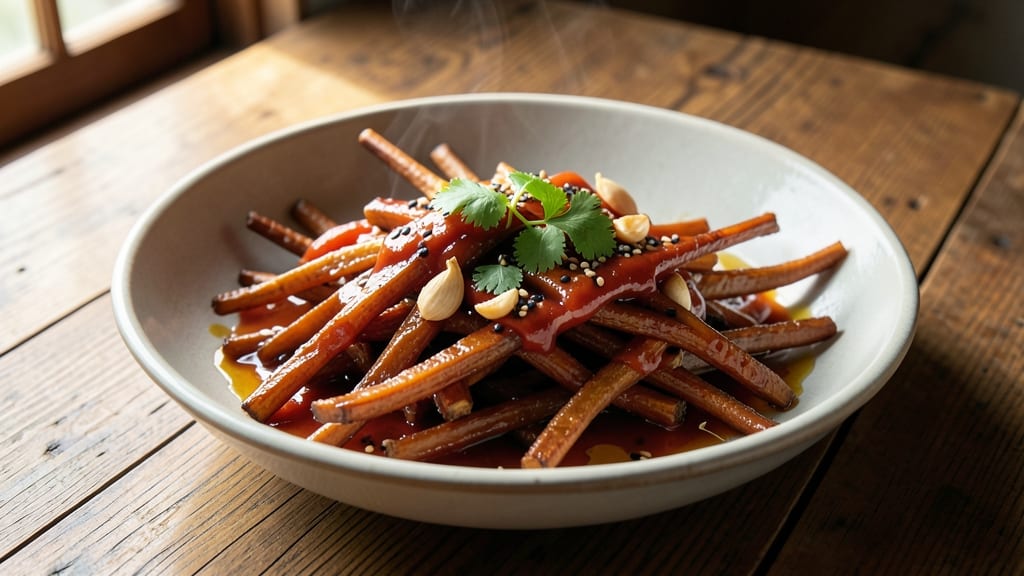
This crispy-fried sweet potato stem Korean recipe transforms humble stems into a crunchy, umami-packed side that steals every meal. 🌟 The secret lies in double-frying for that signature texture—first soft, then golden—while preserving the earthy sweetness of the stems.
I first discovered this technique at a local pojangmacha (street tent) in Seoul, where the crispy stems were served alongside grilled pork and rice. What makes this dish special is its versatility—it works as a standalone snack, a vibrant side, or even a topping for noodles.
The stems are blanched first to remove bitterness, then lightly seasoned with soy sauce, sesame oil, and garlic before frying. This process ensures they stay crispy without turning greasy, while the umami kick comes from a simple dipping sauce of gochujang (Korean chili paste), vinegar, and sugar.
The result is a dish that’s both nostalgic and modern: nostalgic for its roots in Korean comfort food, yet modern in its crispy, addictive texture. The stems become irresistibly crunchy on the outside while staying tender inside, making them perfect for sharing.
Pair them with grilled meats, rice, or even a cold beer to balance the heat. Ready to try? This recipe is foolproof and delivers restaurant-quality results at home—no fancy equipment needed. Let’s get cooking!
Ingredients for sweet potato stem korean
Twelve simple ingredients for crispy, umami-packed sweet potato stems that steal any meal.
| Ingredient | Amount | Notes |
|---|---|---|
| Sweet Potato Stems 🍠 | 1 ½ lb | Trimmed, cut into 2-inch pieces |
| Vegetable Oil 🫒 | 3 cups | For double-frying, high smoke point |
| Soy Sauce 🍶 | 2 tbsp | Korean-style preferred, low-sodium |
| Sesame Oil 🌿 | 1 tbsp | Toasted, for aroma |
| Minced Garlic 🧄 | 2 cloves | Freshly minced, aromatic |
| Gochujang 🌶️ | 1 tbsp | Korean chili paste, for dipping sauce |
| Rice Vinegar 🍶 | 1 tbsp | For tangy balance |
| Granulated Sugar 🍚 | 1 tsp | Adjust to taste |
| Toasted Sesame Seeds 🌿 | 1 tbsp | For garnish, optional |
| Salt 🧂 | ½ tsp | Kosher or sea salt |
| Black Pepper 🌶️ | ¼ tsp | Freshly ground |
| Water 💧 | 4 cups | For blanching stems |
The sweet potato stems are the star—look for fresh, firm stems at Asian markets or well-stocked grocery stores like H-Mart or Korean Food Mart. If you can't find them, substitute with regular sweet potato slices (about 1.5 lbs), but they won't have the same earthy flavor. The key is blanching them first to remove bitterness—don't skip this step. For the oil, vegetable or canola oil works best due to its high smoke point, but peanut oil adds a nice nutty flavor if you're feeling adventurous.
No gochujang? Substitute with 1 tbsp sriracha plus 1 tsp soy sauce for a similar kick, though the depth won't be the same. Running low on sesame oil? Swap for 1 tsp regular vegetable oil plus 1 tsp toasted sesame seeds—just know the flavor will be milder. The dipping sauce can be adjusted to taste: add more vinegar for tang or sugar for sweetness. For extra crunch, toss the fried stems with a pinch of Diamond Crystal kosher salt right after frying while they're still hot.
Blanched stems keep in the fridge for 3 days before frying, but they're best used fresh. Once fried, store in an airtight container with a paper towel to absorb excess oil—they'll stay crispy for 2 days. For a shortcut, fry the stems and freeze them in a single layer before storing in a bag. Reheat in a 350°F oven for 5-7 minutes to restore crispiness. The dipping sauce can be made ahead and stored for 1 week, but the texture of the stems suffers after reheating, so enjoy them fresh whenever possible.
Why You'll Love This Recipe
- Zero-Waste Win: I swear by this recipe for using up those sweet potato stems—no food goes to waste when you turn them into crispy, savory bites. Just trim, slice, and fry; no fancy prep needed.
- Umami Bomb: That combo of soy sauce and sesame oil? Absolute magic. The stems soak up the flavor until they’re caramelized and addictive—like a Korean street snack in your kitchen.
- Lunchbox Hero: Between us, these keep perfectly for days. Pack them cold in bento boxes or reheat for a quick protein boost—my kids beg for them more than any store-bought snack.
- Pantry Staple: Five ingredients, all cheap and long-lasting. If you’ve got oil, soy sauce, and garlic, you’re golden. It’s my go-to when I’m broke but still want something that tastes like a treat.
Step-by-step instructions for crispy sweet potato stem fries
Transform humble sweet potato stems into restaurant-quality crispy fries with this foolproof Korean technique.
🍳 Step 1: Blanch the Stems for Perfect Texture
Bring the 4 cups water to a rolling boil in a large pot. Add the 1.5 lb sweet potato stems and cook for exactly 3 minutes. You'll see them turn slightly translucent at the edges—that's your cue they're properly blanched.
Immediately drain and rinse under cold water to stop the cooking process. This blanching removes excess starch that would otherwise make your fries soggy. Pat them completely dry with paper towels, pressing firmly to eliminate all moisture. Wet stems will prevent crispiness no matter how much oil you use.
🥘 Step 2: Prepare the Double-Fry Oil
Divide the 3 cups vegetable oil between two deep fryers or heavy-bottomed pots. Heat the first batch to 325°F for the initial fry, and the second batch to 375°F for the final crisp. Use a thermometer—oil temperature is critical for that perfect crunch.
Keep the oil at these exact temperatures throughout the process. Too hot and they'll burn; too cool and they'll absorb oil instead of crisping. I like to maintain a small pot of hot water nearby to quickly adjust temperatures if needed.
🔥 Step 3: First Fry for Foundation
Carefully lower the blanched stems into the 325°F oil in batches, working in single layers to avoid crowding. Fry for 2-3 minutes until they turn a pale golden color. You want them soft inside with just a hint of texture—like al dente pasta.
Use a slotted spoon to remove them and drain on a wire rack or paper towel-lined plate. The rack allows air circulation for even drying. Don't stack them or they'll steam instead of crisp. This first fry builds the foundation for that signature Korean crunch.
🍳 Step 4: Second Fry for Crispy Perfection
Increase the oil temperature to 375°F and fry the stems again for 1-2 minutes until they reach a deep golden brown color. You'll hear a satisfying sizzle and see bubbles form around them—that's your crispy confirmation.
Remove immediately and drain once more. The stems should be light enough to float in water now—this is the ultimate crispy test. If any pieces seem underdone, return them to the hot oil for 10-15 seconds until properly browned.
👨🍳 Step 5: Season and Serve
While still hot, toss the crispy stems with 2 tbsp soy sauce, 1 tbsp sesame oil, 2 cloves minced garlic, 0.5 tsp salt, and 0.25 tsp black pepper. The high heat will make them smell incredible and the seasoning will penetrate the crispy exterior.
Transfer to a serving platter and sprinkle with 1 tbsp toasted sesame seeds. For the dipping sauce, whisk together 1 tbsp gochujang, 1 tbsp rice vinegar, and 1 tsp granulated sugar until smooth. Serve immediately while still piping hot for maximum crunch.
Pro Tips For Making Sweet Potato Stem Korean
- STRIP AND RINSE STEMS: Sweet potato stems are dirt magnets—scrub them under cold running water while holding them by the leafy ends to avoid bruising the tender parts. I used to just wipe them, but that left gritty bits in every bite. A quick rinse in a colander makes all the difference.
- COOK IN TWO BATCHES: Crowding the pan turns these into soggy sticks. Work in small batches—no more than half the stems at a time—so they sizzle and sear instead of steam. I learned this the hard way after making a gloppy mess that tasted like boiled greens.
- USE TOASTED SESAME OIL: Skip the raw sesame oil—heat a teaspoon in the pan until it smells nutty (just 30 seconds) before adding the stems. That deep, toasty aroma cuts through the earthiness of the stems and makes the dish taste like it came from a Korean street cart.
- SALT THE STEMS FIRST: Toss the stems with a pinch of salt (even before cooking) to draw out moisture—this guarantees a crisp-tender texture. I was skeptical until I tried it; now I double-check the salt step because dry stems fry up perfectly every time.
Pro cooking tips for great sweet potato stem korean
Blanching Secrets
The 3-minute blanch is non-negotiable—this removes bitterness and pre-cooks the stems just enough to prevent sogginess. I use a wire mesh strainer to drain them immediately, then rinse under cold water for 10 seconds to halt cooking.
Pat them thoroughly with paper towels, pressing firmly between sheets to eliminate all moisture. Any lingering dampness will turn your crispy dreams into greasy nightmares. 💫
Double-Fry Technique
Most home cooks skip the second fry, but that’s where the magic happens. First fry at 325°F for 2-3 minutes softens the stems—think al dente pasta. Then crank the oil to 375°F and fry again for 1-2 minutes until golden brown.
This two-stage process creates the signature crispy exterior with tender interior. Use a thermometer—guestimating oil temps leads to burnt or greasy results.
Oil Temperature Control
Too hot? Your stems burn. Too cool? They absorb oil like a sponge. I keep a small pot of hot water nearby to adjust temps quickly—adding cold water lowers oil temperature instantly. For the first fry, aim for 325°F (like a warm bath).
For the second fry, push it to 375°F (hot enough to sizzle). A deep-fat thermometer is your best friend here—no more oil guesswork. 🌡️
Seasoning Timing
Season the stems while still hot—this locks in the flavors and prevents them from becoming bland. Toss with soy sauce, sesame oil, and garlic immediately after the second fry. The high heat will make your kitchen smell like a Korean street market.
For extra depth, add 1 tsp toasted sesame seeds right before serving. Pro tip: Sprinkle with flaky sea salt while they’re piping hot for maximum crunch.
Storage Hacks
Fried stems lose crispiness fast, but you can preserve them for 2 days by storing in an airtight container with a paper towel to absorb excess oil. For longer storage, freeze them in a single layer before transferring to a bag.
To revive, bake at 350°F for 5-7 minutes—they won’t be as crispy as fresh, but they’ll still taste amazing. The dipping sauce keeps for 1 week in the fridge, though I recommend making it fresh for the best flavor. ❄️
Nutrition facts
Frequently asked questions
What makes sweet potato stems special in Korean cuisine?
Sweet potato stems are prized for their earthy sweetness and umami depth—perfect for crispy frying or stir-frying. Unlike regular sweet potatoes, the stems have a unique texture when properly blanched and fried, becoming irresistibly crunchy while staying tender inside. They're often used in Korean street food and side dishes because they add a satisfying bite without overpowering other flavors.
Can I substitute regular sweet potato slices?
Yes, but the flavor and texture won't be identical. Regular sweet potato slices will be sweeter and less fibrous, so they won't achieve the same crispy texture. If substituting, cut them into ¼-inch thick slices and increase the first fry time to 4-5 minutes to ensure they're fully tender before the second crisp. The umami kick will also be milder without the stems' natural earthiness.
Why do I need to blanch the stems first?
Blanching removes bitterness and pre-cooks the stems to prevent sogginess during frying. The 3-minute boil also helps them hold their shape better. Skipping this step can result in stems that absorb too much oil and turn greasy instead of crispy. Think of it like blanching green beans—it's all about preparing the ingredient for the perfect texture.
What's the best way to store leftover crispy stems?
Store them in an airtight container with a paper towel to absorb excess oil for up to 2 days. For longer storage, freeze them in a single layer before transferring to a bag. To revive, bake at 350°F for 5-7 minutes until crispy again. The dipping sauce keeps for 1 week in the fridge, but the stems are best enjoyed fresh for maximum crunch.
Can I make this recipe without a deep fryer?
Use a heavy-bottomed pot with 2 inches of oil and a thermometer to monitor temperatures. For the first fry, maintain 325°F and for the second fry, bring it to 375°F. Work in small batches to avoid overcrowding, which can lower oil temperature. A slotted spoon helps remove stems without splashing hot oil—just be careful!